
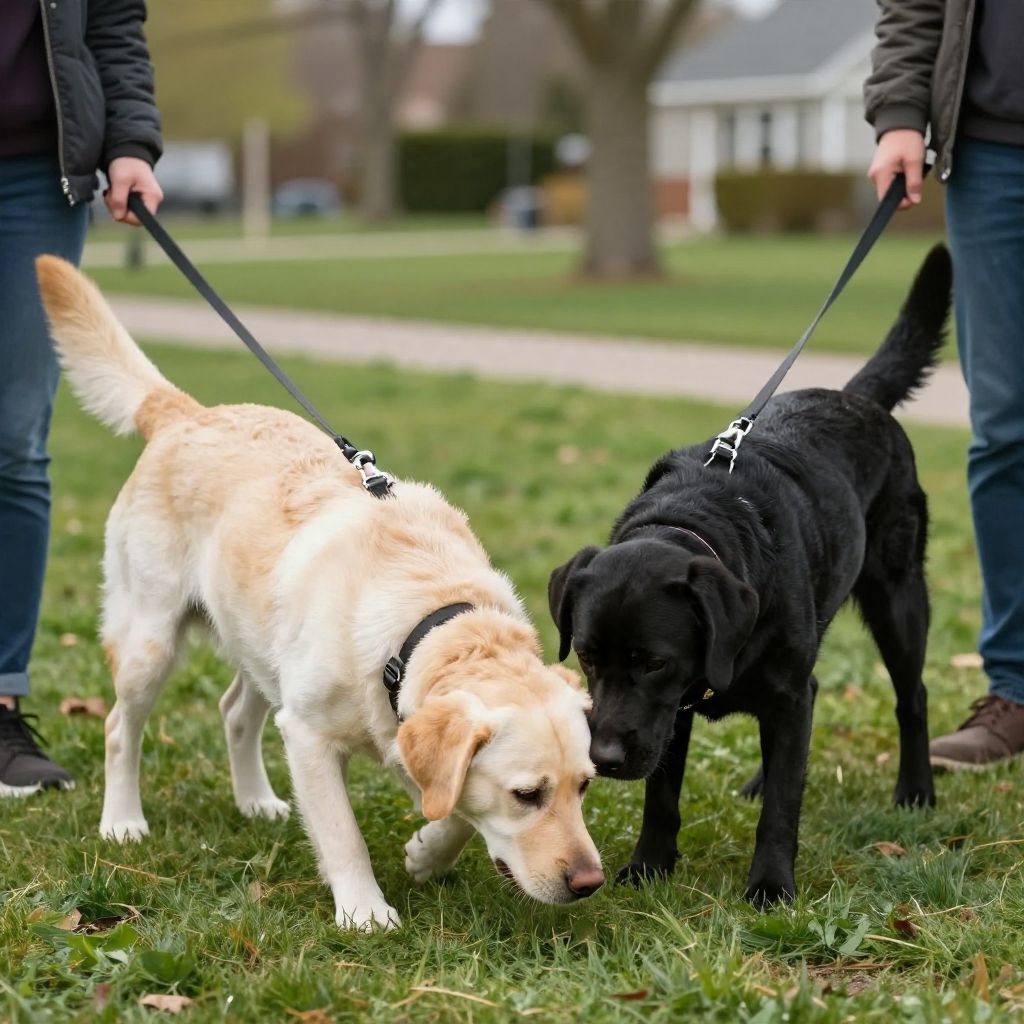
Why do dogs smell butts? It’s a normal canine greeting and information-gathering behavior. Dogs use scent to learn about another dog’s identity, mood, sex, health status, and recent activities.
Most of the time, butt sniffing is harmless social communication. It can become a problem if a dog is overly pushy, fearful, reactive, or fixated on sniffing in ways that stress other dogs or people.
Why do dogs smell butts?
Dogs smell butts because the area around the rear end carries strong scent information from anal glands and body odor. Sniffing helps dogs identify one another, compare social cues, and decide whether to play, avoid, or continue interacting. In most cases, it is normal behavior, not rudeness or aggression.
What dogs are learning when they sniff
To a dog, scent is a rich source of detail. A quick sniff can tell them much more than a visual greeting can.
Common reasons dogs sniff each other’s rear ends
- Identity: Dogs can recognize another dog’s unique scent.
- Social information: They may detect mood, confidence, or stress signals.
- Health clues: Changes in odor can reflect illness, infection, or hormonal changes.
- Sex and reproductive status: Scent can provide general reproductive information.
- Recent history: A dog may learn where the other dog has been and what it may have encountered.
This is why dogs often greet each other nose-to-rear before moving on to play or walking away. It is a fast, normal way to “read” another dog.
When butt sniffing is normal and when it is not
Occasional sniffing during greetings is usually fine. The behavior becomes concerning when it is intense, repetitive, or clearly unwanted by the other dog.
Normal behavior often looks like this
- Brief sniffing during a calm greeting
- Both dogs taking turns
- Loose body posture and easy movement
- Sniffing followed by play, walking, or disengagement
Signs the interaction may be going wrong
- One dog tries to escape, freezes, or hides
- Stiff body posture, hard staring, or raised hackles
- Growling, snapping, or repeated mounting
- One dog keeps pursuing the other despite clear avoidance
- Sniffing becomes obsessive or interrupts normal activity
If your dog does not respect another dog’s signals, you should step in and create space. Good social skills include knowing when to stop.
Why some dogs sniff more than others
Individual dogs vary a lot. Age, temperament, social experience, and health can all affect how much a dog sniffs.
Factors that can influence the behavior
- Age: Puppies may sniff awkwardly as they learn social rules. Older dogs may be less tolerant or slower to engage.
- Confidence: A shy dog may sniff briefly and retreat, while a bold dog may investigate more persistently.
- Breed tendencies: Some dogs may be especially scent-oriented, but no breed behaves exactly the same way every time.
- Training and socialization: Dogs with limited positive social exposure may miss cues or overdo greetings.
- Health and hormones: Illness, pain, or reproductive status can change scent and behavior.
Breed can influence general tendencies, but it does not determine personality. Your dog’s individual history matters just as much.
What to do if your dog keeps smelling butts too much
If your dog is polite, brief, and responsive to cues, you may not need to change anything. If the behavior is excessive or awkward, focus on management and reward-based training.
- Watch body language early. Step in before the interaction becomes tense.
- Use a cheerful recall cue. Reward your dog for coming to you away from the other dog.
- Create space. Move to a wider area or end the greeting if the other dog seems uncomfortable.
- Practice calm greetings. Reward loose-leash walking, checking in with you, and brief polite sniffs.
- Limit overexcitement. High arousal can make sniffing pushy or hard to interrupt.
Do not punish your dog for sniffing. Harsh corrections can increase fear, confusion, or reactivity and may make social behavior worse.
How to help puppies learn proper greeting manners
Puppies often need help learning that not every dog wants a long or intense greeting. Short, positive experiences are usually better than crowded, chaotic play sessions.
Helpful puppy socialization habits
- Expose your puppy to calm, vaccinated, well-mannered dogs when possible
- Keep greetings short and supervised
- Reward your puppy for disengaging and returning to you
- End interactions before the puppy becomes overwhelmed or overly excited
- Pair social time with rest, so your puppy does not become overstimulated
Well-managed socialization helps puppies learn that sniffing is part of communication, not a free pass to crowd every dog they meet.
When butt sniffing may point to a health issue
Most butt sniffing is behavioral, but sometimes a dog’s rear-end odor or attention to another dog’s rear can be linked to health concerns. You should pay attention if the smell is unusually strong, fishy, foul, or associated with discomfort.
Possible health-related concerns
- Anal gland problems: A dog with impacted or infected anal glands may smell stronger than usual.
- Skin irritation or infection: Redness, licking, or odor around the rear can signal a problem.
- Parasites or digestive issues: Changes in stool or irritation may affect scent.
- Hormonal or reproductive changes: Intact dogs may produce different scents during certain life stages.
If your dog suddenly becomes obsessed with sniffing a particular dog’s rear end, or if your own dog has a strong odor, scooting, pain, or discharge, contact your veterinarian. These signs deserve a proper exam.
Red flags that need prompt veterinary attention
Seek veterinary care promptly if butt sniffing is accompanied by symptoms that suggest pain, infection, or another medical problem.
- Swelling, redness, or discharge near the anus
- Persistent scooting or licking
- Straining to defecate
- Blood in the stool
- Sudden behavior change, lethargy, or loss of appetite
- Whining, guarding the rear end, or sensitivity when touched
Urgent care is needed if your dog cannot pass stool, seems severely painful, has a rapidly enlarging swelling, or appears very unwell. Do not wait for these signs to improve on their own.
Common mistakes owners make
It is easy to misread normal canine communication as bad behavior. A few common mistakes can make interactions harder for your dog.
- Interrupting every sniff, even when both dogs are comfortable
- Forcing greetings between dogs that are clearly uneasy
- Assuming all sniffing is dominance or aggression
- Ignoring stress signals such as freezing, lip licking, or turning away
- Letting a pushy dog rehearse rude greeting habits repeatedly
The goal is not to stop all sniffing. The goal is to help your dog greet others safely and respectfully.
How to manage sniffing in public
In parks, sidewalks, and other shared spaces, not every dog wants to be greeted. Good management protects both your dog and others.
Practical public-space tips
- Ask before allowing your dog to approach another dog
- Keep your leash loose enough for normal movement, but short enough to guide your dog away if needed
- Use treats to reward checking in with you
- Move on if the other owner says no or the dog looks uncomfortable
- Avoid crowded areas if your dog becomes overexcited or intrusive
Respecting other dogs’ boundaries is part of good canine manners and good owner etiquette.
When to get help from a trainer or behavior professional
If your dog’s sniffing is part of a bigger behavior pattern, professional help can be useful. This is especially true if your dog is fearful, reactive, or difficult to interrupt.
Consider a certified reward-based trainer or a veterinary behaviorist if your dog:
- Cannot disengage from other dogs
- Shows fear, lunging, or snapping during greetings
- Has trouble reading social cues
- Needs help with polite leash behavior around other dogs
A qualified professional can help you build better habits without using intimidation or punishment.
Bottom line
Dogs smell butts because scent is one of their main ways of gathering social and health information. In most cases, it is normal and harmless. If the behavior becomes pushy, stressful, or linked to odor, pain, or other symptoms, manage the interaction and check with your veterinarian.
For more related reading, you may also find why dogs sniff butts and why dogs drag their butts helpful.