
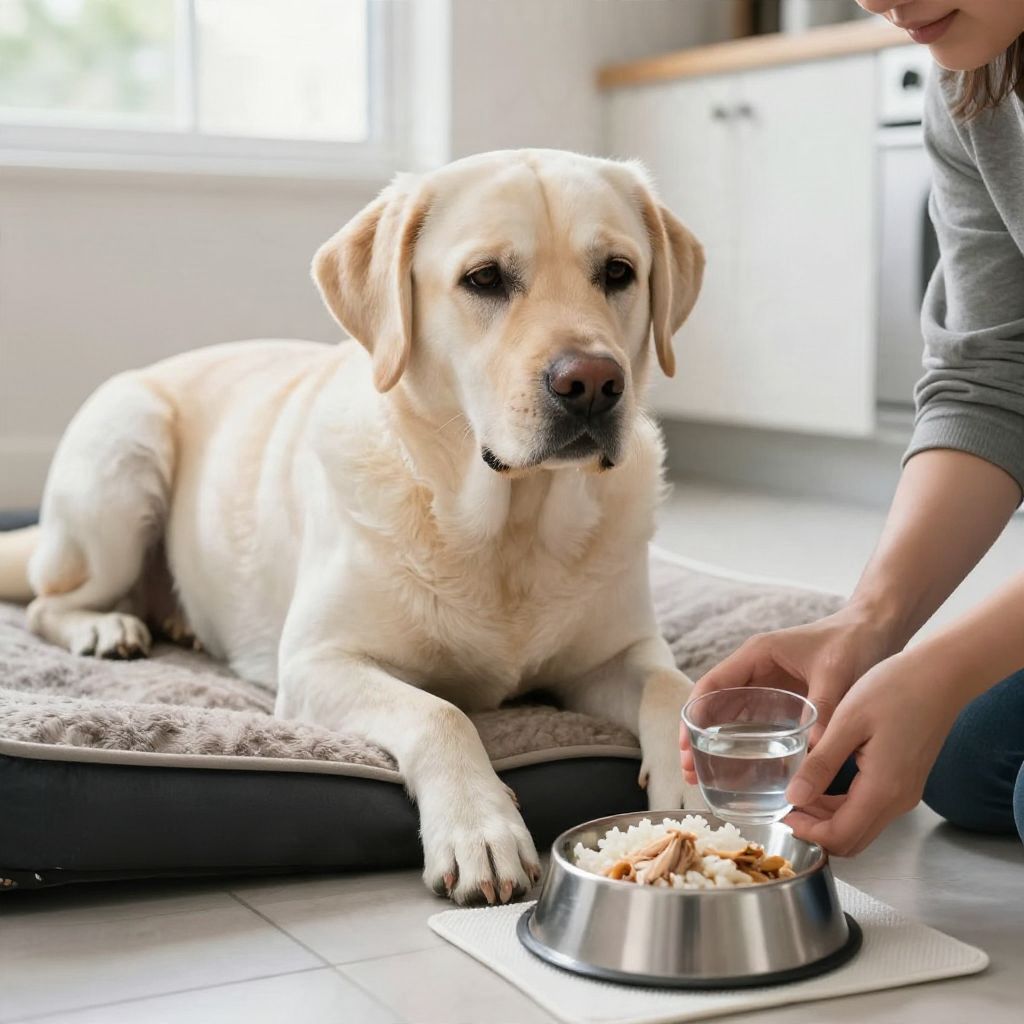
If your dog’s stomach is gurgling, you may be wondering what you can give them to help. Mild stomach noises can happen after eating, swallowing air, or having a temporary digestive upset, but they can also be a sign of illness.
The safest first step is to watch for other symptoms, keep your dog comfortable, and avoid giving human medicines or random home remedies. If the gurgling comes with vomiting, diarrhea, pain, bloating, or a sudden change in behavior, contact your veterinarian promptly.
What Can I Give My Dog For Gurgling Stomach?
For a mildly gurgling stomach without other symptoms, you can usually offer small amounts of water and a short rest from food if your veterinarian has previously said that’s safe for your dog. After that, a bland, vet-approved diet may help. Do not give human medications, dairy, greasy foods, or supplements unless your vet recommends them.
What the Gurgling Might Mean
Stomach gurgling, also called borborygmi, is the sound of gas and fluid moving through the intestines. It can be harmless, especially if your dog is hungry or has eaten quickly.
It can also happen with digestive upset, diet changes, parasites, stress, food intolerance, or a more serious problem. The sound alone does not tell you the cause.
Common, less serious reasons
- Hunger or an empty stomach
- Eating too fast and swallowing air
- A sudden food change
- Mild stress or excitement
- Temporary gas or mild indigestion
Reasons to take it more seriously
- Repeated vomiting or diarrhea
- Loss of appetite
- Abdominal pain or a tense belly
- Weakness, lethargy, or dehydration
- Bloated abdomen, retching, or collapse
Safe First Steps at Home
If your dog is otherwise acting normal, start with simple supportive care. Keep things calm and observe closely for a few hours.
- Offer fresh water. Let your dog drink small amounts often if they want to.
- Pause treats and rich foods. Skip table scraps, fatty foods, and chews for now.
- Keep activity gentle. Avoid hard exercise right after eating.
- Watch for changes. Note vomiting, stool changes, appetite, energy, and belly discomfort.
- Call your vet if it doesn’t improve. Persistent gurgling deserves professional advice.
If your veterinarian has previously recommended a bland diet for mild digestive upset, follow that guidance exactly. If you have not been given a plan before, ask your vet what is appropriate for your dog’s age, size, and health history.
Foods That May Be Appropriate in Some Cases
Some dogs with mild stomach upset may do well on a temporary bland diet, but only if they are not vomiting repeatedly and your veterinarian agrees. The goal is to make digestion easier, not to “treat” every case at home.
- Plain, easily digested food recommended by your vet
- Small, frequent meals instead of one large meal
- Fresh water in small amounts
What is appropriate can vary by age, breed size, medical history, and whether your dog has conditions such as pancreatitis, kidney disease, diabetes, or a sensitive stomach. A puppy, senior dog, or dog on medication may need a different plan than a healthy adult.
Foods to avoid giving “just in case”
- Milk, cheese, and other dairy if your dog is sensitive to lactose
- Fatty meats, fried foods, and greasy leftovers
- Spicy foods, onions, garlic, and seasoned scraps
- Human antacids, pain relievers, or anti-diarrhea medicines unless prescribed
- Large amounts of fiber, supplements, or probiotic products without vet guidance
When Gurgling Needs a Vet Visit
You should contact a veterinarian if the stomach noises are frequent, last more than a short time, or happen alongside other symptoms. Even mild signs can matter if your dog is young, old, very small, or already has a medical condition.
Seek urgent veterinary care right away if your dog has any of the following:
- Repeated vomiting or inability to keep water down
- A swollen, hard, or painful abdomen
- Retching without producing vomit
- Collapse, extreme weakness, or trouble standing
- Blood in vomit or stool
- Signs of dehydration, such as dry gums or marked lethargy
- Possible toxin exposure or swallowing a foreign object
These signs can point to emergencies such as obstruction, bloat, poisoning, or severe gastrointestinal disease. Do not wait to see if they pass on their own.
What Not to Give Your Dog
It is easy to accidentally make an upset stomach worse. Avoid guessing with home treatments, especially when you do not know the cause.
- Human medications unless a veterinarian tells you to use them
- Leftover food that is fatty, salty, or heavily seasoned
- New treats or chews that may irritate the stomach
- Random herbal remedies or internet advice without veterinary approval
- Forced feeding if your dog is nauseated or vomiting
Some human medicines can be dangerous for dogs, and the wrong product can delay proper treatment. If you are unsure about a specific item, call your vet or a pet poison helpline immediately.
How Age, Size, and Health Change the Answer
There is no single answer for every dog. The right approach depends on your dog’s body size, age, and medical background.
Puppies
Puppies can become dehydrated quickly, and stomach gurgling with diarrhea or vomiting can become serious fast. If a puppy is quiet, not eating, or acting weak, contact a vet sooner rather than later.
Adult dogs
Healthy adult dogs with mild, short-lived gurgling may simply need rest, water, and monitoring. If the issue keeps returning, a food sensitivity, parasite, or chronic digestive problem may need evaluation.
Senior dogs
Older dogs may have more medical conditions and may not bounce back as quickly. Ongoing gurgling, appetite changes, or weight loss in a senior dog should be checked by a veterinarian.
Large and deep-chested dogs
Some larger, deep-chested dogs are at higher risk for serious stomach emergencies such as bloat. If gurgling is paired with restlessness, drooling, a distended abdomen, or repeated retching, treat it as urgent.
Common Mistakes to Avoid
- Assuming all stomach noises are harmless
- Giving food too soon after vomiting
- Switching diets repeatedly in a short time
- Using human medications without veterinary advice
- Ignoring recurring episodes because your dog “seems fine” between them
If your dog’s stomach gurgling happens often, keep notes on timing, foods eaten, stool quality, and any other symptoms. That information can help your veterinarian find a pattern more quickly.
How to Help Prevent Future Episodes
Some dogs are prone to occasional digestive noise, but you can reduce the odds of repeat episodes with simple habits.
- Feed a consistent, balanced diet
- Make food changes gradually over several days
- Use puzzle feeders or slow-feeding bowls if your dog eats too fast
- Keep trash, spoiled food, and foreign objects out of reach
- Maintain regular deworming and parasite prevention as advised by your vet
- Limit rich treats and table scraps
For dogs with known food sensitivities or chronic digestive issues, your veterinarian may recommend a specific diet or feeding routine. Following that plan consistently is often more helpful than trying multiple home fixes.
When to Call the Vet Even If It Seems Mild
Call your veterinarian if the gurgling is new and keeps happening, even if your dog is still eating and acting mostly normal. Recurrent symptoms can be a clue that something needs attention.
You should also call if your dog has a history of gastrointestinal disease, has recently changed food, may have eaten something unusual, or is taking medication that could affect the stomach.
Conclusion
If you are asking what you can give your dog for a gurgling stomach, the safest answer is usually simple support: water, rest, and veterinary guidance if symptoms continue. Do not give human medicines or random remedies, and get urgent care if vomiting, bloating, pain, or weakness appears.
If you want more help understanding digestive upset, you may also find what to give a dog for upset stomach and why a dog’s stomach gurgles useful for next steps.