
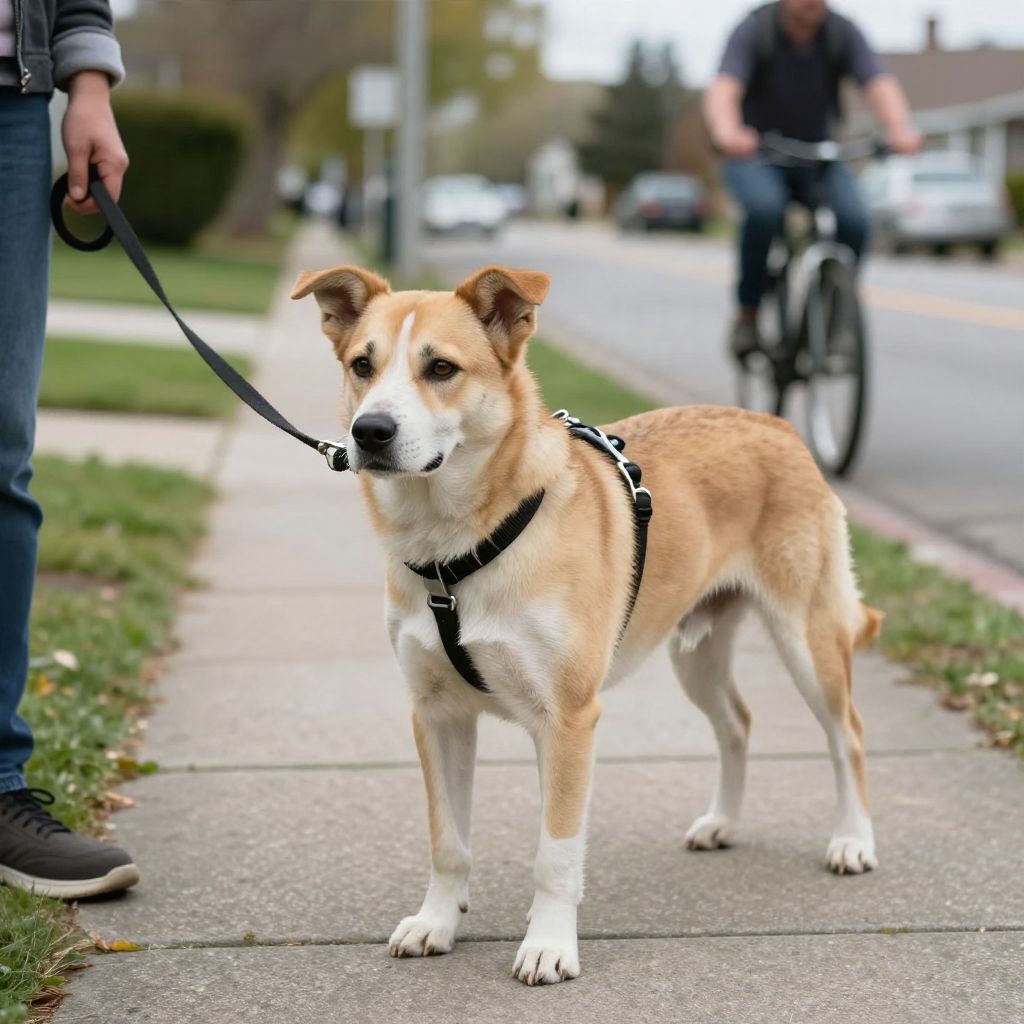
If you’ve wondered, “What is a reactive dog?” the short answer is a dog that overreacts to certain triggers, such as other dogs, people, noises, or movement. The reaction can look like barking, lunging, growling, freezing, or trying to escape.
Reactivity is usually about stress, fear, frustration, or over-arousal rather than “bad behavior.” Understanding the cause helps you choose safer management and more effective training.
What Is A Reactive Dog?
A reactive dog is one that responds to a trigger with an outsized emotional or physical reaction. Common signs include barking, lunging, whining, stiff body language, staring, or snapping at the end of a leash. The reaction may happen because the dog feels threatened, frustrated, startled, or overwhelmed.
What reactivity can look like
Reactivity does not always mean aggression. Some reactive dogs are trying to create distance, while others are excited and unable to settle. The same dog may react differently depending on the situation, distance, leash tension, pain, or how predictable the trigger feels.
- Fear-based reactivity: the dog tries to make the scary thing go away.
- Frustration-based reactivity: the dog wants to reach the trigger but cannot.
- Over-arousal: the dog becomes too excited or overwhelmed to think clearly.
- Protective behavior: the dog may guard space, people, or resources.
How is reactivity different from aggression?
Reactivity and aggression can overlap, but they are not the same thing. A reactive dog may bark and lunge without wanting to bite, while an aggressive dog may use more direct threat or attack behavior. Because body language can change quickly, you should treat any escalating behavior seriously and prioritize safety.
Signs the situation may be more serious
- Hard staring with a stiff body
- Repeated lunging with intent to reach the trigger
- Snapping, air snapping, or biting
- Growling that escalates instead of settling
- Inability to recover after the trigger leaves
Why dogs become reactive
There is rarely one single cause. Reactivity often develops from a mix of genetics, early social experiences, training history, and life events. Some dogs are naturally more sensitive, while others become reactive after repeated stressful encounters, poor socialization, pain, or a frightening incident.
Common contributing factors
- Limited positive exposure to people, dogs, sounds, or places during puppyhood
- Leash tension and feeling trapped
- Repeated close encounters that overwhelm the dog
- Pain, illness, or discomfort
- Fear after a traumatic event
- Frustration from being unable to greet or move freely
What triggers reactive dogs?
Triggers vary by dog. Some react to unfamiliar dogs, children, bicycles, delivery trucks, visitors, or sudden noises. Others react only in specific places, at certain distances, or when they are tired, hungry, or already stressed.
Common trigger categories
- Other dogs on walks
- People approaching the home or yard
- Fast movement, such as runners or skateboards
- Loud or sudden sounds
- Handling, grooming, or veterinary procedures
- Resource guarding around food, toys, or resting spots
What should you do if your dog is reactive?
Start with management, not punishment. Your goal is to prevent rehearsals of the reactive behavior while you work on changing your dog’s emotional response. Calm, consistent handling is usually more effective and safer than trying to “correct” the reaction.
- Increase distance from triggers before your dog goes over threshold.
- Use a secure leash, harness, or barrier as appropriate.
- Reward calm behavior with treats, praise, or access to a preferred activity.
- Keep sessions short and predictable.
- Track patterns so you can identify what sets your dog off.
Helpful management tools
- A front-clip harness or well-fitted harness for safer walks
- Visual barriers like frosted windows or covered crates when needed
- Baby gates or closed doors to reduce household triggers
- Pre-planned walking routes with more space and fewer surprises
Training a reactive dog safely
Reward-based training is the most humane and practical approach for most reactive dogs. The aim is to help your dog notice a trigger and then choose a calmer response. This often involves counterconditioning, desensitization, and teaching alternative behaviors.
Common training goals
- Looking at the trigger and then back at you
- Turning away from the trigger on cue
- Moving behind you or to a safe spot
- Relaxing on a mat or settle cue
- Walking past triggers at a comfortable distance
Training mistakes to avoid
- Punishing barking or growling
- Forcing close contact with the trigger
- Using equipment or methods that create fear
- Expecting quick progress in busy environments
- Ignoring pain or medical issues that may be driving behavior
When to involve a veterinarian or behavior professional
If your dog’s reactivity is new, worsening, or severe, a veterinary exam is important. Pain, skin problems, ear disease, vision changes, orthopedic issues, and other medical concerns can make dogs more reactive. A certified trainer or veterinary behaviorist can also help you build a plan tailored to your dog.
Seek professional help sooner if you notice
- Sudden behavior change
- Growling, snapping, or biting
- Reactivity around handling, touch, or grooming
- Signs of pain such as limping, stiffness, or reluctance to move
- Behavior that makes walks or home life unsafe
Is reactivity more common in some dogs?
Any dog can become reactive, but individual temperament, early experiences, and health matter more than breed labels alone. Some dogs may be more alert, sensitive, or energetic by nature, yet that does not guarantee reactivity. Each dog should be assessed as an individual.
Age can matter too. Puppies may react because they are under-socialized or overwhelmed, while adult and senior dogs may become reactive if they are in pain, anxious, or losing sensory ability such as hearing or vision.
How to help your dog feel safer day to day
Daily routines that lower stress can make a real difference. Predictability, enough rest, and controlled exposure to triggers often help reactive dogs cope better while training progresses.
- Give your dog enough sleep and quiet downtime.
- Use enrichment such as sniffing games, food puzzles, and scatter feeding when appropriate.
- Keep greetings calm and brief.
- Avoid crowded dog parks if they consistently overwhelm your dog.
- Watch for early warning signs so you can increase distance before a reaction starts.
When is reactivity an emergency?
Get urgent veterinary help if your dog suddenly becomes reactive and also seems ill, injured, weak, disoriented, or unable to settle. Emergency care is also warranted if your dog bites, cannot breathe normally, collapses, has seizures, or shows severe pain. Do not wait if safety is at immediate risk.
The bottom line
A reactive dog is not simply “naughty” or “dominant.” Reactivity usually means your dog is overwhelmed, scared, frustrated, or overexcited, and needs safer management plus thoughtful training. If the behavior is new, severe, or escalating, involve your veterinarian and a qualified behavior professional promptly.
If you want to keep learning, you may also find why dogs lick their paws useful for spotting stress or discomfort, and why some dogs seem “aggressive” helpful for understanding behavior labels more clearly.