
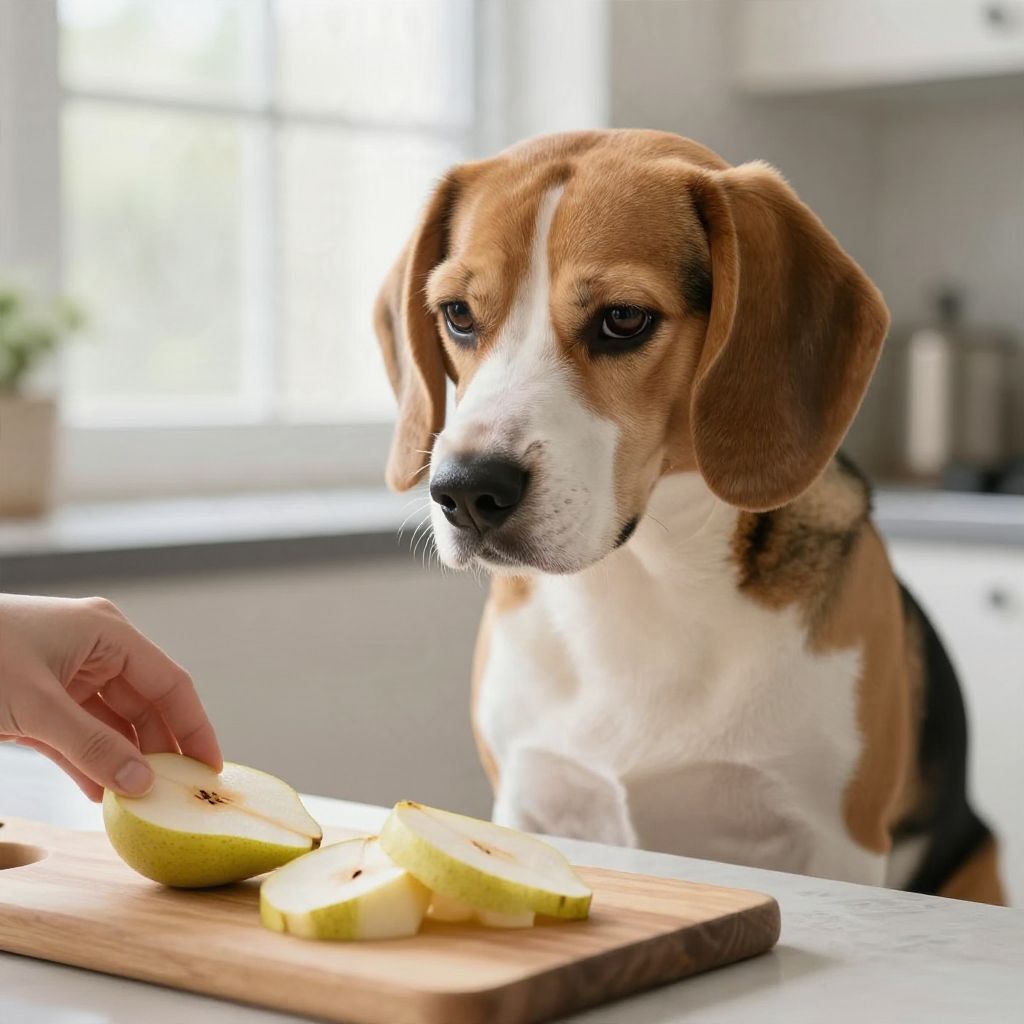
Can dog eat pear? Yes, most dogs can eat pear in small amounts as an occasional treat. Pear should be fresh, plain, and prepared safely, with the seeds, core, and stem removed.
Like any human food, pear can cause stomach upset if you give too much, and some dogs should avoid it because of health or chewing risks. The safest approach is to offer only a few bite-sized pieces and watch how your dog responds.
Can dog eat pear?
Yes, dogs can eat pear in moderation if it is ripe, washed, and cut into small pieces. Remove the seeds, core, and stem first, since these parts are not safe to feed. Pear should be an occasional snack, not a replacement for your dog’s regular balanced diet.
Why pear can be a safe treat for dogs
Pear is mostly water and contains natural fiber, which can make it a refreshing treat for many dogs. It also has some vitamins and plant nutrients, but those benefits are only useful when the fruit is fed in a small, controlled amount.
For most healthy adult dogs, a few pieces of pear are enough. The exact amount that works depends on your dog’s size, daily calorie needs, activity level, and whether they have any digestive or medical issues.
Best way to serve pear
- Wash the pear well.
- Remove the stem, core, and all seeds.
- Cut it into small, bite-sized pieces.
- Offer it plain, with no sugar, syrup, spices, or chocolate.
- Start with a tiny amount if your dog has never had pear before.
Parts of the pear your dog should not eat
Not every part of a pear is equally safe. The flesh is the part you want to share, while the seed-filled core and stem should be discarded.
Why the core and seeds are a concern
- Seeds can be a choking hazard, especially for small dogs.
- The core is tough and harder to digest.
- Large pieces can get stuck in the throat or cause gastrointestinal upset.
It is also best to avoid canned pears, pear pie filling, pear jam, and pear products with added sugar or artificial sweeteners. Some sweeteners are unsafe for dogs, and rich desserts can upset the stomach.
How much pear can you give a dog?
The right amount depends on your dog’s size and overall diet. In general, fruit treats should stay small and occasional so they do not crowd out nutritionally complete dog food.
- Small dogs: a few small pieces
- Medium dogs: a small handful of bite-sized pieces
- Large dogs: a slightly larger handful, still only as an occasional treat
If your dog is on a weight-management plan, has diabetes, or has a sensitive stomach, ask your veterinarian before adding pear or any new fruit. Even healthy dogs can get loose stools if they eat too much fruit at once.
Possible risks of feeding pear to dogs
Pear is not considered a toxic fruit for dogs, but there are still a few important risks to keep in mind. Most problems happen when the fruit is given in the wrong form or in too large an amount.
1. Stomach upset
Too much pear can lead to soft stool, gas, vomiting, or diarrhea. This is more likely if your dog is not used to fruit or has a sensitive digestive system.
2. Choking or swallowing problems
Whole slices, large chunks, or pear with the core still attached can be difficult to chew safely. Small dogs, puppies, and dogs that gulp food are at higher risk.
3. Too much sugar for some dogs
Pear contains natural sugar. That is usually not a problem in tiny amounts, but dogs with diabetes, obesity, or a history of pancreatitis may need stricter treat limits.
4. Seed and core hazards
Seeds and core pieces should not be treated as safe snacks. They can create a choking risk and may cause digestive trouble if swallowed.
Can puppies eat pear?
Puppies can usually eat a very small amount of pear if it is prepared safely, but their digestive systems are more delicate than adult dogs’. Introduce any new food slowly and keep portions tiny.
Because puppies are still learning to chew and swallow safely, cut pear into very small pieces and supervise closely. If your puppy has diarrhea, vomiting, or a sensitive stomach, skip the treat and ask your veterinarian for guidance.
Can senior dogs eat pear?
Many senior dogs can enjoy pear in moderation, especially if they like soft, easy-to-chew treats. However, older dogs may have dental disease, diabetes, kidney concerns, or other health conditions that change what is appropriate.
If your senior dog has trouble chewing, offer very small soft pieces or avoid fruit chunks altogether. When in doubt, choose a treat your veterinarian knows fits your dog’s health profile.
When pear may not be a good idea
Some dogs should not get pear, or should only have it after checking with a veterinarian. Individual health status matters more than breed alone.
- Dogs with diabetes
- Dogs with obesity or on a calorie-restricted diet
- Dogs with pancreatitis or a history of digestive flare-ups
- Dogs with a tendency to gulp food or choke easily
- Dogs with known food sensitivities
Breed can matter indirectly because some dogs are more likely to have certain health issues, but there is no single breed rule that applies to every dog. Your dog’s individual history is the best guide.
What to do if your dog ate pear the wrong way
If your dog ate a little plain pear flesh, they will often be fine. If they ate seeds, a large core piece, or a pear product with added ingredients, monitor them closely and contact your veterinarian if you are unsure what was consumed.
Call a veterinarian promptly if you notice
- Repeated vomiting
- Diarrhea that is severe, bloody, or lasting more than a day
- Abdominal pain or a swollen belly
- Choking, gagging, or trouble swallowing
- Lethargy, weakness, or refusal to eat
Seek urgent veterinary care immediately if your dog has trouble breathing, collapses, cannot keep water down, or seems unable to pass swallowed food. Those signs are emergencies and should not be watched at home.
How to introduce pear safely
If you want to see whether your dog tolerates pear, introduce it gradually. A slow approach helps you spot digestive sensitivity before it becomes a bigger problem.
- Offer one or two tiny pieces of plain pear flesh.
- Watch for vomiting, diarrhea, gas, itching, or unusual behavior over the next day.
- If your dog does well, you can occasionally offer a few more pieces.
- Keep treats to a small part of the day’s total food intake.
If your dog reacts poorly, stop feeding pear and avoid other new foods until their stomach settles. If symptoms are significant or persistent, contact your veterinarian.
Healthy treat tips for dog owners
Pear can fit into a balanced treat routine, but it works best when you keep the bigger picture in mind. Treats should support training or enrichment, not replace complete dog food.
- Use pear as an occasional reward, not a daily staple.
- Keep pieces small so your dog does not overeat.
- Mix fruit treats with lower-sugar options if your dog needs weight control.
- Always supervise when offering any new food.
- Check with your veterinarian if your dog has a medical condition.
Bottom line: can dog eat pear?
Yes, most dogs can eat pear safely in small amounts if you remove the seeds, core, and stem and serve it plain. Keep portions modest, avoid sugary pear products, and stop if your dog gets an upset stomach. When your dog has a health condition or eats the wrong part, ask your veterinarian for advice.
If you want to compare pear with another fruit, you may also find it helpful to read about can dogs have apples or revisit this guide on can dogs eat pears.