
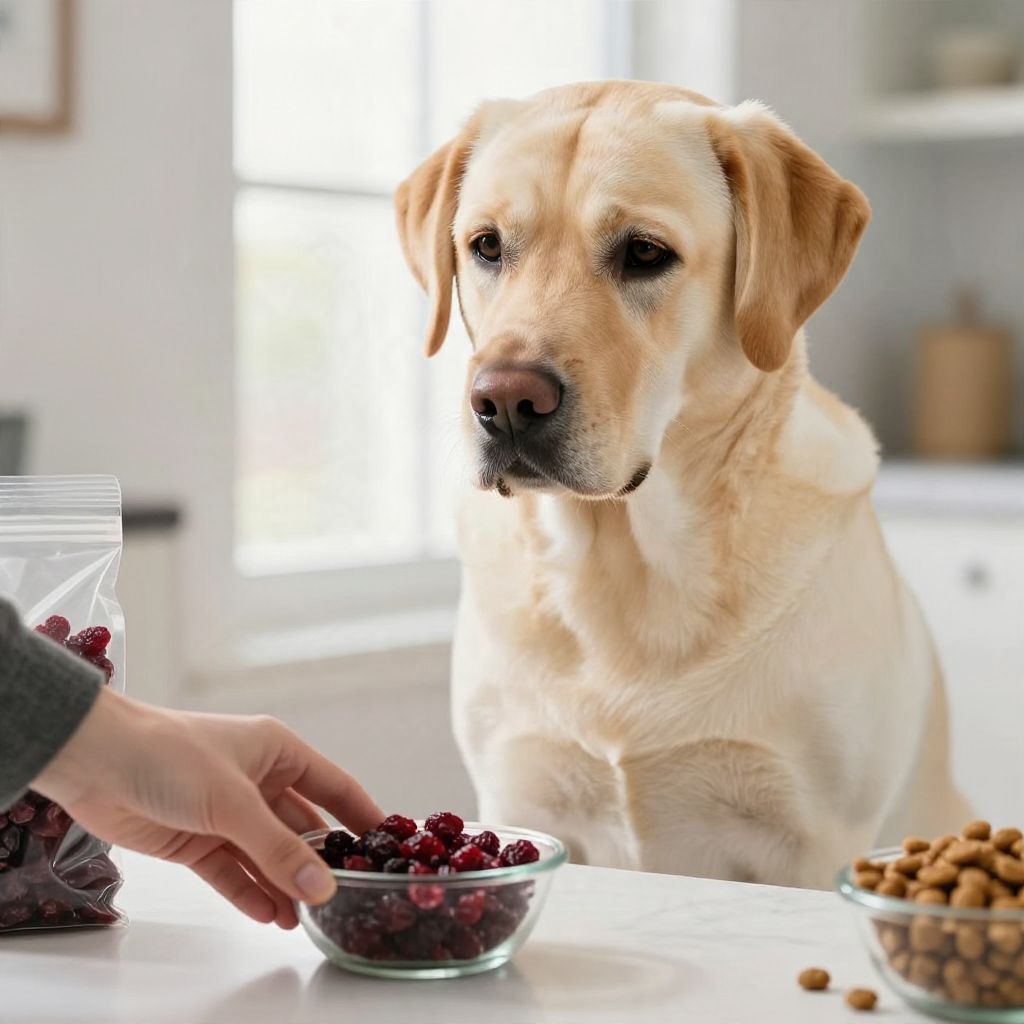
Can dogs eat Craisins? In most cases, no—Craisins are dried cranberries that are usually sweetened, and many brands may also contain added ingredients that are not ideal for dogs. A small accidental taste may not cause harm in a healthy dog, but they should not be a regular treat.
If your dog ate Craisins, the main concerns are stomach upset, excess sugar, and any added ingredients such as raisins or xylitol in mixed products. The right response depends on how much was eaten, your dog’s size, and whether your dog has health issues.
Can dogs eat Craisins?
Craisins are not a recommended dog snack. Plain cranberries are different from sweetened dried cranberries, which often contain added sugar and sometimes other ingredients that can upset your dog’s stomach. A few pieces are unlikely to be a major problem for many dogs, but they are still not a healthy treat choice.
Why Craisins are not a good treat for dogs
The biggest issue is that Craisins are processed for human taste, not canine nutrition. Dogs do not need sugary dried fruit, and the sticky texture can also make them easy to overeat.
Common concerns
- Added sugar: Can contribute to weight gain and is unnecessary in a dog’s diet.
- Stomach upset: Some dogs may vomit or have diarrhea after eating sweetened dried fruit.
- Added ingredients: Some packaged foods may include other ingredients that are unsafe for dogs.
- Dental issues: Sticky, sugary foods can cling to teeth and support plaque buildup.
What if your dog already ate Craisins?
If your dog ate a small amount of Craisins, monitor them closely for digestive upset. If they ate a large amount, or if the package contained anything beyond dried cranberries and sugar, contact your veterinarian or a pet poison helpline for advice.
Watch for these signs
- Vomiting
- Diarrhea
- Loss of appetite
- Drooling
- Abdominal discomfort
- Lethargy
These signs are often mild, but they matter more in puppies, toy breeds, senior dogs, and dogs with diabetes, pancreatitis, or a sensitive stomach.
When Craisins are an emergency
Seek urgent veterinary care if your dog has trouble breathing, repeated vomiting, severe weakness, collapse, a swollen abdomen, or signs of a serious allergic reaction. Also get help right away if the product may have contained raisins or another toxic ingredient.
Call a vet promptly if
- Your dog ate a large quantity
- Your dog is very small or medically fragile
- The ingredient list includes raisins, currants, or unknown additives
- Your dog has diabetes, pancreatitis, or another diet-sensitive condition
Are cranberries themselves safe for dogs?
Plain cranberries are generally safe in small amounts for many dogs, but they are tart and not every dog likes them. Fresh or cooked cranberries without sugar, syrup, or spices are a better choice than sweetened dried versions like Craisins.
Better ways to offer cranberry
- Use a tiny amount of plain, unsweetened cranberry as an occasional treat
- Choose dog treats made specifically for canine digestion
- Keep fruit treats to a small part of the overall diet
How much is too much?
There is no universal safe serving size for Craisins because products vary and dogs vary. Body size, age, health status, and what else is in the package all matter. A single piece may be inconsequential for one dog, while another may develop diarrhea from a few bites.
A practical rule is to treat Craisins as not for routine feeding. If you want to offer fruit, keep it plain, unsweetened, and minimal.
Special considerations for puppies, seniors, and dogs with health issues
Puppies
Puppies have smaller bodies and more sensitive digestive systems, so even small amounts of sugary food can cause loose stool. They also need balanced puppy nutrition, not human snacks.
Senior dogs
Older dogs may have dental disease, slower digestion, or chronic conditions that make sugary treats a poor choice. If your senior dog has a history of pancreatitis or weight gain, avoid Craisins altogether.
Dogs with diabetes or weight concerns
Sweetened dried fruit can complicate blood sugar control and calorie management. Ask your veterinarian before offering any fruit treat if your dog has diabetes, obesity, or another metabolic condition.
What to do instead of Craisins
If you want a safe treat, choose options that are simple and dog-friendly. The best treat is one that fits your dog’s diet and does not upset their stomach.
- Small pieces of plain cooked chicken or turkey, if your vet says it is appropriate
- Commercial dog treats made for your dog’s size and age
- Small amounts of dog-safe vegetables, such as plain green beans or carrots
- Plain fruit in tiny portions, only if your dog tolerates it well
How to keep your dog safe around human snacks
Prevention is easier than treatment. Store snack foods out of reach, avoid leaving bags on counters, and teach family members not to share human treats without checking first.
- Read ingredient labels before offering any packaged food.
- Keep fruit snacks and trail mixes away from dogs.
- Use measured portions instead of feeding from the bag.
- Ask your vet before introducing new foods if your dog has a medical condition.
Bottom line: should dogs eat Craisins?
Craisins are not a good treat for dogs. A small accidental amount may only cause mild upset in some dogs, but they are not a healthy or necessary snack. If your dog ate a lot, or if the product may contain raisins or other risky ingredients, contact your veterinarian for guidance.
If you want to compare other human foods for dogs, you may also find can dogs have crab and can dogs eat green grapes helpful for safer feeding decisions.