
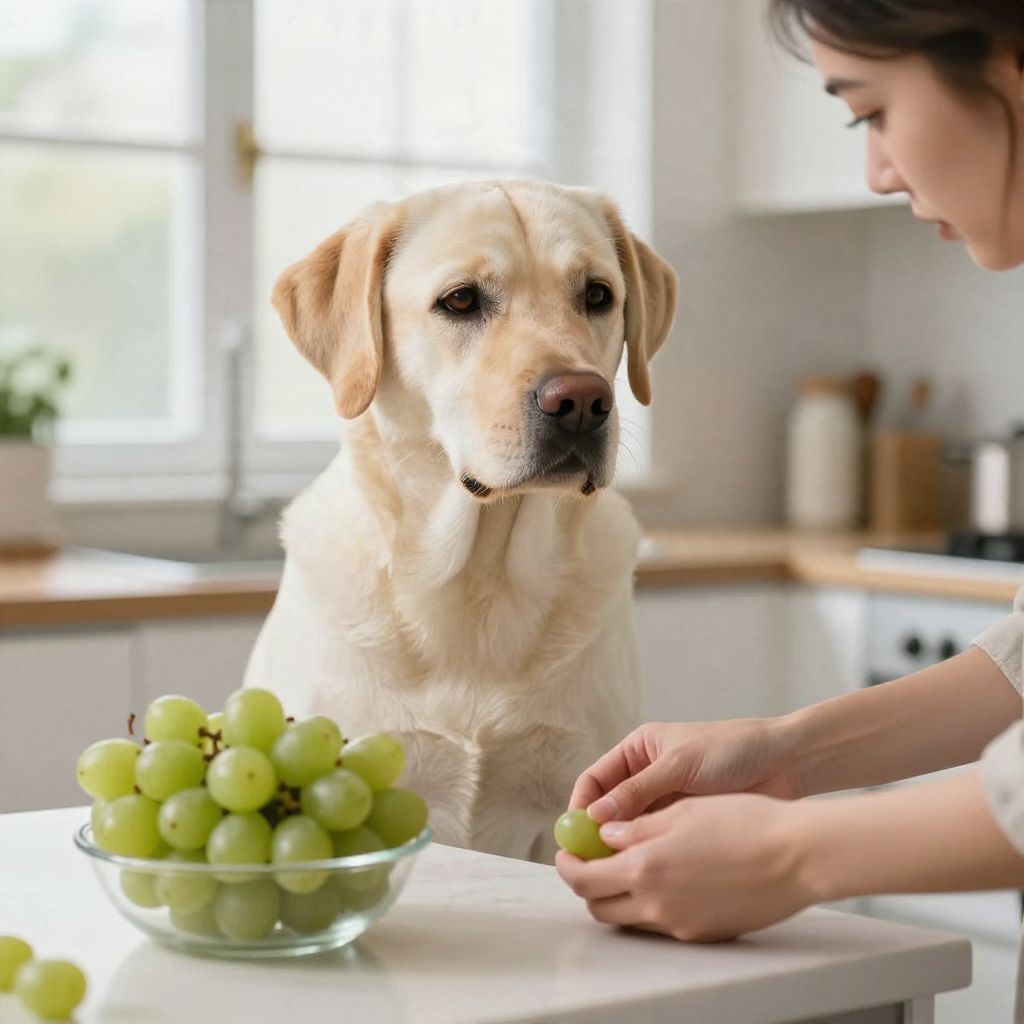
Can dogs eat green grapes? No—green grapes are unsafe for dogs, just like red, purple, and seedless grapes. Even a small amount can cause serious illness in some dogs, and there is no reliable “safe” number to feed.
If your dog ate green grapes, treat it as a potential emergency. Call your veterinarian or an animal poison helpline right away, especially if your dog is small, young, older, or already has kidney problems.
Can Dogs Eat Grapes Green?
No. Green grapes should not be given to dogs because grapes are considered toxic to dogs, and the risk is unpredictable. Some dogs may become very ill after eating only a few grapes, while others may show no immediate signs at first, which is why prompt veterinary advice matters.
Why Green Grapes Are Dangerous for Dogs
The exact toxic substance in grapes has not been fully identified, so there is no dependable way to know how much is too much for a specific dog. That uncertainty is the main reason grapes are treated as unsafe for all dogs, regardless of color, size, or whether they are fresh, frozen, or mixed into food.
Forms of grapes to avoid
- Fresh green grapes
- Frozen grapes
- Seedless grapes
- Grapes in fruit salads or desserts
- Foods containing grapes, such as baked goods or trail mixes
- Grape juice, puree, or dried grapes such as raisins
What to Do If Your Dog Ate Green Grapes
If your dog ate green grapes, contact a veterinarian immediately. Do not wait for symptoms to appear, because early treatment can make a big difference and signs may not show up right away.
- Remove any remaining grapes or grape-containing food.
- Call your veterinarian, emergency clinic, or poison helpline right away.
- Tell them your dog’s weight, how many grapes were eaten, and when it happened.
- Follow their instructions exactly.
- Watch your dog closely for any change in behavior or appetite.
Do not try to make your dog vomit unless a veterinarian specifically tells you to do so. Home remedies can delay proper care or cause additional harm.
Warning Signs That Need Urgent Veterinary Care
Some dogs may develop signs of poisoning or kidney injury after grape exposure. If you notice any of the following, seek urgent veterinary care right away.
- Vomiting
- Diarrhea
- Lethargy or unusual tiredness
- Loss of appetite
- Abdominal pain
- Increased thirst or urination
- Decreased urination or no urination
- Weakness, collapse, or trembling
If your dog is vomiting repeatedly, seems weak, or is not producing urine, treat it as an emergency.
Does the Risk Depend on Breed, Size, or Age?
Any dog can be affected, but the outcome can vary from dog to dog. Smaller dogs may be at greater risk from the same number of grapes simply because of their body size, and puppies, seniors, or dogs with existing health issues may have less reserve if they become sick.
Things that can affect the situation
- Your dog’s body weight
- How many grapes were eaten
- How long ago the exposure happened
- Whether the dog has kidney disease or another illness
- Whether the grapes were eaten alone or with other foods
- Your dog’s current hydration and overall health
Because the reaction is so unpredictable, it is safest to treat every grape ingestion as a concern, even if your dog seems normal at first.
Are Green Grapes Safer Than Other Grapes?
No. Green grapes are not safer than red or purple grapes. All grape varieties should be considered unsafe for dogs, and the same caution applies to raisins and foods made with grapes. Washing, peeling, or removing seeds does not make grapes safe.
What About Grape-Flavored Foods?
Grape-flavored products are not the same as real grapes, but they still are not appropriate treats for dogs. Some products may contain sugar, artificial sweeteners, alcohol, or other ingredients that can be harmful, so it is best to avoid sharing them.
Common human foods to check carefully
- Trail mix
- Fruitcake
- Breakfast bars
- Jams and jellies
- Bakery items with raisins or grapes
- Salads with grapes
Safe Treat Alternatives Instead of Grapes
If you want a fresh treat, choose dog-safe foods in small amounts and keep treats to a modest part of the daily diet. Safe options may include plain apple slices without seeds, blueberries, cucumber, or carrot pieces, depending on your dog’s chewing ability and any diet restrictions.
- Blueberries
- Apple slices without seeds or core
- Carrot sticks cut appropriately for your dog
- Cucumber slices
- Plain green beans
Introduce any new food slowly, and stop if your dog gets an upset stomach. If your dog has diabetes, pancreatitis, allergies, or another medical condition, ask your veterinarian before offering new treats.
How to Prevent Accidental Grape Exposure
Prevention matters because grapes are common in kitchens, lunchboxes, and snack bowls. A few simple habits can lower the risk of accidental ingestion.
- Keep grapes and raisins out of reach on counters and tables.
- Store fruit in closed containers or the refrigerator.
- Teach family members and guests not to share grapes with the dog.
- Clean up dropped fruit immediately.
- Use secure trash cans if grape scraps are thrown away.
- Supervise your dog around children’s snacks and picnic foods.
When to Call Your Veterinarian Even If Your Dog Seems Fine
Call your veterinarian as soon as you know your dog ate green grapes, even if there are no symptoms yet. Early guidance can help determine whether your dog needs monitoring, decontamination, or urgent evaluation.
You should especially call right away if your dog is very small, elderly, has a history of kidney disease, or may have eaten more than one grape. If you are unsure how many were eaten, it is still better to ask.
Bottom Line on Can Dogs Eat Grapes Green
Green grapes are not safe for dogs, and there is no reliable amount that can be considered harmless. If your dog eats even a small number, contact a veterinarian immediately and watch for vomiting, lethargy, or changes in urination.
If you want more dog food-safety guidance, you may also find these related articles helpful: can dogs have green grapes and how many grapes can a dog eat.