
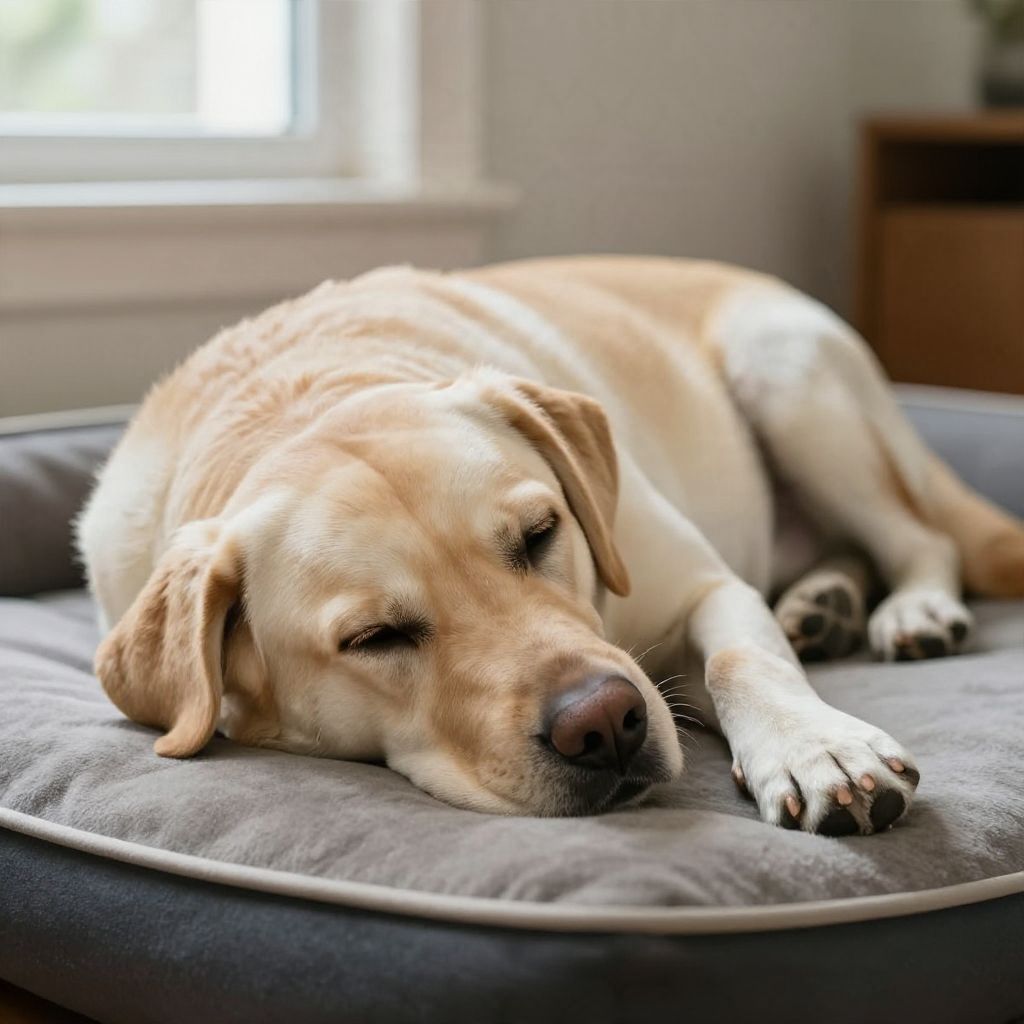
Can dogs sleep with their eyes open? Sometimes, yes. A dog may doze with partially open eyelids, especially during light sleep, dreaming, or when they’re not fully relaxed.
In many cases this is harmless. But if the eyes look dry, red, painful, cloudy, or the dog seems unwell, it’s worth speaking with a veterinarian.
Can dogs sleep with their eyes open?
Yes, some dogs can sleep with their eyes partly open or appear to doze that way. This is often normal and happens when the eyelids don’t fully close during light sleep. If the eyes are comfortable and the dog wakes normally, it is usually not an emergency.
Why a dog may sleep with eyes open
There are a few common reasons a dog may seem to sleep with open eyes, and most are not serious.
- Light sleep: Dogs cycle through different sleep stages, and during lighter sleep the eyelids may not fully close.
- Dreaming or REM sleep: Some dogs twitch, move their eyes, or keep the lids slightly open while dreaming.
- Breed anatomy: Dogs with prominent eyes, loose eyelids, or facial shapes that affect blinking may look like they sleep with their eyes open more often.
- Age-related changes: Older dogs may sleep more deeply in some moments and more lightly in others, which can make their eyes seem partly open.
- Individual variation: Just like people, some dogs simply rest with their eyelids less fully closed than others.
What matters most is whether the eyes stay moist, look comfortable, and function normally when the dog is awake.
When it is normal and when it is not
Not every open-looking eye during sleep means there is a problem. The key is to look at the whole dog, not just the eyelids.
Usually normal
- The dog wakes up easily and acts like themselves.
- The eyes are not red, swollen, or cloudy.
- There is no discharge, squinting, or pawing at the face.
- The dog is eating, drinking, and behaving normally.
Possible concern
- The eyes look dry, irritated, or sticky.
- The dog keeps one eye more open than the other.
- There is frequent blinking, squinting, or rubbing.
- The dog seems painful, lethargic, or unusually restless.
Eye problems that can look like sleeping with eyes open
Sometimes what looks like “sleeping with eyes open” is actually a sign of an eye or nerve issue. These problems should be checked by a veterinarian, especially if the change is new.
Dry eye
If a dog does not produce enough tears, the eyes may look exposed, dull, or irritated. Dry eye can cause discomfort, discharge, and long-term damage if untreated.
Facial nerve or eyelid issues
Some dogs may not blink or close their eyelids normally because of nerve dysfunction, injury, or an eyelid abnormality. This can leave the eye vulnerable to drying out.
Pain or illness
Dogs sometimes rest with their eyes partly open when they are uncomfortable, weak, or not fully resting well. That does not tell you the cause, but it can be a clue that something is off.
Eye injury or infection
Redness, discharge, cloudiness, or sensitivity to light can point to an injury, ulcer, or infection. These are not things to watch and wait on if symptoms are significant.
Red-flag signs that need veterinary care
Contact a veterinarian promptly if your dog’s eyes look abnormal, especially if the issue is new or getting worse. Seek urgent care the same day if you notice any of the following:
- Cloudiness or a blue, white, or gray film over the eye
- Squinting or keeping the eye closed because of pain
- Thick discharge, pus, or blood
- Marked redness or swelling around the eye
- Rubbing at the face or pawing at the eye repeatedly
- Unequal pupils or sudden vision changes
- Inability to fully close the eye while awake or asleep
- Lethargy, fever, head tilt, or loss of balance along with eye changes
If your dog seems to have sudden eye pain, trauma, or vision loss, do not wait for it to improve on its own.
What you can do at home
If your dog sometimes sleeps with eyes open but otherwise seems healthy, your main job is to monitor and support comfort. Keep the environment calm and avoid disturbing normal sleep.
- Watch whether the eyes look moist and comfortable when your dog is awake.
- Check for redness, discharge, cloudiness, or squinting.
- Note whether the behavior is occasional or happening more often.
- Make a short video if the eye position looks unusual, so you can show your veterinarian.
- Keep bedding clean and free of dust or debris that could irritate the eyes.
Do not use human eye drops or home remedies unless your veterinarian specifically tells you to. Some products can irritate the eye or make a problem worse.
How breed, age, and health can affect eyelid closure
Whether a dog appears to sleep with eyes open can vary by individual dog, and some physical traits make it more noticeable.
- Flat-faced dogs: Some brachycephalic dogs may have facial anatomy that makes eyelid closure look incomplete, though not every dog of these types will do this.
- Dogs with prominent eyes: Eyes that sit more forward may seem more exposed during sleep.
- Puppies: Young dogs can twitch, dream, and shift sleep stages often, which may make their eyes look partly open at times.
- Senior dogs: Older dogs may have more eye surface dryness or other age-related changes that deserve closer attention.
- Dogs with prior eye disease: A history of injury, surgery, or chronic eye problems can affect how fully the eyelids close.
These are tendencies, not guarantees. A dog’s behavior and eye health matter more than breed alone.
How to tell sleep from a problem
It can help to watch for the difference between normal sleep behavior and a possible medical issue.
- Normal sleep: relaxed body, slow breathing, occasional twitching, easy waking, no obvious discomfort
- Possible problem: tense face, repeated blinking, eye rubbing, discharge, redness, or reluctance to open the eye fully
If you are unsure, take a short video and contact your vet. A visual record can help them decide whether your dog needs an exam.
Common mistakes to avoid
When you notice your dog sleeping with eyes open, it is easy to overreact or overlook something important. These mistakes can delay proper care.
- Assuming it is always normal without checking for other symptoms
- Using leftover eye medication or human drops
- Waiting too long when the eye looks painful or cloudy
- Forcing the eyelids closed or handling the eye roughly
- Ignoring a change that is new for your dog
What a veterinarian may check
If you bring your dog in, the veterinarian may examine the eye surface, eyelids, tear production, and surrounding structures. They may also look for signs of infection, injury, or nerve problems.
Depending on what they find, they may recommend monitoring, prescription treatment, or referral to a veterinary ophthalmologist. The right next step depends on the cause, not just the appearance of the eye during sleep.
When to call your vet even if the eye seems fine
It is a good idea to call if the open-eye sleeping is new, happening more often, or paired with any change in behavior. You should also call if your dog has a history of eye disease, facial nerve issues, or recent trauma.
Early attention is especially important for dogs that cannot blink normally, because the eye can dry out quickly and become damaged.
Bottom line
Can dogs sleep with their eyes open? Yes, sometimes they can, and it is often harmless if the eyes look healthy and the dog acts normal. But if you see redness, cloudiness, discharge, pain, or trouble closing the eye, contact your veterinarian promptly.
If you want to learn more about canine sleep habits, you may also find how many hours a day a dog sleeps helpful, along with a deeper look at dogs sleeping with their eyes open.