
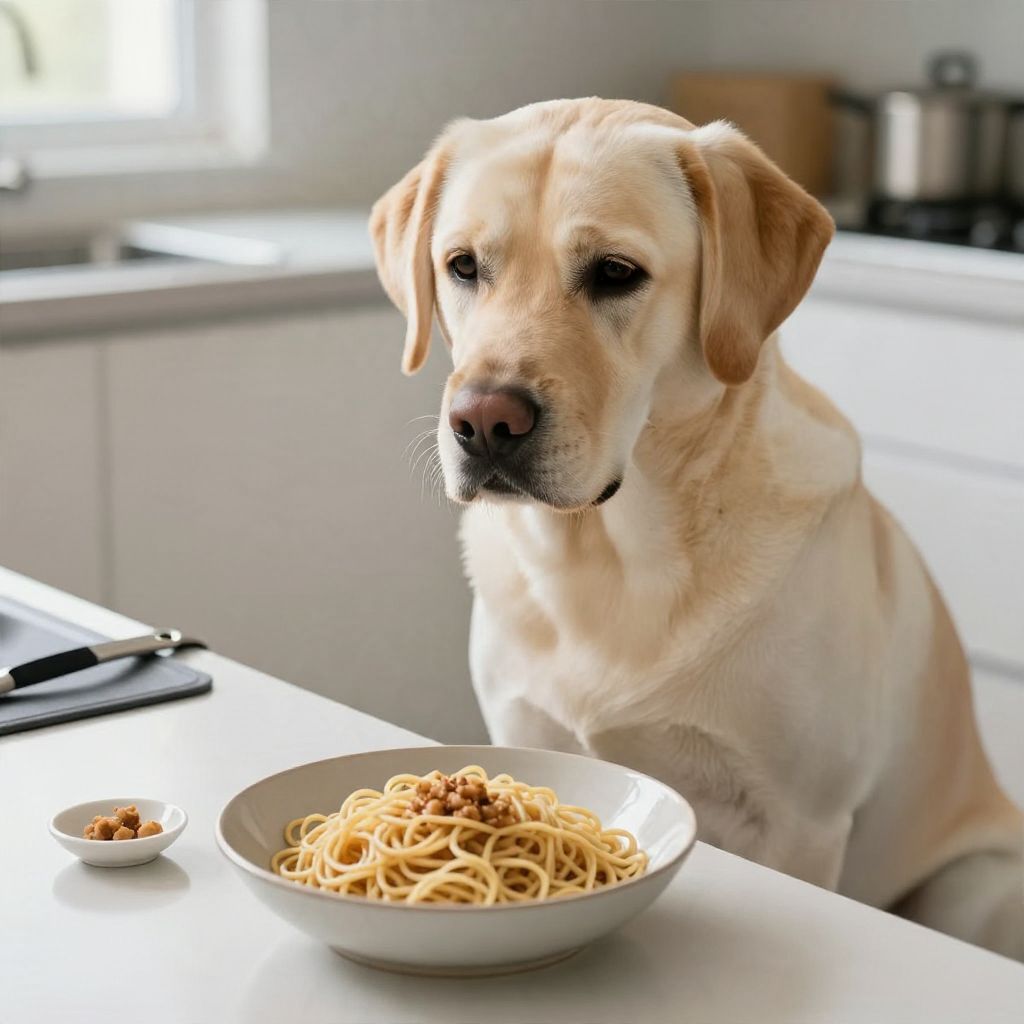
Can dogs have noodles? Sometimes, yes—but only in plain, small amounts and only if the noodles are cooked and unseasoned. Noodles are not a necessary part of a dog’s diet, and some preparations can upset your dog’s stomach or add unhealthy extras.
The bigger question is what kind of noodles you mean, how they’re cooked, and whether your dog has any health issues. Sauce, butter, garlic, onion, salt, and rich toppings can make a simple noodle dish unsafe.
Can Dogs Have Noodles?
Yes, dogs can usually eat plain, fully cooked noodles in small amounts as an occasional treat. They should not replace a balanced dog food, and they become risky when they contain seasoning, oil, cheese, onion, garlic, or heavy sauces. Dogs with sensitive stomachs, diabetes, or weight issues may need to avoid them.
When Noodles Are Safe for Dogs
Plain noodles are generally low-risk for healthy dogs when served sparingly. Think of them as a small extra, not a meal.
Safer noodle choices
- Plain cooked pasta with no sauce or seasoning
- Plain ramen-style noodles only if the seasoning packet is not used
- Simple rice noodles or egg noodles, cooked soft and plain
The safest version is boring: fully cooked, cool enough to eat, and served without salt, spices, butter, oil, or toppings. If you are unsure whether a dish contains onion or garlic powder, do not share it.
How to serve noodles safely
- Cook them until soft and easy to chew.
- Drain them well and let them cool.
- Offer a very small portion first.
- Watch your dog for stomach upset afterward.
Risks of Feeding Dogs Noodles
Noodles can be harmless in tiny amounts, but the way they are prepared often creates the real problem. The most common risks are digestive upset, extra calories, and toxic ingredients mixed into the dish.
1. Upset stomach
Some dogs handle plain noodles well, while others get gas, loose stool, or vomiting from unfamiliar foods or rich meals. This is more likely in dogs with sensitive digestion, puppies, or dogs that eat too fast.
2. Weight gain
Noodles are carbohydrate-heavy and can add calories quickly. If your dog is already overweight or on a weight-management plan, even small extras can work against that goal.
3. Dangerous ingredients in sauces
Many noodle dishes include ingredients that are not safe for dogs. Onion and garlic are especially concerning, including powders and seasonings often found in sauces, soups, and instant noodle packets.
- Onion
- Garlic
- Chives
- Large amounts of salt
- Butter, cream, or heavy cheese sauces
- Spicy seasonings
4. Choking or swallowing problems
Long, sticky, or clumped noodles can be hard for some dogs to manage, especially small dogs, brachycephalic breeds with short noses, or dogs that gulp food quickly. Cut noodles into shorter pieces if needed and supervise your dog while eating.
What Kind of Noodles Can Dogs Eat?
Different noodle types are not equally risky. The noodle itself usually matters less than the ingredients around it.
Plain pasta
Cooked pasta is usually the most common option people share with dogs. It should be plain and served in a small portion.
Egg noodles
Egg noodles are generally fine if they are plain and cooked through. Because they can be richer than simple pasta, keep the portion small.
Rice noodles
Rice noodles are often easy to digest in small amounts, but they still count as extra calories. Avoid flavored versions.
Instant noodles
Instant noodles are not a good choice if they come with a seasoning packet, broth mix, or flavor oil. The noodles themselves may be plain enough, but the packaged flavorings are the main concern.
Soupy noodle dishes
Broths and soups are tricky because they often contain salt, onion, garlic, or other seasonings. If you cannot confirm the ingredients, do not share them with your dog.
How Much Noodle Can a Dog Have?
The right amount depends on your dog’s size, age, activity level, and health. For most healthy dogs, noodles should be a tiny treat rather than a regular snack. A few plain pieces are usually enough.
Use this simple rule: if the noodles would make up a noticeable part of the meal, it is too much. Treats of any kind should stay a small part of your dog’s daily intake.
Factors that change the answer
- Small dogs need much less than large dogs.
- Puppies have more sensitive stomachs and need a nutrient-rich diet for growth.
- Senior dogs may have dental issues or medical conditions that affect digestion.
- Dogs with diabetes, pancreatitis, or obesity may need stricter limits or none at all.
When Noodles Are Not a Good Idea
Some dogs should avoid noodles altogether unless your veterinarian says otherwise. This is especially true if your dog has a medical condition that requires a tightly controlled diet.
Skip noodles if your dog has:
- Pancreatitis or a history of pancreatitis
- Diabetes
- Food allergies or repeated stomach upset
- Obesity or a weight-loss plan
- Kidney disease or another condition requiring dietary restrictions
If your dog is on a prescription diet, ask your veterinarian before offering any human food. Even small extras can interfere with the plan or make symptoms harder to manage.
Signs Your Dog May Not Tolerate Noodles Well
Most mild stomach upset passes on its own, but you should pay attention to how your dog reacts after eating noodles. Some signs suggest the food did not agree with them.
- Vomiting
- Diarrhea
- Gas or bloating
- Refusing food
- Abdominal discomfort
- Lethargy
If symptoms are mild and short-lived, monitor your dog and avoid giving more noodles. If symptoms are repeated, severe, or your dog seems unwell, contact your veterinarian.
Emergency Warning Signs After Eating Noodles
Some noodle-related problems need urgent veterinary care, especially if the dish contained unsafe ingredients or your dog is acting very sick. Do not wait if you notice red-flag symptoms.
- Repeated vomiting
- Bloody diarrhea or black stool
- Swollen or painful abdomen
- Difficulty breathing
- Collapse, weakness, or severe lethargy
- Seizures
- Known ingestion of onion, garlic, or a large amount of seasoning
If your dog ate a noodle dish with onion, garlic, or a large amount of rich sauce, call your veterinarian or an emergency clinic right away. Do not try to “wait and see” if your dog is showing concerning signs.
How to Offer Noodles More Safely
If you want to share noodles occasionally, keep the process simple and controlled. The goal is to avoid ingredients that can upset your dog or add unnecessary calories.
- Choose plain, cooked noodles.
- Make sure there is no sauce, seasoning, or broth.
- Serve a very small portion.
- Use noodles only as an occasional treat.
- Balance the rest of the day’s calories by reducing other treats if needed.
For training, many dogs do better with small, low-calorie treats that are easier to portion than noodles. If you use noodles at all, keep them as an occasional novelty rather than a routine reward.
Common Mistakes to Avoid
Most noodle problems happen because the dish was meant for people, not dogs. A few simple mistakes can turn a harmless snack into a health issue.
- Giving noodles with sauce, butter, or cheese
- Sharing instant noodle seasoning packets
- Offering a large bowl instead of a small taste
- Feeding noodles to a dog with digestive or metabolic disease
- Using noodles as a meal replacement
Another common mistake is assuming “plain” means safe even when the noodles were cooked in broth or mixed with leftovers. If the ingredients are unclear, do not share them.
What to Do If Your Dog Ate Unsafe Noodles
If your dog ate noodles with onion, garlic, heavy seasoning, or a very rich sauce, contact your veterinarian for advice. The exact response depends on what was eaten, how much, and your dog’s size and health.
Have the package or recipe details ready if possible. That information helps your veterinarian judge the risk more quickly.
The Bottom Line
Can dogs have noodles? Yes, but only plain, cooked noodles in small amounts and only as an occasional treat. Avoid sauces, seasoning, onion, garlic, and rich toppings, and skip noodles entirely if your dog has a condition that makes human food risky.
If you want more guidance on simple human foods for dogs, you may also find these helpful: can dogs eat pasta and can dogs eat rice cakes.