
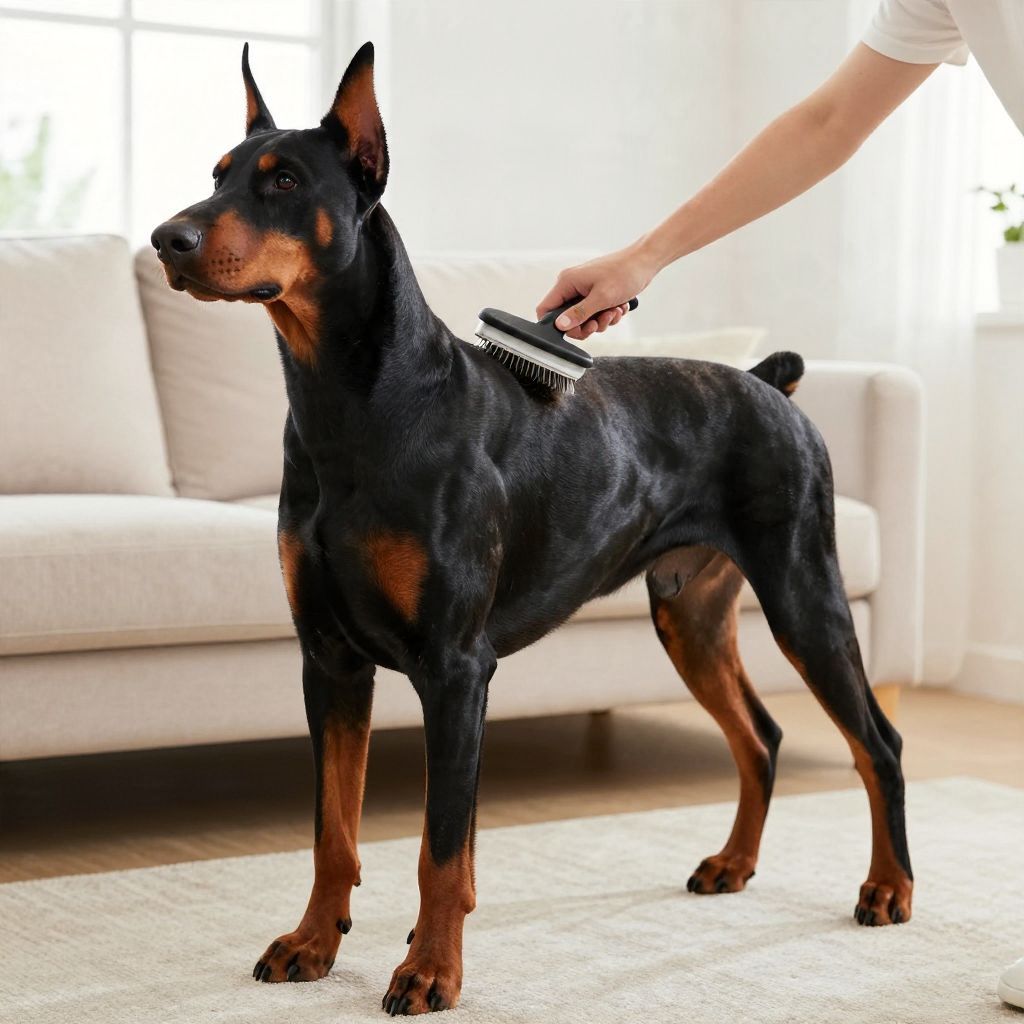
Do Dobermans shed a lot? They do shed, but usually not as much as heavy-shedding breeds with thick undercoats. Most Dobermans have a short, smooth coat that sheds year-round in small amounts, with more noticeable shedding during seasonal changes.
If you are seeing extra hair around your home, grooming habits, skin health, diet, and stress can all play a role. The good news is that shedding is usually manageable with simple care and a watchful eye for skin problems.
Do Dobermans Shed A Lot?
Dobermans are generally considered moderate shedders. Their short coat does not trap as much loose hair as longer or double-coated breeds, but they still shed consistently and may shed more during seasonal coat changes, stress, or skin irritation.
What Doberman Shedding Usually Looks Like
Because Dobermans have a short, sleek coat, the hair they shed is often easy to notice on furniture, clothing, and floors. The hairs may be short and stiff, so even modest shedding can seem more obvious than you expect.
Typical shedding patterns
- Light, regular shedding throughout the year
- More shedding during spring and fall in many dogs
- Noticeable loose hair after brushing or petting
- Extra shedding if the coat or skin is dry, irritated, or unhealthy
Individual dogs vary. Age, health, hormones, stress levels, and grooming routines can all affect how much hair you see.
Why Dobermans Shed
Shedding is normal for all dogs with hair coats. Old or damaged hairs fall out as new hairs grow in, and the process can change with the seasons or with changes in the dog’s body and environment.
Common reasons shedding increases
- Seasonal coat change
- Dry skin from low humidity or frequent bathing
- Poor grooming or buildup of loose hair
- Diet that does not fully support skin and coat health
- Allergies or skin irritation
- Parasites such as fleas or mites
- Stress or changes in routine
- Underlying medical issues
If shedding suddenly becomes much heavier than usual, it is worth paying attention to the whole picture, not just the hair loss itself.
How to Manage Doberman Shedding
You cannot stop shedding completely, but you can reduce loose hair and keep your Doberman’s coat healthier. A simple routine usually works better than occasional intensive grooming.
1. Brush regularly
Use a soft-bristle brush, grooming mitt, or rubber curry-style tool that suits a short coat. Brushing once or twice a week is often enough for many Dobermans, though some may benefit from more frequent grooming during heavier shedding periods.
2. Bathe only when needed
Bathing too often can dry out the skin and make shedding worse. Use a dog-safe shampoo and rinse thoroughly so no residue remains on the skin.
3. Feed a balanced diet
Skin and coat health depend on complete nutrition. If you are changing foods, do so gradually and choose a high-quality diet appropriate for your dog’s age and activity level.
4. Keep up with parasite prevention
Fleas and other parasites can trigger itching, scratching, and hair loss. Your veterinarian can help you choose a safe prevention plan for your dog’s needs and local risks.
5. Support skin health
Dry indoor air, harsh shampoos, and frequent washing can all affect the coat. If your home is very dry, a humidifier may help some dogs, and gentle grooming is usually better than overbathing.
6. Reduce stress
Stress can sometimes contribute to increased shedding. A predictable routine, enough exercise, mental enrichment, and calm handling can all support overall health.
When Shedding Is Normal vs. When It May Be a Problem
Normal shedding is usually even, gradual, and not accompanied by major skin changes. Problem shedding often comes with itching, redness, bald patches, odor, or changes in behavior.
Watch for these warning signs
- Sudden or severe hair loss
- Bald spots or patchy thinning
- Red, flaky, crusty, or greasy skin
- Constant scratching, licking, or chewing
- Scabs, sores, or a strong skin odor
- Changes in appetite, energy, or weight
- Signs of pain when touched or groomed
If you notice these signs, schedule a veterinary visit. Skin problems can be caused by allergies, infections, parasites, hormonal disease, or other issues that need proper diagnosis.
Do Doberman Puppies Shed Too?
Doberman puppies do shed, but their coat changes can be different from adult shedding. As puppies grow, coat texture and density may change, and you may notice more loose hair during coat transitions.
Keep puppy grooming positive and brief. Short sessions with treats and calm praise help your puppy learn that brushing is normal and safe.
Puppy grooming tips
- Introduce the brush slowly
- Use gentle handling and short sessions
- Check the skin for irritation after grooming
- Make sure bathing products are dog-safe and mild
Can Diet Affect Doberman Shedding?
Yes, diet can affect coat quality, though food is not the only factor. A balanced diet supports healthy skin, while nutritional gaps or abrupt food changes may contribute to a dull coat or increased shedding.
Do not rely on supplements as a fix unless your veterinarian recommends them. Some dogs need dietary changes, while others need medical evaluation for allergies or another underlying cause.
What to look for in a diet
- Appropriate nutrition for your dog’s life stage
- Consistent feeding routine
- Gradual transitions between foods
- Veterinary guidance if your dog has skin issues or food sensitivities
Common Mistakes That Can Make Shedding Seem Worse
Sometimes the coat is not the main problem; the grooming routine is. A few common mistakes can make shedding more noticeable or make the skin less healthy.
- Bathing too often or using harsh shampoo
- Skipping regular brushing
- Ignoring itching or skin redness
- Changing foods too quickly
- Not using flea and tick prevention when recommended
- Assuming all shedding is “normal” even when there are other symptoms
When to Call the Veterinarian
Contact your veterinarian if shedding is sudden, extreme, or paired with skin changes. A vet can help determine whether the cause is simple coat loss or a condition that needs treatment.
Seek urgent veterinary care if your Doberman has severe swelling, open wounds, widespread hives, trouble breathing, collapse, or sudden intense itching with distress. These can be signs of a serious reaction or other emergency.
How to Keep Your Home Cleaner During Shedding
Even moderate shedding can be noticeable indoors. A few practical habits can make cleanup easier without overgrooming your dog.
- Brush your Doberman on a regular schedule.
- Use washable bedding and clean it often.
- Vacuum furniture and floors consistently.
- Keep a lint roller or pet hair remover handy.
- Wipe down surfaces where your dog rests most often.
These steps will not stop shedding, but they can keep loose hair under control and make daily life easier.
The Bottom Line
Dobermans do shed, but usually not excessively compared with many other breeds. With regular brushing, good nutrition, sensible bathing, and attention to skin health, you can usually keep shedding manageable. If hair loss becomes sudden, patchy, or uncomfortable for your dog, get veterinary help.
If you want to learn more about related Doberman care, you may also find how long Dobermans live and why your dog may be shedding so much helpful.