
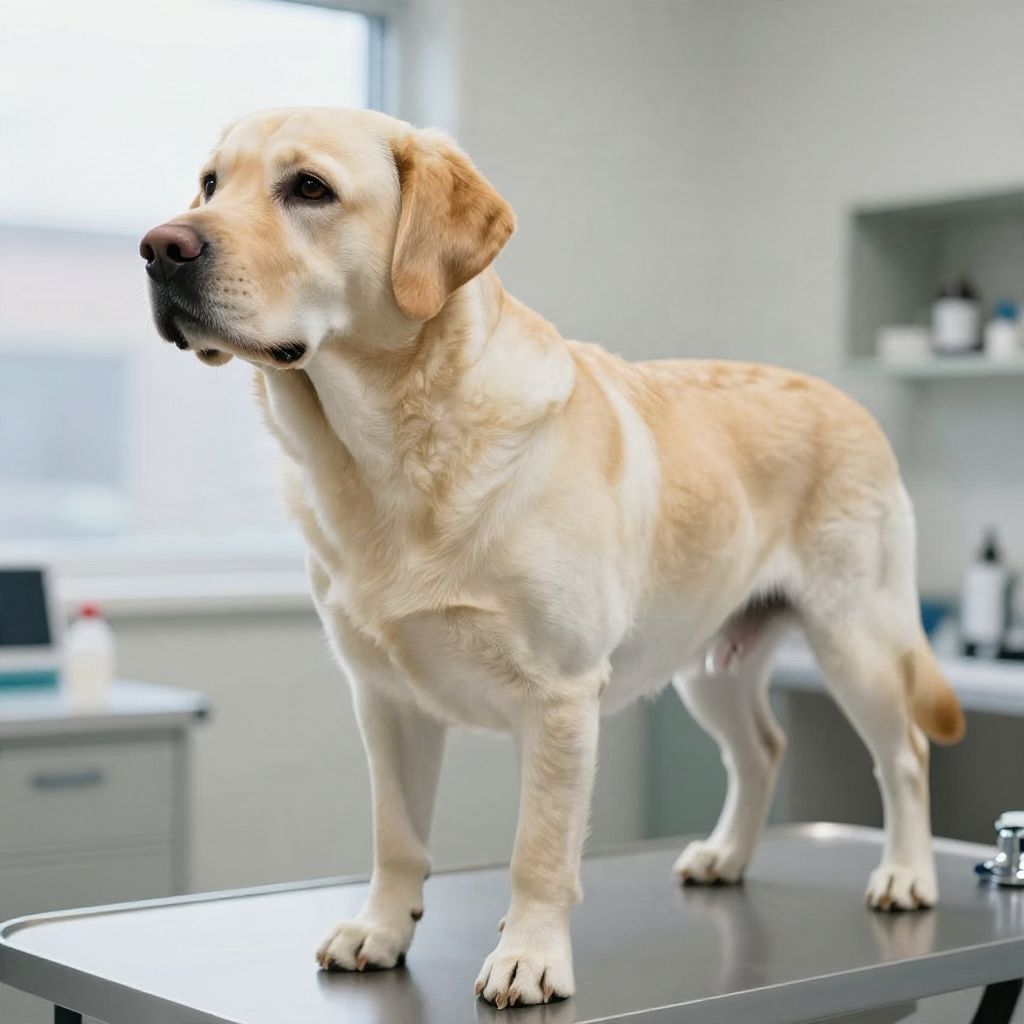
If you’ve noticed a small bump in your dog’s neck and wondered, “Do dogs have Adams apples?” the short answer is yes, dogs do have a larynx, and some dogs have a visible bump there. In many dogs, that structure is normal and simply reflects their anatomy.
Most of the time, a noticeable throat bump is harmless, but a new, growing, painful, or hard swelling should be checked by a veterinarian. Because the neck contains the airway, thyroid, lymph nodes, and other important structures, it’s worth paying attention to changes.
Do dogs have Adams apples?
Yes. Dogs have a larynx, which sits in the throat and helps protect the airway and produce sound. In some dogs, the laryngeal area can look like an Adam’s apple, especially in lean dogs or certain head and neck positions. A visible bump is often normal, but sudden changes are not.
What you’re actually seeing on your dog’s neck
What people call a dog’s “Adam’s apple” is usually the larynx or nearby throat structures. Depending on your dog’s body condition, coat, and posture, it may be easy to see or barely noticeable.
Normal reasons it may stand out
- Your dog is thin or has a narrow neck.
- The head is tilted up or the neck is stretched.
- The coat is short, making the throat area easier to see.
- Your dog is panting, swallowing, or vocalizing, which can make the throat move.
Why it varies from dog to dog
There is no single “normal” look for every dog. Breed type, size, age, muscle mass, and body fat all affect how visible the throat area appears. A bump that is easy to see in one dog may be hidden in another.
When a throat bump is normal versus concerning
A stable, painless bump that has been there for a long time may simply be part of your dog’s anatomy. A new lump, a lump that changes quickly, or any swelling with other symptoms deserves veterinary attention.
Signs that are more likely to be normal
- The bump has been present for a long time without change.
- Your dog eats, drinks, breathes, and acts normally.
- The area is not painful when touched.
- There is no redness, heat, or drainage.
Warning signs to watch for
- Rapid growth or sudden appearance
- Pain or sensitivity when the neck is touched
- Coughing, gagging, or repeated swallowing
- Hoarse bark or voice change
- Difficulty breathing or noisy breathing
- Problems eating or drinking
- Lethargy, fever, or reduced appetite
Seek urgent veterinary care right away if your dog has trouble breathing, blue or pale gums, collapse, severe swelling, or is unable to swallow. Neck swelling can affect the airway and should not be watched at home if breathing is compromised.
Common causes of a visible or enlarged throat area
Not every neck bump is the larynx itself. Several structures sit in the throat and upper neck, and different problems can look similar from the outside.
Normal anatomy
The larynx, trachea, and surrounding cartilage can create a visible contour, especially in slim dogs. This is often the simplest explanation when the area is unchanged and your dog feels well.
Swollen lymph nodes
Lymph nodes can enlarge with infection, inflammation, immune conditions, or other illness. They are not usually visible in healthy dogs, so a new lump in the neck should be examined.
Thyroid or salivary gland issues
Problems with the thyroid gland or salivary glands can create swelling in the neck. These conditions need a veterinary exam because they are not possible to diagnose accurately by appearance alone.
Injury or irritation
Trauma, rough play, collar pressure, or something stuck in the throat can cause swelling or discomfort. If your dog has recently coughed, choked, or pulled hard on a collar, mention that to your vet.
Growths or masses
Benign or cancerous masses can occur anywhere in the neck. A lump that is firm, fixed, enlarging, or associated with weight loss or swallowing trouble should be evaluated promptly.
Can dogs get the same kind of Adam’s apple as people?
Not exactly. Humans have a prominent thyroid cartilage that is often called an Adam’s apple, and it becomes more noticeable in some people after puberty. Dogs also have laryngeal cartilage, but the shape and visibility differ. In dogs, the throat bump is usually just one part of normal neck anatomy.
How to check your dog safely at home
You can do a gentle visual and hands-on check, but avoid pressing hard or trying to “move” the lump. The goal is to notice changes, not to diagnose the cause yourself.
- Look at the throat area in good light.
- Compare both sides of the neck for symmetry.
- Gently feel for heat, pain, or firmness.
- Note whether the bump moves when your dog swallows.
- Watch for coughing, gagging, or noisy breathing.
If your dog resists being touched, seems uncomfortable, or the area feels abnormal, stop the exam and contact your veterinarian.
Why neck lumps should not be ignored
Because the neck contains the airway and major blood vessels, even a small-looking issue can matter. Some problems are mild and temporary, but others can worsen quickly or signal a more serious condition.
Do not wait if you notice these emergency signs
- Labored breathing or open-mouth breathing at rest
- Blue, gray, or very pale gums
- Sudden collapse or extreme weakness
- Choking, repeated gagging, or inability to swallow
- Fast-growing swelling in the neck or throat
What your veterinarian may do
Your vet will look at the size, location, and feel of the swelling and ask about your dog’s history. They may recommend tests based on the exam findings and your dog’s symptoms.
Possible next steps
- Physical and oral exam
- Palpation of the neck and lymph nodes
- Bloodwork if illness is suspected
- Imaging such as X-rays or ultrasound
- Needle sampling of a lump if appropriate
The right test depends on what your vet finds. A visible throat bump alone does not tell you whether the cause is normal anatomy, inflammation, or something more serious.
How age, size, and breed can affect what you see
Body shape matters. Lean dogs and dogs with short coats may show the throat area more clearly, while heavier dogs may hide it under soft tissue.
Puppies
Puppies have smaller, more delicate neck structures, and their bodies change quickly as they grow. A bump that seems new in a puppy should be checked sooner rather than later, especially if it affects swallowing or breathing.
Adult dogs
In adult dogs, a stable visible laryngeal area may simply be normal. Still, any change from your dog’s usual appearance deserves attention.
Senior dogs
Older dogs are more likely to develop lumps, gland changes, or chronic airway issues. If a senior dog has a new throat bump, coughing, or voice changes, it is wise to schedule a veterinary exam promptly.
How to keep the neck area safe
You cannot prevent every throat problem, but you can reduce avoidable irritation and catch changes early.
- Use a well-fitted harness if your dog pulls on walks.
- Avoid rough handling of the neck area.
- Check for coughing, gagging, or voice changes after play.
- Monitor any bump you already know about for size or texture changes.
- Keep routine veterinary visits so subtle changes are found earlier.
Common mistakes to avoid
One of the biggest mistakes is assuming every neck bump is “just an Adam’s apple.” Another is waiting too long because your dog is still eating or acting mostly normal.
- Do not squeeze, massage, or poke the lump repeatedly.
- Do not give human medicines unless your vet specifically instructs you to do so.
- Do not ignore breathing changes, even if they seem mild at first.
- Do not assume a lump is harmless because it is not painful.
Bottom line
Yes, dogs have the throat structures people often refer to as an Adam’s apple, and in many dogs that visible bump is normal anatomy. What matters most is whether it is new, changing, painful, or linked to coughing, swallowing trouble, or breathing problems. If you are unsure, have your veterinarian examine it.
If you want to learn more about related anatomy, you may also find do dogs have tonsils? helpful, along with do dogs have knees? for a closer look at other common dog body questions.