
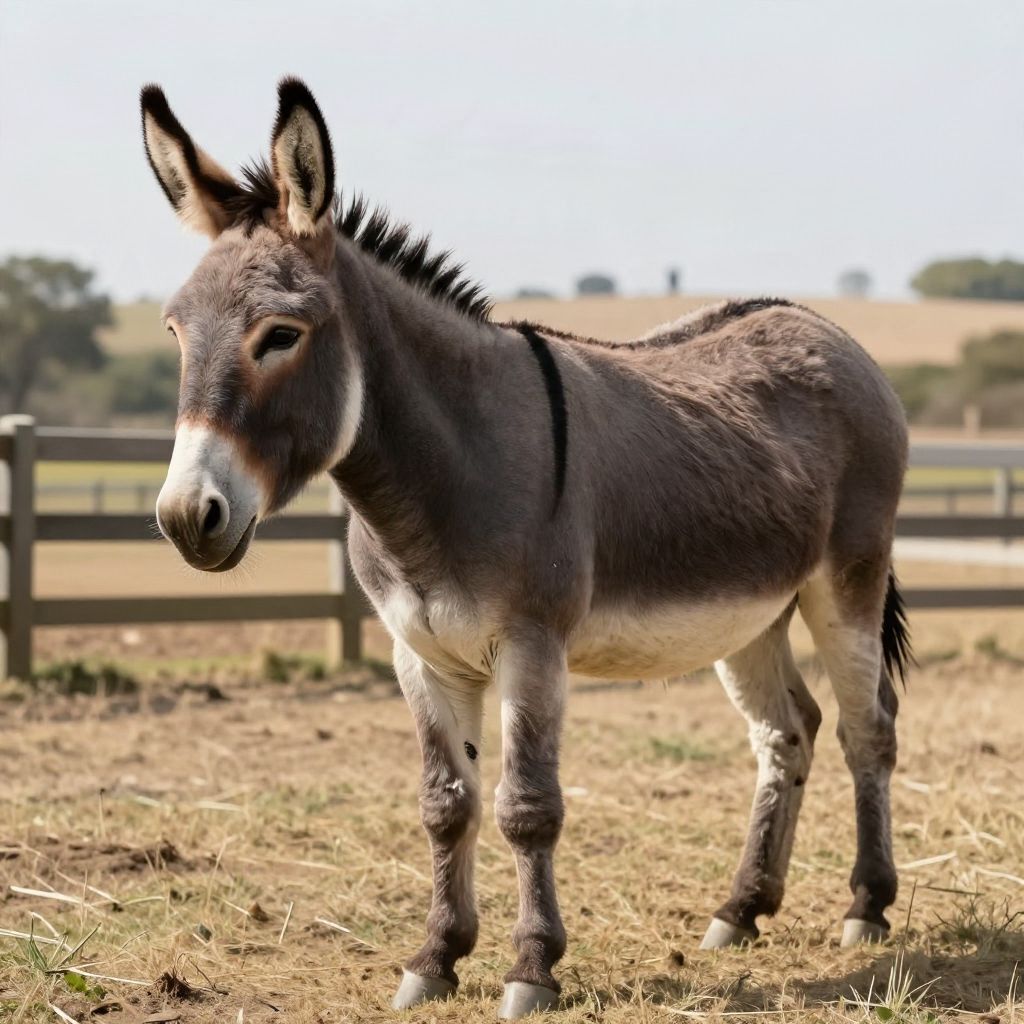
Do donkeys have a cross on their back, and does that matter for your dog? The short answer is that the “cross” is a natural coat marking in some donkeys, not a sign of illness or a trait that affects dogs directly.
If you’re asking because your dog is reacting to a donkey, the main concerns are safety, supervision, and calm introductions. Dogs may bark, chase, or fixate on livestock, so it helps to know how to manage the encounter properly.
Do Donkeys Have A Cross On Their Back?
Some donkeys have a dark dorsal stripe and shoulder stripe that form a cross-like marking, but not all do. It is a normal coat pattern, not a health problem, and it does not mean a donkey is friendlier, safer, or more dangerous around dogs.
What the marking means for your dog
The cross on a donkey’s back does not change how you should handle dog-donkey interactions. Your dog’s behavior depends far more on training, prey drive, socialization, fear level, and the donkey’s own temperament.
In practical terms, treat every donkey as an individual. A calm, well-managed donkey may tolerate a dog nearby, while another may kick, pin its ears, or charge if it feels threatened.
Why dogs may react to donkeys
- Novelty: The shape, smell, and sounds may be unfamiliar.
- Movement: Sudden motion can trigger chasing or barking.
- Guarding instinct: Some dogs become protective around livestock or property.
- Fear: A nervous dog may lunge, freeze, or hide.
How to introduce your dog to a donkey safely
If your dog will be near donkeys, the goal is controlled exposure, not forced interaction. Keep your dog on leash unless a qualified professional has advised otherwise and the setting is secure.
- Start at a distance where your dog can notice the donkey but still remain calm.
- Reward relaxed behavior with praise or small treats.
- Move closer only if your dog stays loose, quiet, and responsive.
- End the session before your dog becomes overly excited or stressed.
Do not let your dog rush up to sniff a donkey. Even a calm donkey can kick or strike if startled, and a dog may interpret that as play or escalate the situation.
Signs your dog is too close or too stressed
- Hard staring or fixating
- Raised hackles
- Repeated barking or whining
- Pulling hard toward the donkey
- Tucked tail, crouching, or retreating
- Snapping, lunging, or inability to take treats
What to do if your dog chases livestock
If your dog has a history of chasing animals, assume the behavior can happen again. Prevention is much easier than trying to stop a chase in the moment.
- Use a secure leash, harness, or fenced area.
- Practice reliable recall in low-distraction settings first.
- Teach a strong “leave it” and “come” cue with rewards.
- Avoid off-leash access near farms unless it is clearly safe and permitted.
If your dog repeatedly fixates on livestock, a certified trainer or veterinary behaviorist can help you build a safer plan using reward-based training and management.
When the donkey’s behavior matters more than the marking
The presence of a cross-shaped marking tells you nothing about whether a donkey is safe around dogs. Watch body language instead.
Warning signs from the donkey
- Flattened ears
- Raised tail or tense posture
- Stomping
- Turning hindquarters toward the dog
- Charging, biting, or kicking
If you see any of these signs, increase distance immediately. Never assume your dog can “work it out” with the donkey.
Training tips for dogs living near donkeys
Dogs that live on farms or rural properties often need extra practice around livestock. Short, positive sessions work better than long or intense ones.
- Reward your dog for looking at the donkey and then looking back at you.
- Practice calm sits, downs, and loose-leash walking near the boundary.
- Use barriers, gates, and supervised routines to reduce opportunities for chasing.
- Give your dog enough exercise and enrichment so they are less likely to seek out the donkey for entertainment.
Remember that young dogs and high-energy breeds may need more structure, but any dog can learn safer habits with consistent training.
Common mistakes to avoid
Many problems happen because people underestimate how quickly a dog-donkey interaction can go wrong. Avoid these common mistakes:
- Letting a dog approach without permission or supervision
- Assuming a donkey with a “cross” is automatically gentle
- Using punishment when a dog barks or pulls
- Ignoring early stress signals
- Leaving a dog unattended near livestock
Reward-based training and good management are safer and more effective than intimidation or punishment.
When to call a veterinarian or trainer
Seek professional help if your dog shows intense fear, repeated aggression, or an inability to settle around donkeys. A veterinarian can also rule out pain or medical issues that may worsen reactivity.
Get urgent veterinary care if your dog is kicked, bitten, struck, or shows signs of injury such as limping, swelling, bleeding, trouble breathing, collapse, or severe pain. These are not situations to monitor at home.
Bottom line
Yes, some donkeys have a cross on their back, but it is just a natural marking. For your dog, the important issues are distance, supervision, and training. Keep interactions controlled, read both animals’ body language, and get professional help if your dog struggles to stay calm.
If you want more practical animal-care reading, you may also find this donkey marking guide helpful.