
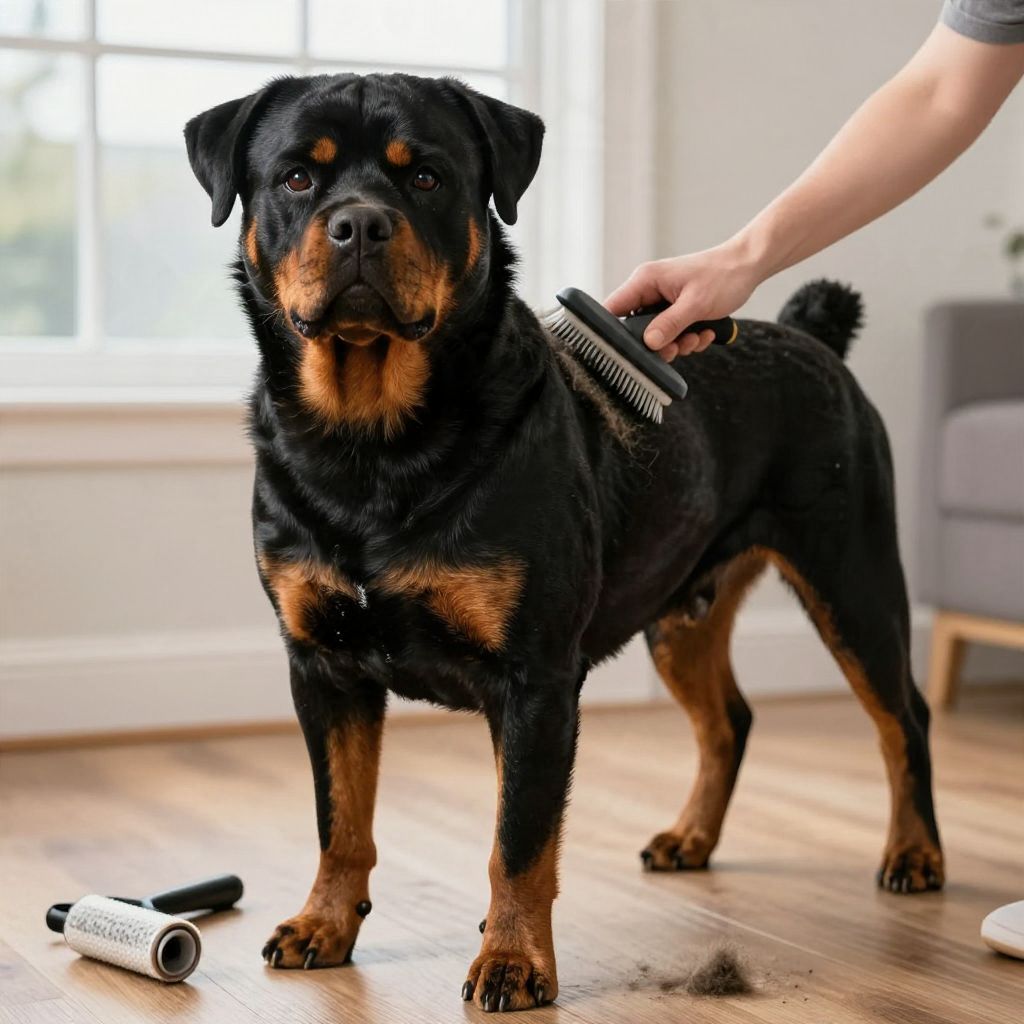
If you’re asking, “Do Rottweilers shed a lot?” the short answer is yes, they do shed, but usually not in a dramatic, all-day way like some heavy-coated breeds. Most Rottweilers have a short, dense double coat that sheds year-round and often more heavily during seasonal coat changes.
How much you notice depends on the individual dog, the time of year, grooming habits, and overall health. With regular brushing and good skin care, shedding is usually manageable for most homes.
Do Rottweilers Shed A Lot?
Rottweilers do shed moderately and can shed more during spring and fall coat changes. Their short coat is easy to maintain, but loose hair still collects on clothing, furniture, and floors. Regular brushing, a healthy diet, and checking for skin issues can help keep shedding under control.
What Rottweiler shedding usually looks like
Rottweilers have a practical, low-maintenance coat, but that does not mean they are low-shedding. You may notice loose hair on your couch, car seats, and dog beds, especially if you pet them often or live with a dog that enjoys rolling on rugs and blankets.
Typical shedding patterns can vary by:
- Season — many dogs shed more when temperatures change.
- Age — puppies and older dogs may have different coat and skin needs.
- Health — skin irritation, parasites, allergies, and illness can increase shedding.
- Grooming routine — brushing removes loose hair before it ends up around your home.
- Individual coat type — some dogs simply shed more than others.
Why Rottweilers shed
Shed hair is normal. Dogs naturally replace old hairs with new ones, and double-coated breeds often lose more hair during seasonal coat changes.
Normal shedding
Normal shedding usually happens evenly across the coat. You may see more loose hair after brushing, on bedding, or around the home, but your dog’s skin should look healthy and comfortable.
Excessive shedding
Shedding becomes more concerning when it is sudden, patchy, or paired with other symptoms. That can point to a skin problem or another medical issue that needs veterinary attention.
Watch for these signs:
- Bald spots or thinning in one area
- Red, flaky, scabby, or greasy skin
- Strong odor from the coat or skin
- Itching, licking, chewing, or frequent scratching
- Hair loss along with poor appetite, tiredness, or weight changes
How to manage shedding in a Rottweiler
You cannot stop shedding completely, but you can reduce how much hair ends up around your home. The best approach is consistent grooming, skin care, and good overall health.
Brush regularly
Brushing removes loose hair before it falls off naturally. For many Rottweilers, a few short brushing sessions each week work well, with more frequent brushing during heavy shedding periods.
Helpful grooming tools may include:
- A soft-bristle brush
- A grooming mitt
- A deshedding tool used carefully and not too aggressively
Keep sessions calm and brief if your dog is new to grooming. Reward cooperation with treats and praise so grooming stays positive.
Bathe only as needed
Bathing can help remove loose hair, dirt, and dander, but too many baths can dry the skin. Use a dog-safe shampoo and follow your veterinarian’s advice if your dog has sensitive skin or a known skin condition.
Support skin and coat health
A balanced diet matters for coat quality. If your dog’s food is complete and appropriate for their life stage, that is usually enough. If you are considering supplements, ask your veterinarian first, especially if your dog has allergies, digestive issues, or a medical condition.
Also help by:
- Keeping up with flea prevention recommended by your vet
- Providing clean water every day
- Maintaining a healthy body condition
- Managing stress, since stress can sometimes affect coat condition
When shedding may mean a health problem
Not all hair loss is just normal shedding. If your Rottweiler suddenly sheds much more than usual, or if the coat looks dull and patchy, a veterinary exam is the safest next step.
Common causes of unusual shedding
- Allergies
- Fleas or other parasites
- Skin infections
- Hormonal problems
- Poor nutrition or absorption issues
- Excessive licking or scratching from discomfort
Do not try to guess the cause if the shedding is severe or ongoing. A veterinarian can check the skin, review diet and parasite control, and decide whether testing is needed.
Red flags that need prompt veterinary care
Seek veterinary help soon if shedding comes with:
- Open sores, bleeding, or pus
- Swollen skin, hives, or facial swelling
- Severe itching that disrupts sleep or daily life
- Sudden weakness, vomiting, or loss of appetite
- Rapidly spreading hair loss
Get urgent care immediately if your dog has trouble breathing, collapses, seems very weak, or has a severe allergic reaction.
How to keep hair under control at home
If you live with a Rottweiler, a few simple habits can make shedding much easier to manage.
- Brush your dog on a regular schedule.
- Use washable covers on furniture and dog beds.
- Vacuum high-traffic areas often.
- Keep lint rollers in common spots.
- Wash bedding frequently.
- Check your dog’s coat during petting for dandruff, bumps, or parasites.
These steps do not reduce shedding itself dramatically, but they make the hair far less noticeable in your home.
Common mistakes owners make
When people are frustrated by shedding, they sometimes try shortcuts that do not help and can even make coat problems worse.
- Bathing too often — this can dry the skin and increase irritation.
- Using human shampoo — it may be too harsh for dogs.
- Ignoring itching or bald spots — these can signal a medical issue.
- Brushing too aggressively — this can irritate the skin.
- Expecting a no-shed dog — even short-coated dogs shed.
Are Rottweilers a good choice if you dislike dog hair?
Rottweilers may be manageable for people who can tolerate moderate shedding and keep up with grooming. They are not the best choice if you want a nearly hair-free home. If hair control is a top priority, think carefully before choosing any dog, even one with a short coat.
If you already live with a Rottweiler, the good news is that their coat is usually straightforward to care for. Regular brushing and early attention to skin changes go a long way.
When to ask a professional for help
Contact a veterinarian if shedding seems excessive, sudden, or linked to skin changes. If your dog is scratching, chewing, or licking constantly, a certified trainer or veterinary behaviorist may also help if stress or compulsive habits are part of the problem.
For more general background, you may also find these articles helpful: Do Dogs Shed a Lot? and Why Is My Dog Shedding So Much?
So, do Rottweilers shed a lot? They shed moderately, with heavier shedding at certain times of year. If you brush regularly, watch for skin problems, and keep up with routine vet care, their shedding is usually very manageable.