
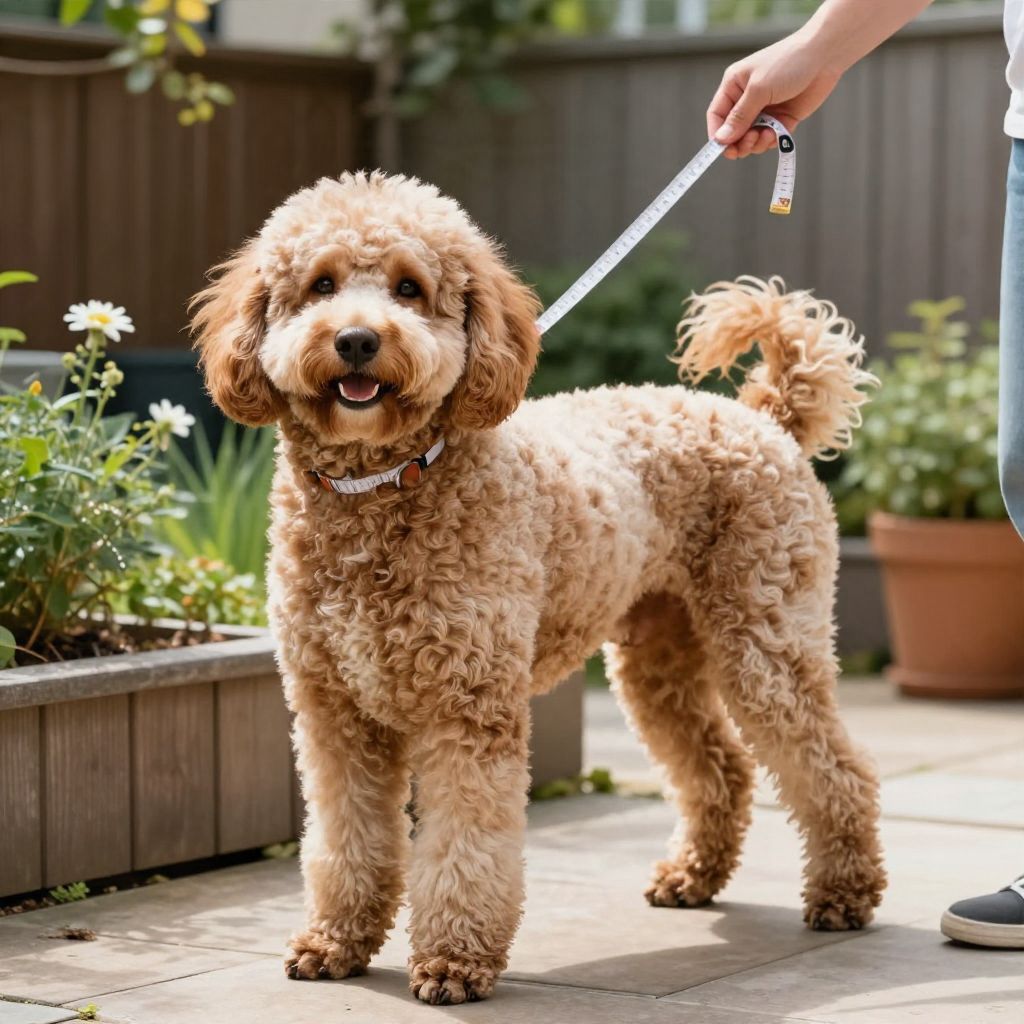
How big do Cockapoos get? The answer depends on whether your dog is bred from a Toy, Miniature, or Standard Poodle parent, because Cockapoos can vary a lot in adult size. Most are small to medium dogs, but growth, build, and weight can differ from one puppy to another.
If you’re choosing a Cockapoo puppy or tracking your dog’s growth, it helps to know the typical size range, what affects it, and when a puppy’s size may suggest a health or feeding issue. Here’s what to expect.
How Big Do Cockapoos Get?
Cockapoos usually grow into small to medium dogs, but exact adult size depends on the size of the Poodle parent and the puppy’s individual genetics. Many Cockapoos finish around 10 to 20 pounds, though some are smaller or larger. Height commonly falls somewhere in the low-to-mid teens in inches.
What Affects a Cockapoo’s Adult Size?
Several factors influence how big a Cockapoo will get, and no single puppy growth chart can predict the final size perfectly. A puppy’s adult weight is shaped by parent size, genetics, sex, nutrition, health, and whether the dog is still immature.
1. The Poodle parent size
This is usually the biggest clue. A Cockapoo from a Toy Poodle parent tends to be smaller than one from a Miniature or Standard Poodle parent.
2. The Cocker Spaniel parent size
Cocker Spaniels are generally small-to-medium dogs, so they also influence the Cockapoo’s final build and weight.
3. Individual genetics
Even littermates can mature differently. One puppy may inherit a more compact frame, while another grows taller or carries more muscle.
4. Sex and body condition
Males are often a little larger than females, but that is not guaranteed. A dog’s body condition can also make them look bigger or smaller than they truly are.
Typical Cockapoo Size by Type
Because Cockapoos are a mixed breed, size categories are approximate rather than fixed. Breeders may use different labels, so it is smart to ask about the parents’ actual measurements instead of relying only on a puppy’s name.
- Toy Cockapoo: usually the smallest type, often suited to apartment living and easier to carry.
- Mini Cockapoo: commonly a small-to-medium adult, often the most familiar size people picture.
- Standard Cockapoo: larger and sturdier, usually from a bigger Poodle parent line.
If you want a specific adult size, ask the breeder for the parents’ height and weight, not just the breed label. That gives you a much better estimate.
How Fast Do Cockapoos Grow?
Cockapoo puppies usually grow quickly during the first several months, then gradually fill out as they approach adulthood. Smaller dogs often mature sooner than larger dogs, but growth timing still varies from puppy to puppy.
What to expect during puppyhood
- Early months: rapid growth in height and weight.
- Middle puppy stage: growth may slow and become less dramatic.
- Adolescence: the body may look lanky before muscle and chest development catch up.
- Adult stage: weight and body shape stabilize.
If your puppy seems to grow unevenly, that can be normal. Legs, chest, and body length often develop at different rates.
How to Tell If Your Cockapoo Is a Healthy Size
Healthy size is about more than a number on the scale. A Cockapoo should have a visible waist when viewed from above, and you should be able to feel the ribs with light pressure without pressing hard.
Signs your Cockapoo may be underweight
- Ribs, spine, or hip bones look overly prominent
- Poor muscle tone
- Lack of energy or poor coat quality
- Slow growth in a puppy
Signs your Cockapoo may be overweight
- No waistline or a rounded body shape
- Difficulty feeling the ribs
- Reduced stamina on walks
- Reluctance to jump or play
If you are unsure, your veterinarian can assess body condition and tell you whether your dog’s size is healthy for their frame.
Feeding a Growing Cockapoo the Right Way
Good nutrition supports steady growth, but overfeeding can make a puppy gain excess weight too quickly. That can stress joints and make it harder to maintain a healthy body condition later.
Helpful feeding habits
- Feed a complete, age-appropriate puppy food if your dog is still growing.
- Measure meals instead of free-feeding whenever possible.
- Use treats sparingly during training.
- Track body condition, not just appetite.
- Ask your vet when to switch from puppy food to adult food.
Do not try to make a Cockapoo “bigger” with extra food or supplements unless your veterinarian recommends it. Growth should be steady, not forced.
Exercise Needs by Size
Most Cockapoos need regular daily exercise, but the amount should match age, size, and energy level. Smaller dogs still need activity, and larger Cockapoos may need a bit more endurance work.
Good exercise options
- Leashed walks
- Short play sessions
- Training games
- Food puzzles and sniffing activities
Puppies should not do intense, repetitive exercise for long periods. Their joints are still developing, so keep activity age-appropriate and avoid overdoing stairs, jumping, or long runs.
Grooming and Size: Why It Matters
Grooming does not change a Cockapoo’s actual size, but it can affect how big they look and how comfortable they feel. A curly or fluffy coat may make a dog appear larger than they are.
Regular brushing helps prevent mats, and professional grooming may be needed depending on coat type. Keeping the coat tidy also makes it easier to notice body changes, skin issues, or weight gain.
When a Cockapoo’s Size May Be a Health Concern
Most size variation is normal, but sudden changes in weight or growth can signal a problem. Puppies that are not gaining weight well, or adult dogs that gain or lose weight unexpectedly, should be checked by a veterinarian.
Call your vet if you notice:
- Poor appetite for more than a day or two
- Vomiting, diarrhea, or dehydration
- Sudden weight loss or weight gain
- Swollen belly or obvious discomfort
- Lameness, stiffness, or trouble moving
Seek urgent veterinary care if your dog is weak, collapses, has trouble breathing, has repeated vomiting, or shows signs of severe pain. Those are not issues to watch at home.
Common Mistakes When Estimating Cockapoo Size
It is easy to overestimate or underestimate a Cockapoo’s adult size, especially when the puppy is still growing. A few common mistakes can lead to confusion or poor care decisions.
- Assuming all Cockapoos are the same size
- Using only the puppy’s current weight to predict adulthood
- Ignoring the size of the parents
- Overfeeding to “help” a puppy grow faster
- Comparing your dog to a heavily groomed or overweight dog online
For the best estimate, combine parent size, the puppy’s current growth pattern, and your veterinarian’s input.
What to Ask a Breeder or Rescue
If you are trying to figure out how big a Cockapoo will get before adoption, ask practical questions that reveal the dog’s likely adult build. Honest answers are more useful than broad labels.
- How big are the mother and father?
- What are their weights and heights?
- How old are the puppies now?
- Has the puppy shown steady growth?
- Has a veterinarian examined the litter?
If the answer is vague, treat the size estimate as uncertain. Mixed-breed dogs can vary more than many people expect.
Living With a Cockapoo of Any Size
Whether your Cockapoo is tiny or more medium-sized, the basics of care are similar: balanced food, daily exercise, grooming, training, and routine veterinary visits. The main difference is how you manage handling, travel, and activity level.
Practical size-related tips
- Use a harness that fits well, especially for smaller dogs.
- Provide safe steps or ramps if your dog struggles with furniture or car access.
- Choose toys sized appropriately for the mouth and body.
- Adjust exercise to avoid strain in young or small dogs.
A well-cared-for Cockapoo should be active, comfortable, and easy to move through daily life, regardless of whether they land on the smaller or larger end of the range.
Conclusion
So, how big do Cockapoos get? Most become small-to-medium dogs, but adult size varies with parent size and individual genetics. Focus on healthy growth, body condition, and routine vet care rather than chasing a perfect number. If you want a more precise estimate, ask about the parents and monitor your puppy’s development over time.
If you are also comparing similar mixed breeds, you may find it helpful to read about how big Cavapoos get and how big Mini Goldendoodles get.