
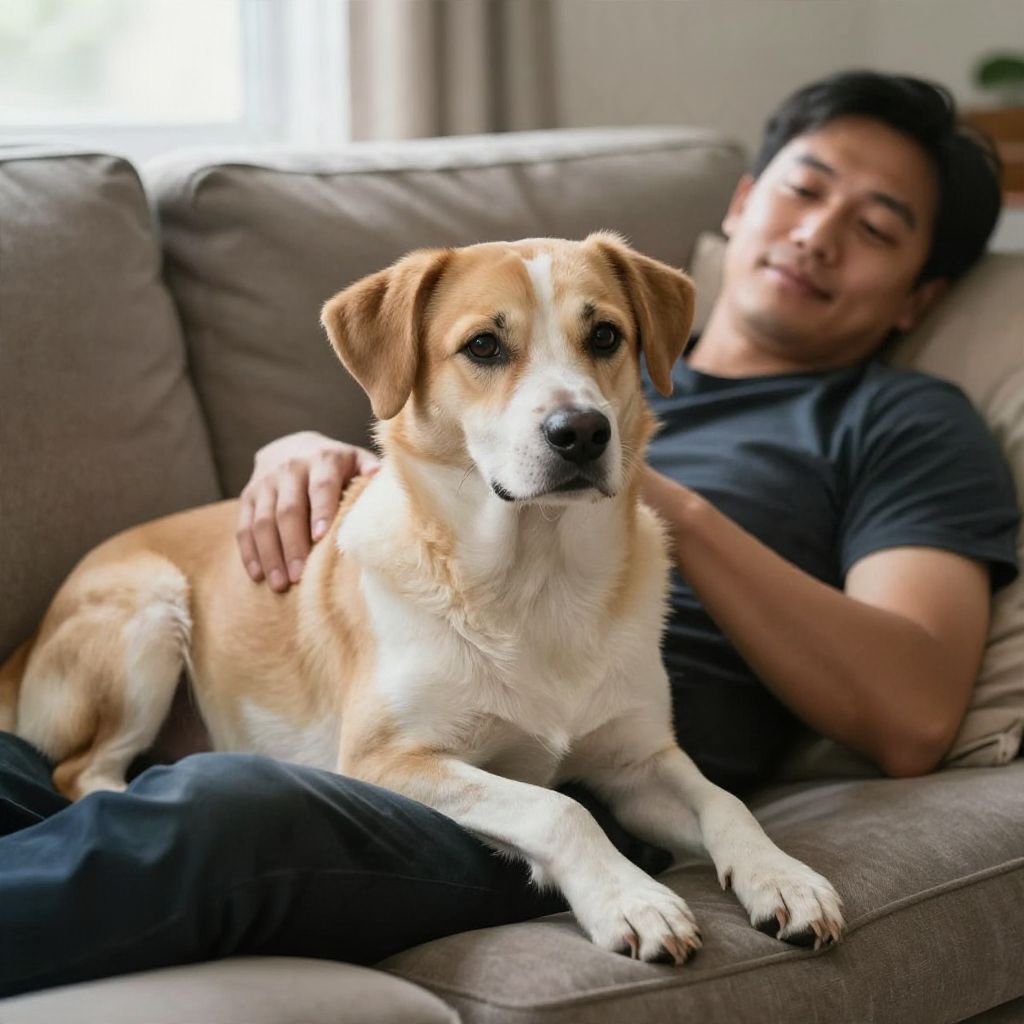
If your dog lays on top of you, it is usually a sign of affection, comfort, or a strong desire to be close. In many cases, it is normal canine behavior, but the reason can change depending on your dog’s age, temperament, training, and health.
Most dogs do this because being near you feels safe, warm, or rewarding. Sometimes it is learned attention-seeking, and sometimes it can reflect anxiety, clinginess, or a medical issue if the behavior is sudden or unusual.
Why does my dog lay on top of me?
Your dog may lay on top of you for comfort, bonding, warmth, security, attention, or habit. Some dogs also do it to claim a preferred spot, settle down, or stay close when they feel uncertain. If the behavior is new, intense, or paired with other symptoms, check for stress or health concerns.
Common reasons dogs lay on top of people
Dogs communicate a lot through body contact. Lying on you can be a normal, social behavior, but the motivation behind it is not always the same.
1. Affection and bonding
Many dogs simply enjoy physical closeness. If your dog seeks you out, relaxes quickly, and appears calm, the behavior often reflects trust and attachment.
2. Warmth and comfort
Your body heat and soft surfaces can be appealing, especially for small dogs, short-coated dogs, puppies, or older dogs that get chilly more easily. Some dogs choose you because you are the most comfortable place in the room.
3. Security and reassurance
Dogs that feel anxious, uncertain, or overstimulated may press against or lie on a trusted person. This can happen during storms, fireworks, visitors, travel, or changes in routine.
4. Attention-seeking
If laying on you reliably gets petting, talking, or laughs, your dog may repeat it because it works. Even calm attention can reinforce the habit if it happens every time.
5. Learned habit
Some dogs start as puppies and continue the behavior into adulthood because it has always been allowed. What begins as cute cuddling can become a default resting place.
6. Resource guarding or possessive behavior
Less commonly, a dog may lay on you to control access to you or to other people and pets. This is more likely if your dog stiffens, blocks others, or seems tense rather than relaxed.
Is it normal or a problem?
For many dogs, laying on top of you is harmless and normal. It becomes a concern when it is uncomfortable, unsafe, obsessive, or tied to stress, fear, or medical changes. The key is to look at the whole picture, not just the behavior itself.
Usually normal if your dog:
- Is relaxed, loose, and easy to move
- Chooses to get off when asked
- Does it occasionally, not constantly
- Has no other concerning behavior changes
Potentially concerning if your dog:
- Becomes tense, clingy, or panicked when separated
- Growls, snaps, or guards you from others
- Suddenly starts doing it much more often
- Seems restless, uncomfortable, or unable to settle elsewhere
- Shows pain, limping, coughing, heavy panting, or other illness signs
What your dog may be trying to tell you
Body language matters. A soft expression, loose muscles, and a sigh usually point to comfort. A stiff body, fixed stare, pinned ears, or rapid breathing may point to stress, discomfort, or overarousal instead.
Look for these clues
- Relaxed: soft eyes, loose body, easy breathing
- Anxious: trembling, panting, pacing, inability to settle
- Possessive: stiff posture, blocking, growling when approached
- Pain-related: flinching, reluctance to move, sensitivity to touch
What to do if your dog lays on top of you
If you enjoy it and your dog is calm, you do not need to stop it. If it is inconvenient or excessive, you can redirect the behavior kindly and consistently without punishment.
- Decide whether it is okay sometimes. Some dogs can cuddle on the couch but not during work, sleep, or meals.
- Teach an alternate spot. Use a bed, mat, or blanket near you so your dog has a predictable place to settle.
- Reward the choice you want. Praise and treat your dog when they lie beside you or on their own bed.
- Be consistent. If you sometimes allow it and sometimes push your dog away, the habit may become more persistent.
- Meet your dog’s needs. Regular exercise, mental enrichment, and a calm routine can reduce clingy behavior.
Helpful training approach
Use reward-based methods only. Lure your dog to a mat, reward them for staying there, and gradually increase the time they remain settled. Keep sessions short and easy so your dog learns that calm independence pays off.
When the behavior may be linked to anxiety
If your dog lays on top of you mainly during stressful moments, the behavior may be a coping strategy. This is common in dogs with separation-related distress, noise sensitivity, or general anxiety.
Signs that anxiety may be involved include following you everywhere, vocalizing when you leave, destructive behavior, drooling, house soiling, or trouble relaxing even when nothing obvious is happening. A veterinarian or certified behavior professional can help you sort out the cause.
What helps anxious dogs
- Predictable routines
- Safe resting spaces
- Gradual alone-time practice
- More physical and mental exercise
- Professional behavior support if needed
Breed, age, and size can affect the behavior
Some dogs are naturally more people-oriented, but breed alone does not determine whether a dog will lay on top of you. Individual temperament, early socialization, reinforcement history, and current health matter more than labels.
Puppies
Puppies often seek body contact because they are learning, adjusting, and still need reassurance. They may also have trouble settling alone, so early crate or mat training can help them build independence in a gentle way.
Adult dogs
Adult dogs may lay on you out of habit, affection, or because the behavior has been reinforced for years. If it is becoming inconvenient, consistent boundaries work better than sudden restriction.
Senior dogs
Older dogs may seek more contact because they feel colder, less secure, or more dependent. If a senior dog becomes unusually clingy or restless, ask your veterinarian whether pain, cognitive changes, or another health issue could be contributing.
When to call the vet
Contact your veterinarian if the behavior is sudden, intense, or paired with physical or behavioral changes. A new need to stay on top of you can sometimes reflect discomfort rather than affection.
Get veterinary advice if you notice:
- Sudden clinginess or restlessness
- Limping, stiffness, or trouble getting comfortable
- Loss of appetite or low energy
- Excessive panting, trembling, or pacing
- Behavior changes after an injury or illness
- Signs of pain when touched or moved
Seek urgent care now if your dog has:
- Difficulty breathing
- Collapse or extreme weakness
- Severe bloating or a swollen abdomen
- Repeated vomiting with distress
- Seizures
- Sudden inability to stand or walk
Common mistakes to avoid
It is easy to accidentally reinforce the habit or miss a problem behind it. A calm, practical approach is usually best.
- Do not punish your dog for seeking closeness.
- Do not assume all clingy behavior is “just love.”
- Do not ignore sudden changes in behavior.
- Do not reward unwanted jumping, blocking, or guarding.
- Do not force independence too quickly if your dog is anxious.
How to tell affection from a behavior issue
A dog that lays on you because they love being near you usually looks relaxed and can settle elsewhere when needed. A dog that does it because of anxiety or possessiveness may seem tense, frantic, or unwilling to let you move freely.
If you are unsure, watch when the behavior happens, how your dog looks while doing it, and whether it is new or escalating. That pattern often tells you more than the behavior alone.
Bottom line
Why does my dog lay on top of me? Most often, it is a normal sign of affection, comfort, or security. If it becomes constant, stressful, or suddenly different, redirect the habit gently and check with your veterinarian if you suspect anxiety or illness.
If you want to understand related closeness behaviors, you may also find why dogs sit on you and this related guide on dogs laying on top of you helpful.