
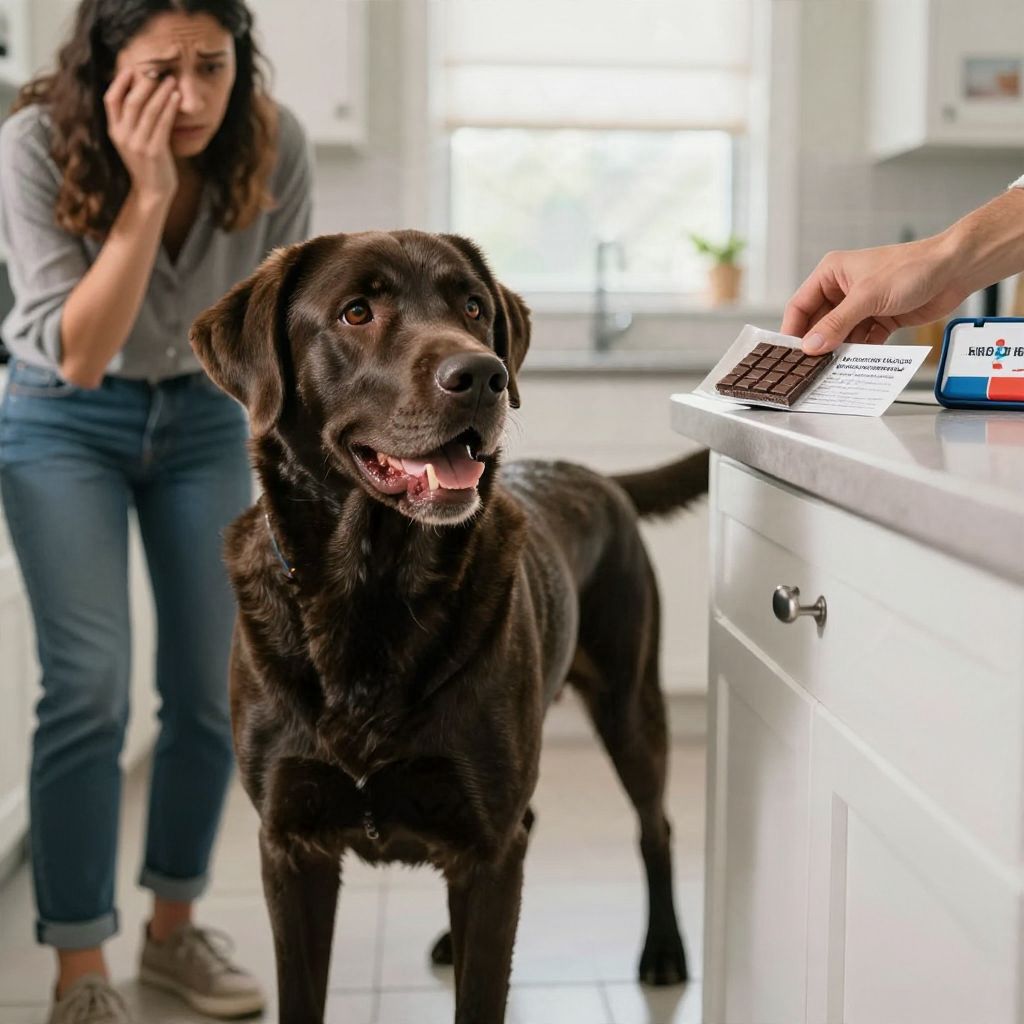
If your dog ate chocolate, the most important question is how much, what kind, and when it happened. Chocolate can cause anything from mild stomach upset to a life-threatening emergency, depending on the dose and the dog.
Do not wait for symptoms if your dog ate a significant amount. Call your veterinarian or an emergency clinic right away, because fast treatment can make a major difference.
How fast does chocolate kill dogs?
Chocolate usually does not kill dogs instantly. Serious poisoning can develop within a few hours, and the risk depends on the type of chocolate, the amount eaten, and your dog’s size and health. The most dangerous signs are vomiting, tremors, a racing heart, seizures, and collapse, which need urgent veterinary care.
Why chocolate is dangerous for dogs
Chocolate contains theobromine and caffeine, two stimulants dogs process slowly. That means these chemicals can build up in the body and affect the heart, nervous system, and stomach.
Not all chocolate is equally risky. The darker and more concentrated the chocolate, the more dangerous it tends to be.
Chocolate types that are most concerning
- Baking chocolate and cocoa powder: very high risk
- Dark chocolate: high risk
- Milk chocolate: still unsafe, especially in smaller dogs or larger amounts
- White chocolate: lower theobromine risk, but still not a safe food for dogs
Other ingredients matter too. Chocolate products may also contain raisins, xylitol, nuts, or alcohol, which can create additional risks.
How quickly symptoms can appear
Signs often begin within a few hours, though the exact timing varies. Some dogs show stomach upset first, while others develop faster heart rate or restlessness before more severe problems appear.
Because the onset can be unpredictable, it is safest to treat any meaningful chocolate ingestion as urgent until a veterinarian says otherwise.
Common early signs
- Vomiting
- Diarrhea
- Restlessness or pacing
- Excessive thirst
- Rapid breathing
- Increased heart rate
Emergency warning signs
- Tremors or shaking
- Stiffness or wobbliness
- Seizures
- Collapse
- Very fast or abnormal heartbeat
- Extreme agitation or panic
- Coma
If your dog has any of these signs, go to an emergency veterinarian immediately.
What affects how serious chocolate poisoning is
The same amount of chocolate can affect dogs very differently. A small dog may become sick from a modest amount, while a larger dog may tolerate more before showing severe signs.
- Body size: smaller dogs are at higher risk from the same amount
- Type of chocolate: dark and baking chocolate are more dangerous
- Amount eaten: more chocolate means more toxin exposure
- Age and health: puppies, seniors, and dogs with heart problems may be more vulnerable
- Individual sensitivity: some dogs react more strongly than others
Breed alone does not determine the outcome. Individual size, health, and the amount eaten matter far more than stereotypes about a breed.
What to do right away if your dog ate chocolate
Act quickly and contact a veterinarian or poison helpline as soon as possible. Time matters because treatment is most effective before severe signs develop.
- Remove any remaining chocolate so your dog cannot eat more.
- Note the type of chocolate, approximate amount, and time eaten.
- Call your veterinarian or an emergency clinic right away.
- Follow their instructions exactly.
- Go in urgently if your dog is already vomiting, shaking, or acting abnormal.
Do not assume your dog will be fine because they seem normal at first. Symptoms can be delayed, and some dogs worsen after an initial quiet period.
What not to do
- Do not wait for symptoms if the amount may be significant
- Do not try home remedies without veterinary guidance
- Do not induce vomiting unless a veterinarian specifically tells you to
- Do not give human medications
When chocolate exposure is an emergency
Some situations need immediate veterinary attention, even if your dog has not started vomiting yet. Emergency care is especially important if your dog ate dark chocolate, baking chocolate, cocoa powder, or a large amount of any chocolate.
Seek urgent help right away if your dog is:
- Very small, very young, or elderly
- Already showing tremors, agitation, or rapid breathing
- Having a seizure
- Unable to stand normally
- Collapsing or unresponsive
These signs can indicate a serious toxic reaction that should not be managed at home.
How veterinarians may treat chocolate poisoning
Treatment depends on how much was eaten, how long ago it happened, and whether symptoms are already present. A veterinarian may recommend bringing your dog in for monitoring and supportive care.
Possible veterinary steps can include:
- Inducing vomiting if appropriate and safe
- Giving activated charcoal in some cases
- Monitoring heart rate and body temperature
- Providing fluids
- Managing tremors, seizures, or heart rhythm problems
The goal is to reduce absorption, control symptoms, and prevent complications. The earlier you call, the more options your veterinarian may have.
Why “a little chocolate” is not a safe rule
People sometimes assume a small bite is harmless, but that is not a reliable safety rule for dogs. Even a small amount can matter if the chocolate is concentrated or the dog is tiny.
Also, chocolate products often come in mixed forms such as brownies, cookies, cakes, or candy bars. Those foods may contain other dangerous ingredients or be rich enough to cause pancreatitis or stomach upset in some dogs.
How to prevent chocolate emergencies
Prevention is the best protection, especially around holidays, parties, and pantry storage. Dogs are often quick to snatch dropped treats or raid counters and bags.
- Keep chocolate in closed cabinets or containers
- Store candy, baking supplies, and desserts out of reach
- Remind guests not to feed your dog table treats
- Clean up wrappers and crumbs promptly
- Use trash cans with secure lids
If your dog is especially food-motivated, management matters even more. Training a reliable “leave it” cue can help, but it should never replace safe storage.
Common questions about chocolate and dogs
Can a dog recover from chocolate poisoning?
Yes, many dogs recover fully when treated promptly. The outcome depends on the amount, the type of chocolate, how quickly care begins, and whether severe signs develop.
Is white chocolate safe for dogs?
White chocolate contains much less theobromine than dark chocolate, but it is still not a healthy or recommended food for dogs. It can still cause stomach upset, and mixed desserts may contain other hazards.
Should I wait overnight to see if symptoms appear?
No. Waiting can be risky, especially if your dog ate dark chocolate, baking chocolate, or an unknown amount. Call a veterinarian right away for guidance.
Bottom line
Chocolate does not usually kill dogs instantly, but it can become dangerous within hours and can be life-threatening in severe cases. If your dog ate chocolate, identify the type and amount, call a veterinarian immediately, and get urgent care if any warning signs appear.
If you want more dog safety reading, you may also find these helpful: what happens when dogs eat chocolate and can dogs die from chocolate.