
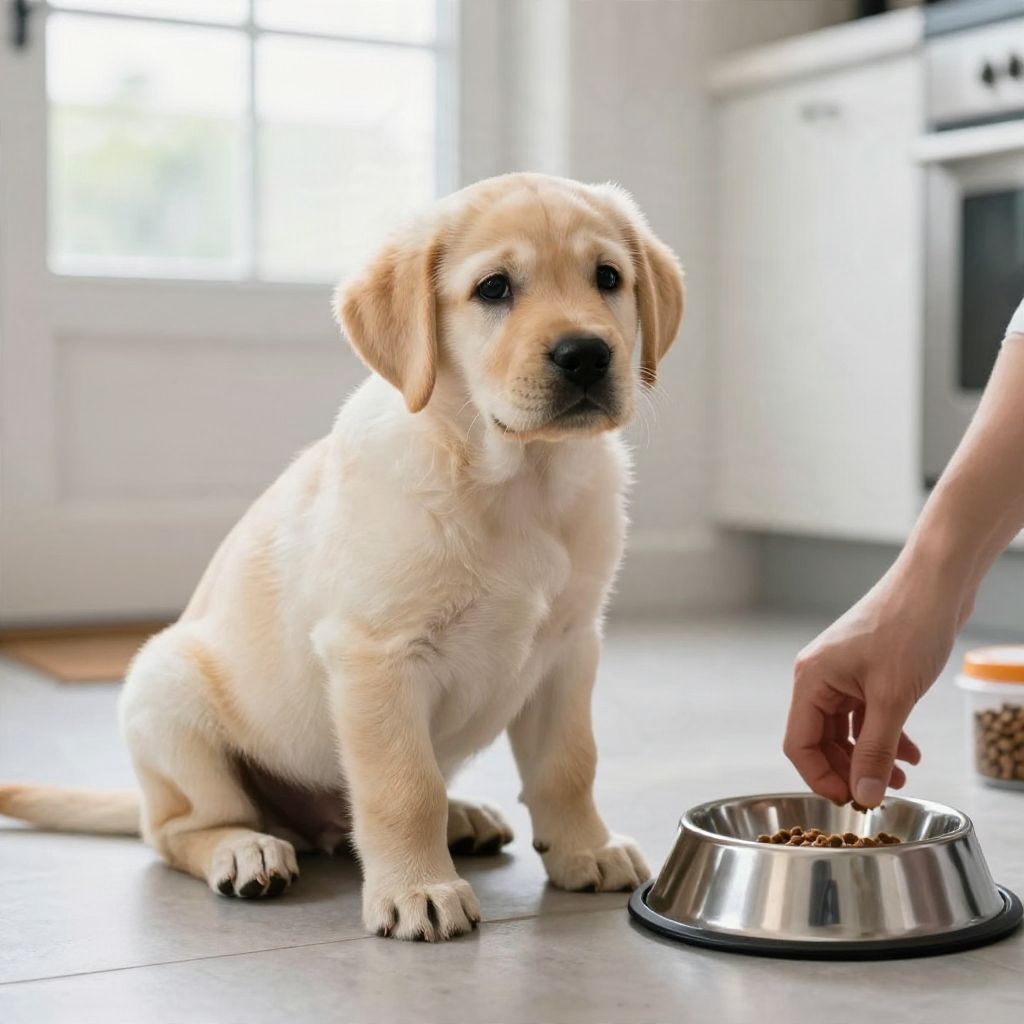
How often should you feed a puppy? Most puppies do best with three to four meals a day when they are young, then gradually fewer meals as they grow. The right schedule depends on age, breed size, appetite, activity level, and your veterinarian’s guidance.
Feeding on a consistent routine helps support digestion, house training, and steady growth. It also makes it easier to notice changes in appetite, which can be an early sign that something is wrong.
How Often Should You Feed A Puppy?
In general, feed a young puppy 3 to 4 times daily, then reduce to 2 to 3 meals as they approach adolescence. Very young puppies need frequent meals because their stomachs are small and their energy needs are high. Always follow the feeding directions on the puppy food and adjust with your vet’s advice.
Puppy feeding schedule by age
A puppy’s feeding frequency changes as they grow. Age is the biggest starting point, but body size and individual needs matter too.
8 to 12 weeks old
Most puppies at this age do best with 4 meals a day. Their digestive systems are still developing, and smaller, more frequent meals are easier to handle.
3 to 6 months old
Many puppies can move to 3 meals a day. Some small breeds may still need more frequent feeding if they seem hungry or have trouble keeping weight on.
6 to 12 months old
Many puppies transition to 2 meals a day. Larger breeds may stay on puppy food longer, while some toy breeds may need a slower transition if they are prone to low blood sugar or inconsistent eating.
After 12 months
Many dogs are ready for adult feeding routines around this stage, but the exact timing depends on breed size and growth rate. Large and giant breeds often need puppy nutrition longer than small breeds, so ask your veterinarian when to switch.
What affects how often a puppy should eat?
There is no single schedule that fits every puppy. These factors can change how often you should feed them:
- Age: Younger puppies need more frequent meals.
- Breed size: Small, medium, large, and giant breeds may mature at different rates.
- Body condition: A puppy that is too thin or gaining too quickly may need a schedule adjustment.
- Activity level: Very active puppies may need more calories spread across the day.
- Health issues: Digestive problems, parasites, or other medical concerns can affect appetite and feeding plans.
- Food type: Wet, dry, and mixed diets can influence how full a puppy feels.
If your puppy has a special medical condition, your veterinarian may recommend a different meal pattern than the general guidance above.
How to build a healthy puppy feeding routine
A predictable routine supports training and makes it easier to monitor your puppy’s health. Try to feed at about the same times each day.
- Choose the number of meals based on age and your vet’s advice.
- Measure each meal instead of free-feeding all day.
- Feed in a quiet, low-stress area.
- Remove uneaten food after a short period if your vet recommends scheduled meals.
- Keep fresh water available at all times.
Many owners find that feeding, potty breaks, and training sessions work well together. A puppy often needs to eliminate shortly after eating, so a regular mealtime can help with house training.
How much should a puppy eat at each meal?
Meal frequency and meal size are related, but they are not the same thing. The right amount depends on your puppy’s current weight, expected adult size, growth stage, and the calorie content of the food.
Use the feeding chart on the puppy food bag as a starting point, then adjust based on your puppy’s body condition and your veterinarian’s recommendations. A puppy should look lean and healthy, not round or ribby.
Signs your puppy may be getting too much food include rapid weight gain, loose stools, or leaving little room for treats and training rewards. Signs they may need more support include poor weight gain, constant hunger, low energy, or a visible loss of body condition.
Should you feed puppies free-choice or on a schedule?
Scheduled meals are usually better for puppies than leaving food out all day. A routine makes house training easier, helps you track appetite, and can reduce overeating in puppies that would graze constantly.
Free-feeding may be used in some limited situations, but it is not ideal for many puppies because it can make it harder to notice health changes. If you are unsure which approach is best, ask your veterinarian.
Common feeding mistakes to avoid
Even well-meaning owners can run into problems when feeding a puppy. These are some of the most common mistakes:
- Changing the schedule too quickly.
- Feeding too many treats or table scraps.
- Using adult food when a puppy still needs puppy nutrition.
- Guessing portion sizes instead of measuring.
- Ignoring repeated vomiting, diarrhea, or poor appetite.
- Letting multiple pets compete for food.
Treats should stay a small part of the day’s calories. If you use treats for training, reduce meal portions only if your veterinarian recommends it and your puppy is gaining weight too quickly.
When to change from puppy meals to adult meals
The switch to adult food should happen when your puppy is close to full growth, but the timing varies. Small breeds often mature sooner, while large and giant breeds may need puppy food longer to support controlled growth.
Do not rush the transition just because your puppy seems to eat well. The best time to switch depends on growth, body condition, and breed size, so your veterinarian can help you decide.
When feeding changes may signal a health problem
A puppy’s appetite can change for harmless reasons, but some changes need veterinary attention. Call your veterinarian if your puppy:
- Stops eating for more than one meal and seems unwell
- Vomits repeatedly
- Has diarrhea that lasts or contains blood
- Seems weak, lethargic, or painful
- Drinks far more or far less than usual
- Is not gaining weight as expected
Seek urgent veterinary care if your puppy has repeated vomiting, a swollen abdomen, trouble breathing, collapse, seizures, severe weakness, or you suspect they ate something toxic or dangerous. Puppies can decline quickly, so do not wait if symptoms are severe.
Feeding tips that make life easier
Simple habits can make puppy feeding safer and less stressful:
- Use a measuring cup or kitchen scale for consistency.
- Feed in a calm place away from distractions.
- Keep the feeding area clean to reduce bugs and spoilage.
- Track meals, treats, stool quality, and appetite changes.
- Ask your vet before changing foods if your puppy has a sensitive stomach.
If your puppy gulps food too quickly, ask your veterinarian whether a slow feeder or puzzle feeder is appropriate. Some puppies benefit from a calmer eating pace, but any feeding tool should be safe and easy to clean.
What about water, potty breaks, and feeding time?
Food, water, and potty timing are closely linked. Puppies often need to urinate soon after eating and drinking, so a regular meal schedule can help with house training and accident prevention.
If you want more support with routine planning, you may also find these guides helpful: how often puppies pee and how much water a puppy should drink.
Bottom line
How often should you feed a puppy? Most young puppies need 3 to 4 meals a day, then gradually fewer meals as they grow. Use age, body size, and your veterinarian’s advice to guide the schedule, and watch closely for appetite changes or digestive problems.
Keep meals consistent, measure portions carefully, and contact your vet if your puppy is not eating normally or shows any warning signs.