
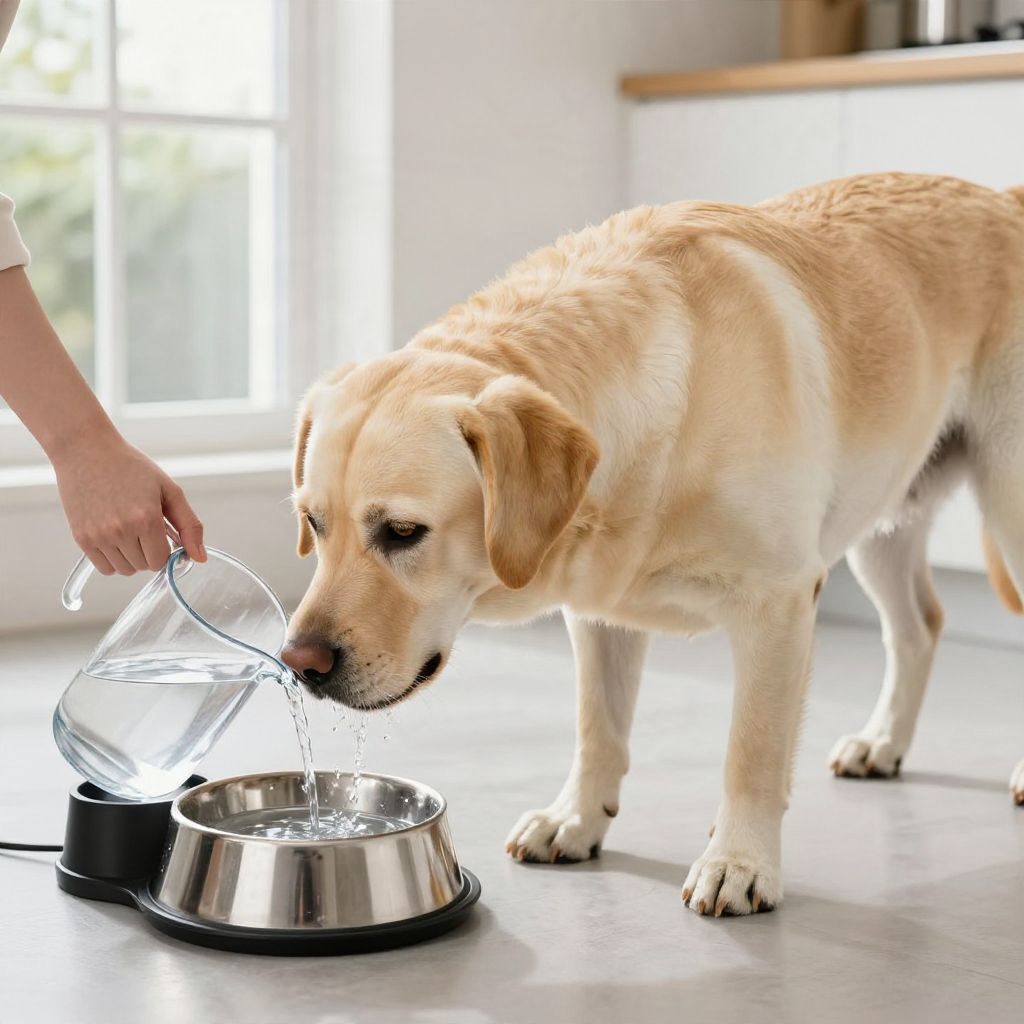
If you’re asking, “How to get my dog to drink more water,” the best approach is usually to make water easier, fresher, and more appealing while checking for any health reason your dog may be avoiding it. Start with simple changes, then watch closely for signs of illness or dehydration.
Most dogs drink more when their water is clean, easy to reach, and offered in a way that matches their preferences. If your dog still won’t drink, or seems unwell, contact your veterinarian promptly.
How to get my dog to drink more water?
Offer fresh water in multiple clean bowls, place them in quiet easy-to-reach spots, and try changing the bowl material or adding moisture-rich food. Encourage drinking with short walks, play, and cool rest breaks. If your dog suddenly drinks less, or shows vomiting, lethargy, or dry gums, call your vet.
First, figure out why your dog is drinking less
Before you focus on tricks, think about what changed. A dog may drink less because the water tastes stale, the bowl is dirty, the bowl location feels unsafe, the weather changed, or the dog is eating more wet food than usual.
Sometimes the issue is medical rather than behavioral. Pain, nausea, fever, dental disease, kidney problems, and other health concerns can all affect drinking.
Common non-medical reasons
- The bowl is dirty or has a smell your dog dislikes.
- The water is too warm, too cold, or stale.
- The bowl is in a noisy, high-traffic, or stressful area.
- Your dog is distracted by travel, visitors, or a new routine.
- Your dog is getting more moisture from wet food, broth-based toppers, or ice.
Possible health-related reasons
- Dental pain or mouth discomfort
- Nausea, vomiting, or stomach upset
- Fever or infection
- Kidney, liver, or urinary tract disease
- Medication side effects
- Heat stress or dehydration
Step-by-step ways to encourage drinking
1. Refresh the water often
Change the water at least once or twice daily, and more often if it gets dirty. Many dogs prefer fresh, cool water over water that has sat out for hours.
2. Clean the bowl thoroughly
Wash the bowl every day with soap and water. Slime, saliva, and food residue can change the taste and discourage drinking.
- Rinse well so no soap remains.
- Try a different bowl if the current one smells or looks worn.
- Some dogs prefer stainless steel or ceramic over plastic.
3. Put water where your dog actually spends time
If your dog has to search for water, they may drink less. Place bowls in the main living area, near sleeping spots, and on each level of the home if needed.
For puppies, senior dogs, and dogs with mobility issues, easy access matters even more.
4. Offer multiple bowls
Some dogs drink more when they have choices. A second or third bowl can help if one location feels too busy or if your dog simply prefers a different spot.
5. Try a different bowl style
Dogs can be surprisingly picky about the bowl itself. A shallow bowl may suit a flat-faced dog better, while a larger dog may prefer a wider, sturdier bowl.
- Use a bowl that doesn’t slide around.
- Choose a size that allows comfortable drinking.
- Avoid bowls with strong odors or chipped surfaces.
6. Make water more appealing with food moisture
If your dog eats dry kibble, you can add moisture by mixing in a little warm water to soften it. You can also offer wet food if it fits your dog’s diet and your veterinarian agrees it’s appropriate.
Do not rely on flavored liquids as a replacement for proper water intake. Human foods and broths can contain ingredients that are unsafe for dogs.
7. Use safe, dog-friendly flavor boosts carefully
Some dogs will drink more if you add a small amount of water from plain cooked meat or a pet-safe broth with no onion, garlic, or excess salt. Keep it mild, and use it only as a short-term aid if needed.
Always check labels. Many store-bought broths contain ingredients that are not safe for dogs.
8. Encourage drinking after activity
Offer water after walks, play sessions, training, and time outdoors. Dogs often drink more when they’re naturally thirsty, especially after exercise or warm weather.
Keep the pace calm. Some dogs drink better when they can settle for a minute first.
9. Use ice or cold water if your dog prefers it
Some dogs like cool water or a few ice cubes, while others ignore them. This is a preference issue, not a requirement, so observe what your dog seems to enjoy.
10. Keep the environment calm
Dogs who are anxious, newly adopted, or easily distracted may avoid drinking in busy areas. Let your dog drink in a quiet space away from loud children, other pets, or stress triggers.
How age and life stage affect water intake
Puppies
Puppies need frequent access to water because they can dehydrate faster than adult dogs. They also need close supervision because they may get distracted or spill bowls.
If you want more guidance on puppy hydration, see how much water a puppy should drink.
Adult dogs
Healthy adult dogs usually do best with routine, clean access to water and a predictable schedule. If an adult dog suddenly stops drinking, that change deserves attention.
Senior dogs
Older dogs may drink less because of reduced mobility, pain, cognitive changes, or illness. Make water easier to reach and consider placing bowls where your senior dog rests most often.
When less drinking is a warning sign
A dog that drinks a little less for a short time may simply be reacting to a routine change. But a sudden drop in drinking, especially with other symptoms, can signal a problem.
Call your veterinarian soon if you notice:
- Reduced drinking for more than a day
- Vomiting or diarrhea
- Lethargy or weakness
- Loss of appetite
- Dry gums or sticky saliva
- Dark urine or very little urination
- Fever, coughing, or obvious pain
- Bad breath, drooling, or trouble chewing
Seek urgent veterinary care now if your dog has:
- Collapse or severe weakness
- Repeated vomiting and cannot keep water down
- Bloated abdomen
- Signs of heatstroke, such as heavy panting, confusion, or staggering
- Possible toxin exposure
- No urination, or straining to urinate
Common mistakes to avoid
- Do not force water into your dog’s mouth unless a veterinarian has instructed you to do so.
- Do not use salty broths, seasoning, onion, garlic, or human soup bases.
- Do not wait if your dog seems sick, painful, or dehydrated.
- Do not assume low drinking is normal just because your dog is eating.
- Do not ignore changes in urination, appetite, or energy.
How to tell whether your dog may be dehydrated
Dehydration can develop quickly, especially in hot weather, after vomiting or diarrhea, or when a dog refuses water. Signs can be subtle at first.
- Dry or tacky gums
- Sunken eyes
- Low energy
- Thick saliva
- Reduced skin elasticity
- Dark, concentrated urine
If you suspect dehydration, contact your veterinarian. Severe dehydration can become an emergency.
What to do if your dog still won’t drink
If you’ve tried the practical steps and your dog still isn’t drinking normally, stop troubleshooting and get professional advice. A veterinarian can check for dental pain, illness, medication effects, or other causes that you can’t see at home.
For dogs with ongoing behavior or anxiety issues around water, a certified trainer or veterinary behaviorist may help identify stress triggers and build a gentle routine.
Simple routine that works for many dogs
- Wash the bowl and refill it with fresh water.
- Place water in a quiet, easy-to-reach spot.
- Offer water after walks, meals, and play.
- Watch whether your dog prefers a different bowl or cooler water.
- Track any changes in appetite, energy, or urination.
If you’re still wondering how to get my dog to drink more water, start with clean water, easy access, and a calm routine, then watch for health red flags. If the change is sudden or your dog seems unwell, call your veterinarian without delay. For related reading, you may also find why a dog may drink a lot of water helpful.