
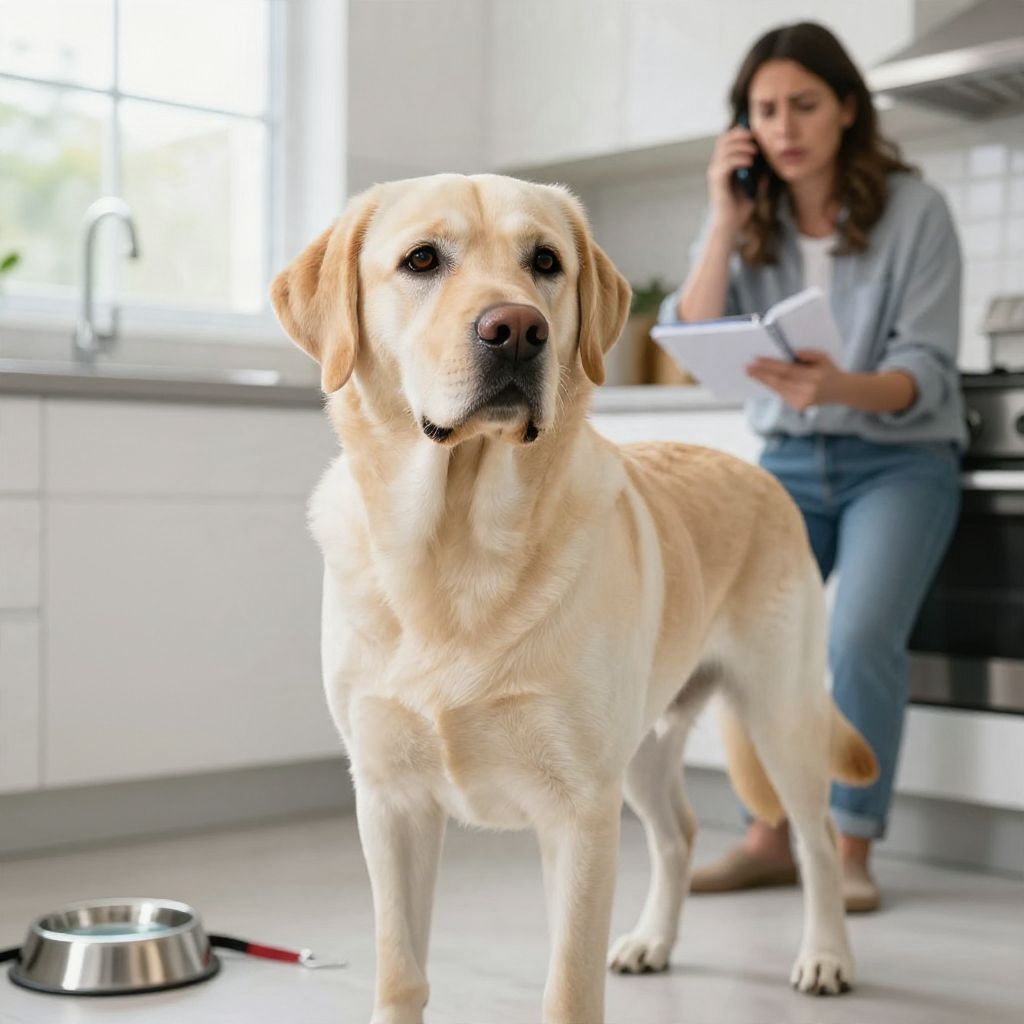
If your dog swallowed something dangerous, you may be wondering how to induce vomiting in a dog safely. The answer depends on what was eaten, how long ago it happened, and your dog’s health, because vomiting is not always the right response.
In many cases, the safest step is to call a veterinarian or poison helpline first. Some substances and situations make vomiting risky, and in those cases your dog needs professional guidance or urgent care instead of a home attempt.
How To Induce Vomiting In A Dog?
Only induce vomiting in a dog if a veterinarian or poison expert tells you to do it. It is not safe for every toxin, object, or dog. If vomiting is recommended, follow veterinary instructions exactly, because the wrong method can cause choking, aspiration, or worse injury.
What you should do first
Before trying anything at home, pause and assess the situation. The safest response depends on what your dog swallowed and whether your dog is alert, breathing normally, and able to swallow.
- Call your veterinarian right away if you know or suspect ingestion of a toxin, medication, or sharp object.
- Have the product name, ingredient list, and approximate time of ingestion ready.
- Keep your dog calm and prevent further eating.
- Do not give food, milk, oil, salt, or random home remedies unless specifically instructed.
When vomiting should not be induced
Some situations make vomiting dangerous. In these cases, your dog needs immediate veterinary advice or emergency care instead of a home attempt.
- Your dog is unconscious, very sleepy, having seizures, or unable to stand.
- Your dog is struggling to breathe, coughing, or showing blue or pale gums.
- The swallowed item is sharp, such as glass, metal, or a bone fragment.
- The item is a corrosive substance, such as a cleaner, battery material, or strong acid/alkali.
- Your dog may have swallowed a petroleum product or something that could be inhaled into the lungs.
- Your dog has a history of swallowing objects, vomiting problems, or a condition that makes vomiting risky.
- Your dog is very young, very old, pregnant, or medically fragile without veterinary guidance.
Why a vet may recommend vomiting or not recommend it
Vomiting can sometimes remove a toxin before it is absorbed, but it is not a universal fix. A veterinarian considers the substance, the timing, your dog’s size and health, and whether the material could cause more damage coming back up.
Common reasons not to make a dog vomit
- The substance can burn the throat on the way back up.
- The dog could inhale vomit into the lungs.
- The object may lodge in the esophagus or cause choking.
- Vomiting may delay better treatment, such as activated charcoal, fluids, or surgery.
Step-by-step: what to do if a veterinarian tells you to induce vomiting
If a veterinarian specifically instructs you to induce vomiting at home, follow their directions exactly. The steps below are general and should not replace individualized veterinary advice.
- Confirm the plan. Ask what to use, how much, and how long after ingestion it is still appropriate.
- Check your dog’s condition. Make sure your dog is awake, able to swallow, and not having trouble breathing.
- Prepare the area. Use a washable space and keep towels nearby.
- Follow the veterinarian’s exact instructions. Do not improvise with household products or repeat attempts unless told to do so.
- Watch closely afterward. Your dog may still need an exam, X-rays, bloodwork, or additional treatment.
- Bring packaging or a sample. If possible, take the product container or a photo of the label to the clinic.
What not to do
- Do not use salt, syrup, mustard, oil, or other internet remedies.
- Do not force your fingers into your dog’s throat.
- Do not give anything if your dog is drowsy, collapsing, or having seizures.
- Do not assume vomiting means the danger is over.
Signs your dog needs urgent veterinary care now
Some symptoms mean you should skip home management and go to an emergency clinic immediately. These are red flags, especially after possible poisoning, foreign body ingestion, or trauma.
- Repeated vomiting or retching
- Bloated or painful abdomen
- Drooling, pawing at the mouth, or difficulty swallowing
- Weakness, wobbliness, collapse, or tremors
- Seizures
- Blood in vomit or stool
- Labored breathing
- Signs of shock, such as pale gums, rapid heart rate, or extreme lethargy
Common mistakes people make
When a dog eats something dangerous, panic can lead to choices that make the situation worse. Avoid these common errors.
- Waiting too long to call for help.
- Trying to induce vomiting after the safe window has likely passed.
- Using a method seen online without veterinary approval.
- Assuming a small dog and a large dog can be handled the same way.
- Ignoring the dog’s age, health problems, or current symptoms.
How age, size, and health can affect the decision
There is no one-size-fits-all answer. A puppy, senior dog, brachycephalic dog, or dog with heart, airway, or seizure issues may face different risks than a healthy adult dog.
Puppies
Puppies can deteriorate quickly because they are smaller and less stable. They may also be more likely to swallow foreign objects, so prompt veterinary advice is especially important.
Small dogs
Smaller dogs can be more sensitive to vomiting complications and dehydration. Even a modest amount of a toxin may matter more because of their body size.
Large dogs
Larger dogs may swallow larger objects, which can increase the risk of obstruction. Size does not make vomiting automatically safer.
Senior dogs and dogs with medical conditions
Older dogs and dogs with chronic illness may have a harder time recovering from vomiting or aspiration. If your dog has a known condition, tell the veterinarian before doing anything at home.
What happens after your dog vomits
Even if your dog brings up the swallowed material, you may still need veterinary care. Some toxins are absorbed quickly, and some objects can remain partially inside the body or cause irritation on the way out.
- Monitor your dog for continued vomiting, lethargy, coughing, or diarrhea.
- Keep your dog from eating more until you get veterinary instructions.
- Save any vomited material if the clinic asks you to bring a sample.
- Follow up if your dog seems unwell later, even if the first episode looked successful.
How to prevent future emergencies
The best way to avoid needing to induce vomiting in a dog is to reduce access to dangerous items. Prevention is especially important for curious puppies, food-motivated dogs, and dogs that scavenge.
- Store medications, cleaning products, and trash out of reach.
- Pick up socks, toys, batteries, string, and small household items.
- Use secure bins and keep counters clear.
- Teach a reliable leave it cue with reward-based training.
- Supervise dogs that chew, scavenge, or counter-surf.
When to call a veterinarian instead of trying anything at home
In most real-world cases, the safest answer to “how to induce vomiting in a dog” is to call a veterinarian first. That is especially true if you are unsure what was eaten, the item may be dangerous to vomit back up, or your dog already has symptoms.
If you want more guidance on related warning signs, see dog vomiting when to worry and, for broader context on the topic, how to make a dog vomit. If your dog may have swallowed something harmful, call your vet now and follow their instructions exactly.