
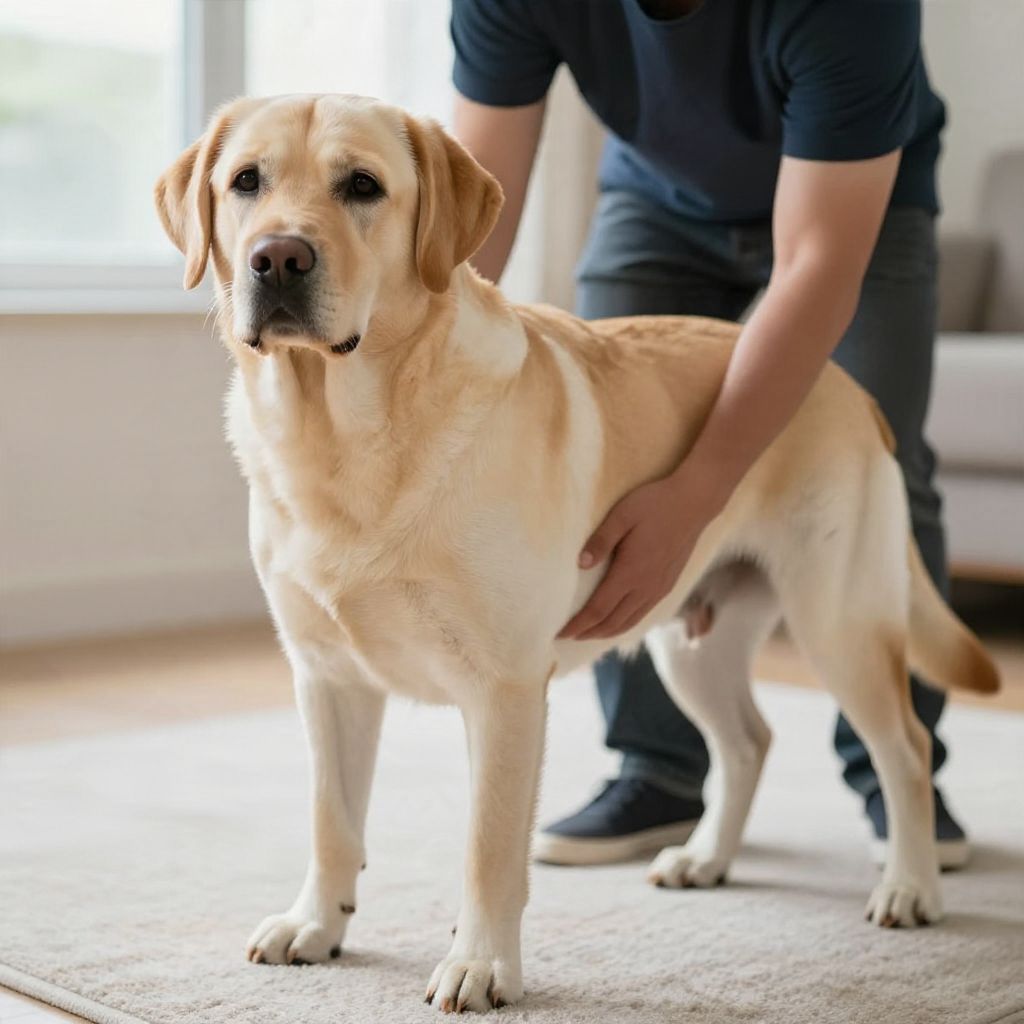
How to pick up a dog safely depends on the dog’s size, age, health, and comfort level. The goal is to support the body well, avoid pain or panic, and let the dog feel secure throughout the lift.
Some dogs enjoy being carried; others tolerate it only when necessary. With a calm approach, proper hand placement, and a few safety checks, you can lift most dogs without causing injury or stress.
How do you pick up a dog safely?
To pick up a dog safely, stay calm, approach from the side, let the dog know what you are doing, and support both the chest and hind end. Keep the dog close to your body, lift smoothly, and stop if the dog resists, seems painful, or is too heavy for you to carry safely.
Step-by-step: how to pick up a dog
Use a slow, predictable approach so the dog does not feel startled. The exact technique varies by size and body shape, but the basic idea is always the same: support the dog’s weight evenly and avoid twisting the spine.
- Get the dog’s attention first. Say the dog’s name in a calm voice and let them see your hands.
- Check the dog’s mood. If the dog is stiff, hiding, growling, or trying to move away, do not force a lift.
- Place one arm under the chest. Support the front half of the body, not just the front legs.
- Support the rear end with your other arm. Lift the hindquarters so the spine stays level.
- Bring the dog close to your body. Holding the dog against your chest improves stability.
- Lift smoothly. Avoid jerking, swinging, or lifting by the legs, collar, or scruff.
- Lower the dog gently. Set the dog down with the same control you used to lift them.
How to pick up a small dog or puppy
Small dogs and puppies are easier to lift, but they still need full body support. Many injuries happen when people grab a puppy under the front legs or let the back end dangle, which can strain joints and make the puppy feel insecure.
Best way to lift a small dog
- Slide one hand under the chest, just behind the front legs.
- Use your other hand to support the hindquarters.
- Keep the dog level and close to your body.
- For very small dogs, you may be able to cradle them securely in both arms.
Extra care with puppies
Puppies are still growing, so their bones, joints, and soft tissues are more vulnerable to rough handling. Keep lifts brief, gentle, and calm, and avoid letting children carry a puppy without close adult supervision.
How to pick up a medium or large dog
Medium and large dogs may need a different approach because their weight can strain your back or theirs if you lift awkwardly. If the dog is too heavy to carry comfortably, use a harness, ramp, towel sling, or help from another person instead of forcing a lift.
Safer lifting for bigger dogs
- Bend your knees, not your waist.
- Keep the dog’s body close to yours.
- Use a two-person lift if needed.
- Do not try to lift a large dog by yourself if you feel unstable.
If a larger dog has mobility problems, ask your veterinarian or rehab professional about the safest way to help them stand, walk, or get into a car.
How to pick up a dog with back pain, arthritis, or an injury
If a dog has pain, stiffness, or a known orthopedic problem, lifting becomes more delicate. A dog with back pain, hip pain, knee pain, or a recent injury may react suddenly if you touch the sore area or shift their weight the wrong way.
What to do first
- Move slowly and speak softly.
- Avoid pressing on the painful area.
- Support the body evenly from chest to hind end.
- Stop if the dog yelps, flinches, or tries to bite.
Urgent veterinary care is needed if the dog cannot stand, drags a limb, has sudden weakness, cries out in pain, has obvious swelling or deformity, or seems unable to control their bladder or bowels.
Signs a dog does not want to be picked up
Not every dog likes being carried, and some dogs are clear about it. Respecting those signals helps prevent fear, defensive biting, and long-term handling problems.
- Turning away or moving out of reach
- Freezing or stiffening
- Lip licking, yawning, or whale eye
- Growling, snapping, or showing teeth
- Tucking the tail or crouching low
- Trying to wriggle free
If a dog shows these signs, do not punish them. Instead, work on trust, handling skills, and positive association with being touched.
How to train a dog to accept being picked up
Training helps many dogs feel safer with handling, especially puppies, rescue dogs, and dogs that need regular grooming or veterinary care. Use reward-based training so the dog learns that being lifted predicts good things.
Simple desensitization steps
- Touch the dog briefly in a calm area, then reward.
- Place your hands in the lifting position without lifting, then reward.
- Apply a tiny bit of upward pressure, then reward.
- Lift for one second, then set the dog down and reward.
- Gradually increase the duration only if the dog stays relaxed.
Keep sessions short. If the dog becomes worried, go back to an easier step instead of pushing through.
Common mistakes when picking up a dog
Many lifting problems come from rushing, poor support, or assuming the dog is comfortable. Avoiding these mistakes can prevent injury and make future handling easier.
- Lifting by the front legs or under the armpits only
- Letting the hind end hang unsupported
- Picking up a dog while they are sleeping, startled, or eating
- Using force when the dog resists
- Carrying a dog that is too heavy for you
- Handing a nervous dog to children without supervision
When should you not pick up a dog?
There are times when lifting is not the safest option. If the dog is painful, frightened, aggressive, or medically unstable, a different handling plan is better.
Avoid picking up the dog if:
- The dog may bite because of fear or pain
- The dog has a suspected spinal injury or severe trauma
- The dog is having trouble breathing
- The dog is collapsing, weak, or unable to bear weight
- The dog is too large for safe solo lifting
In these situations, contact a veterinarian for guidance. If the dog is in immediate distress, seek urgent care rather than trying to carry them far without help.
How to pick up a dog for grooming, travel, or vet visits
Some dogs need to be lifted for routine care, such as entering a car, getting onto a table, or moving through a crowded area. In those moments, calm handling matters as much as technique.
Practical tips for real-life situations
- Prepare the destination before lifting the dog.
- Use a leash or harness for control, not for lifting by the leash alone.
- Keep the dog close to your body while moving.
- Set the dog down as soon as the task is complete.
For dogs that are nervous about handling, pairing lifts with treats and praise can gradually reduce stress over time.
Special considerations for senior dogs
Older dogs may have arthritis, muscle loss, vision changes, or balance problems that make lifting and carrying more difficult. They may also be more sensitive to sudden movement, so a slow, supported lift is especially important.
If your senior dog seems painful during handling, ask your veterinarian whether pain management, mobility aids, or physical therapy could help. Never assume stiffness is “just old age” if the dog seems uncomfortable.
When to get professional help
Reach out to a veterinarian, certified trainer, or veterinary behaviorist if your dog frequently resists being picked up, snaps when handled, or seems painful during lifting. Professional help is also smart if you are unsure whether the dog has an injury or if safe handling is becoming difficult at home.
For new dog owners, it can also help to learn about safe setup and handling before the dog arrives. If you are preparing for a young dog, how to prepare for a new puppy is a useful next read. If you are still looking for the right dog, how to find puppies for sale near me may also help you plan ahead.
The safest way to pick up a dog is to stay calm, support the whole body, and respect the dog’s comfort level. If the dog is painful, frightened, or too large to lift safely, choose another method and get professional advice when needed.