
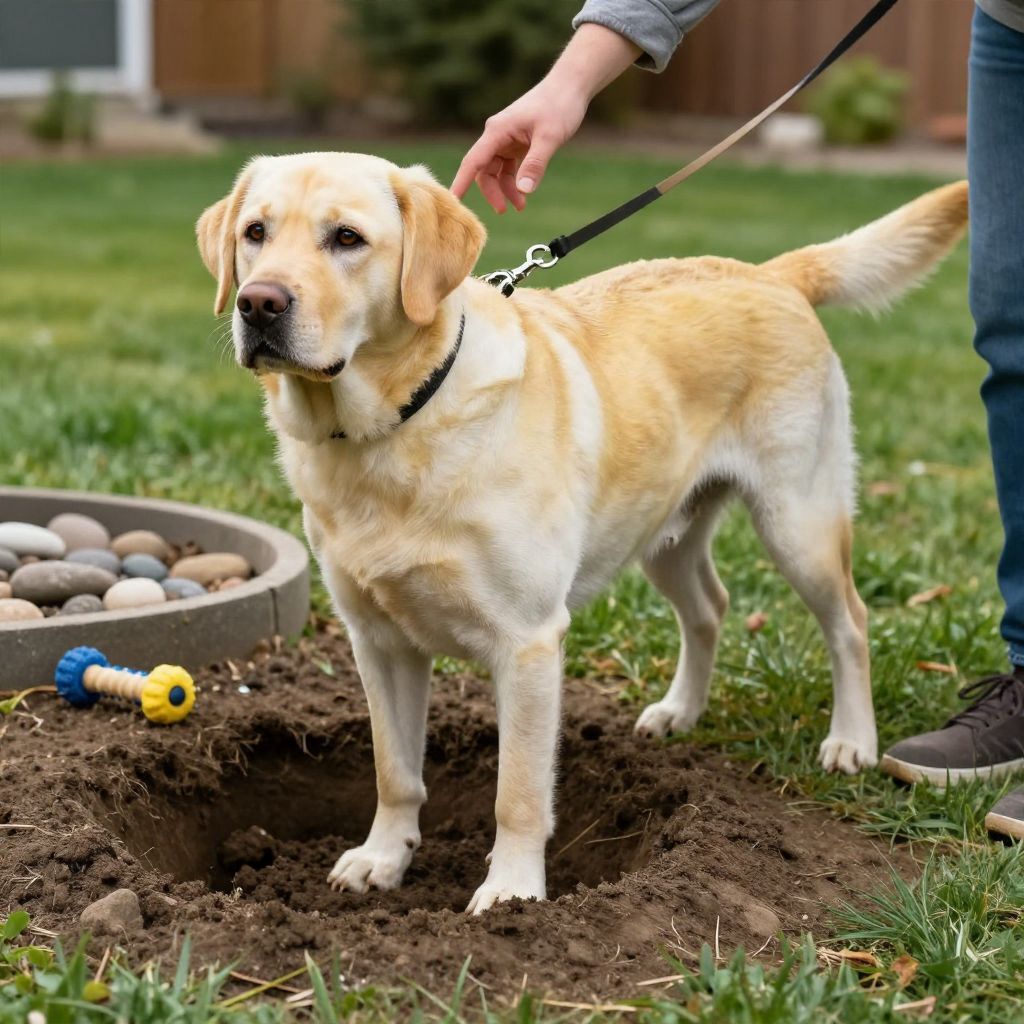
How to stop dog from digging starts with figuring out why your dog is doing it. Digging is often normal canine behavior, but it can become destructive when it is driven by boredom, stress, prey drive, heat-seeking, or a lack of appropriate outlets.
The good news is that most dogs can learn better habits with management, training, and more suitable enrichment. The best approach is to reduce opportunities to dig in unwanted places while giving your dog legal, rewarding ways to use that natural instinct.
How To Stop Dog From Digging?
To stop a dog from digging, first identify the trigger, then prevent access to problem spots, increase exercise and mental stimulation, and teach an alternative behavior. Reward your dog for using approved outlets, such as a designated digging area or a chew toy, and involve a veterinarian or trainer if the behavior is sudden, intense, or anxiety-related.
Why Dogs Dig in the First Place
Digging is not always misbehavior. Many dogs dig because it feels rewarding, helps them cool down, relieves boredom, or lets them follow scents and small animals.
Common reasons include:
- Boredom or too little daily activity
- Attention-seeking, especially if digging gets a big reaction
- Prey drive or scent tracking near burrows, insects, or rodents
- Comfort-seeking in hot, cold, or uncomfortable resting areas
- Anxiety or frustration, including confinement stress
- Instinct, which can be stronger in some dogs than others, but varies by individual
Understanding the reason matters because the solution for a bored young dog is different from the solution for a worried dog or a dog chasing wildlife under a fence.
Step-by-Step: How To Stop Dog From Digging
1) Block access to the places your dog targets
Start by making the problem area less available. Management prevents rehearsal of the habit while you train a better response.
- Supervise your dog outdoors, especially in the early stages.
- Use temporary barriers, fencing, or garden edging where appropriate.
- Cover freshly dug spots with safe deterrents like rocks, pavers, or landscaping fabric under soil.
- Keep your dog on leash or a long line in the yard if supervision is difficult.
If your dog digs under a fence, check for escape risks right away. A dog that can get out of the yard may be at risk of traffic, fights, or getting lost.
2) Increase exercise and mental enrichment
Many dogs dig more when they have energy and no outlet. Physical activity and brain work can reduce the urge to create their own entertainment.
- Add daily walks, sniffing time, or play sessions suited to your dog’s age and fitness.
- Use food puzzles, scatter feeding, and short training games.
- Rotate toys so they stay interesting.
- Offer safe chew items that match your dog’s size and chewing style.
Some dogs need more than a quick walk. High-energy dogs, adolescent dogs, and working-type dogs often benefit from structured activity, but every dog should have a routine that fits their body and health.
3) Teach an alternative behavior
Instead of only saying “no,” show your dog what to do instead. Reward-based training is usually more effective and less stressful than punishment.
- Choose a replacement behavior, such as going to a mat, sitting, or coming when called.
- Practice indoors first with low distractions.
- Reward the behavior generously with treats, praise, or play.
- Move training outside near the digging area once your dog understands the cue.
- Interrupt early and redirect before your dog starts digging.
If your dog begins to dig, calmly call them away and immediately offer the alternative behavior. The goal is to make the better choice easier and more rewarding.
4) Create an approved digging zone
For some dogs, the most practical answer is not to eliminate digging completely, but to redirect it to a place you control.
- Choose one corner of the yard or a sandbox-style area.
- Make it easy to recognize with a distinct surface.
- Hide toys or treats there for your dog to “discover.”
- Reward your dog for digging only in that spot.
This works best for dogs with strong digging instincts. It can be especially useful when your dog enjoys the behavior and you want to preserve it safely.
5) Reduce triggers that make digging more likely
Some dogs dig in response to specific triggers, and those triggers should be addressed directly.
- If your dog digs near fences, look for wildlife, scents, or noises that may be provoking them.
- If your dog digs in hot weather, provide shade, water, and a cool resting area.
- If your dog digs when left alone, consider separation-related stress and ask a professional for help.
- If your dog digs in the same spot repeatedly, inspect for insects, roots, or smells that may be attracting them.
Sometimes the environment is doing part of the work for the dog. Fixing the trigger can reduce the behavior faster than training alone.
What Not to Do
When you are trying to stop dog from digging, avoid approaches that can create fear, confusion, or more problem behavior.
- Do not punish your dog after the fact; they will not connect the punishment with the earlier digging.
- Do not use shock collars, intimidation, or physical corrections.
- Do not assume your dog is being “stubborn” or “dominant.”
- Do not ignore the behavior if it is new, intense, or paired with other symptoms.
Harsh methods can make anxious dogs more stressed and may increase digging or other unwanted behaviors. Humane management and training are safer and more likely to last.
Age, Breed, and Individual Differences
Age and temperament matter. Puppies often dig because they are curious, energetic, and still learning what is allowed. Adult dogs may dig from habit, boredom, or environmental triggers. Senior dogs can dig if they are uncomfortable, restless, or anxious.
Breed tendencies can influence how likely a dog is to dig, but they do not determine behavior. Some dogs with strong hunting, terrier, or scenting instincts may be more motivated to dig, yet individual training history, exercise, and environment matter just as much.
If your dog’s digging pattern changes suddenly, do not assume it is only behavioral. Pain, skin irritation, cognitive changes, or other medical issues can sometimes affect behavior.
When Digging May Signal a Health or Behavior Problem
Call your veterinarian if digging is new, sudden, or accompanied by other changes such as restlessness, pacing, decreased appetite, excessive panting, limping, scratching, or changes in sleep. These signs may point to discomfort, anxiety, or another underlying issue.
Seek professional help sooner if your dog:
- Diggs obsessively and seems unable to settle
- Digs only when alone or during stressful events
- Escapes the yard or damages fencing
- Shows signs of pain, skin irritation, or injury while digging
- Has sudden behavior changes along with other medical symptoms
Urgent veterinary care is important if your dog has a wound, swollen paw, heavy bleeding, trouble breathing, collapse, or appears overheated after digging outside in warm weather.
Practical Yard and Home Fixes
Small changes can make a big difference while training is in progress.
- Trim overgrown areas where wildlife may hide.
- Reinforce fence lines if your dog targets the perimeter.
- Provide a shaded resting spot and fresh water outdoors.
- Supervise after storms, when smells and disturbed soil may increase digging.
- Keep your dog’s routine predictable if stress seems to be a trigger.
If your dog digs indoors, such as at bedding or carpets, look at comfort, anxiety, and boredom first. Indoor digging can also happen when a dog is nesting, seeking a cooler spot, or trying to settle.
How Long Does It Take to Stop Digging?
That depends on the cause, how long the habit has been practiced, and how consistent you are with management and training. Some dogs improve quickly once they have enough enrichment and limited access to the problem area. Others need weeks of repetition and environmental changes.
Progress usually looks like fewer digging episodes, shorter digging bursts, and faster redirection to the right behavior. If you are not seeing improvement, the plan may need to be adjusted.
When to Get Professional Help
A certified dog trainer or veterinary behaviorist can help if digging is tied to anxiety, frustration, or strong compulsive habits. A veterinarian should evaluate sudden changes, suspected pain, or any signs that point to a medical cause.
Professional support is especially helpful if you have already tried management and enrichment but your dog still digs daily, escapes, or seems distressed.
Conclusion
To stop dog from digging, combine prevention, enrichment, training, and a clear alternative outlet. Focus on the reason behind the behavior, reward the right choices, and get professional help if the digging is sudden, severe, or linked to health concerns.
If you want to understand the behavior more deeply, you may also find it helpful to read about why dogs dig holes and this related guide on how to stop a dog from digging.