
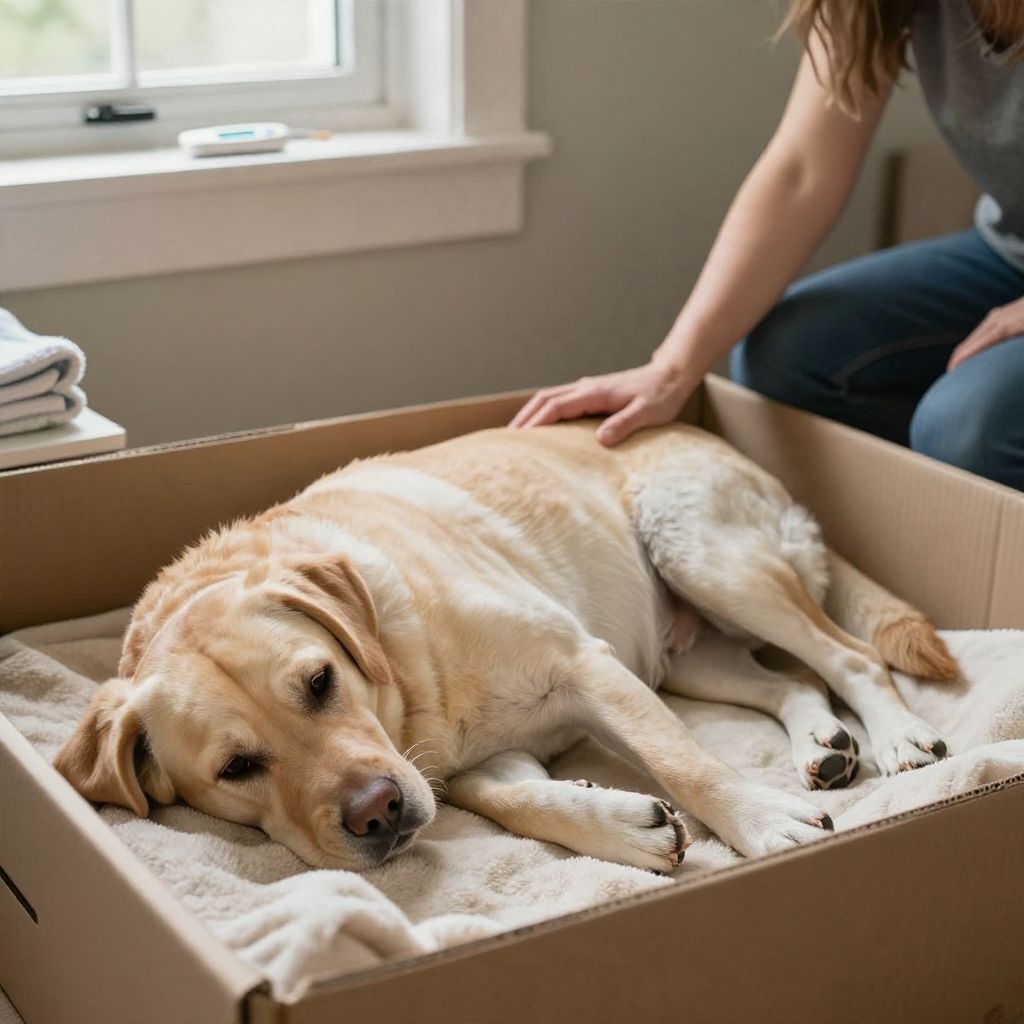
If you’re wondering about signs a dog is going into labor soon, the early changes are often subtle at first. Many pregnant dogs become restless, seek a nesting spot, eat less, or seem clingy as labor approaches.
Knowing what is normal and what is an emergency can help you support your dog safely. Watch closely, prepare a quiet whelping area, and contact your veterinarian if anything seems unusual or your dog appears unwell.
What are the signs a dog is going into labor soon?
Common early signs include nesting behavior, restlessness, reduced appetite, panting, shivering, and a drop in body temperature before labor starts. Some dogs become more affectionate, while others want privacy. These changes can begin hours to a day before active labor, but timing varies from dog to dog.
Early labor signs to watch for
The first stage of labor can look different in each dog. Some signs are mild and easy to miss, especially in first-time mothers.
Behavior changes
- Nesting: Your dog may scratch bedding, circle, or try to make a secluded space.
- Restlessness: She may pace, get up and lie down repeatedly, or seem unable to settle.
- Clinginess or withdrawal: Some dogs want constant attention, while others hide away.
- Increased licking: She may lick her vulva or surrounding area more often.
Physical changes
- Reduced appetite: Many dogs eat less or stop eating as labor nears.
- Panting: This can happen even without exercise or heat.
- Shivering or trembling: Mild shaking may occur during early labor.
- Softening of the abdomen and enlarged mammary glands: These changes often happen during pregnancy, but may become more noticeable near delivery.
Temperature drop
A drop in rectal temperature can happen shortly before labor begins, but it is not perfect on its own. If your veterinarian has shown you how to monitor temperature, use trends rather than a single reading.
How to tell normal pre-labor signs from a problem
Some discomfort is expected, but certain signs mean your dog may need veterinary help. The key is whether she is acting like she is preparing to deliver versus appearing sick, painful, or distressed.
- Usually expected: nesting, mild panting, restlessness, reduced appetite, and a quiet desire for privacy.
- Concerning: severe lethargy, vomiting, collapse, obvious pain, foul-smelling discharge, or a swollen abdomen without progress.
- Urgent: strong contractions for more than 30 minutes without a puppy, green or bloody discharge before any puppy is born, or a puppy stuck in the birth canal.
What to do when you notice labor may be starting
Your job is to provide a calm, safe environment and observe carefully. Avoid unnecessary handling, noise, or visitors, because stress can make labor harder for some dogs.
- Set up a quiet whelping area. Choose a warm, draft-free space with clean bedding.
- Keep water available. Offer fresh water nearby so she can drink easily.
- Limit activity. Short, calm bathroom breaks are fine if she wants them.
- Watch for progression. Note panting, nesting, discharge, and contractions.
- Have your veterinarian’s number ready. Know where the nearest emergency clinic is located.
Signs labor is moving from early stage to active delivery
As labor progresses, your dog may become more focused, have visible abdominal contractions, and start pushing. The first puppy usually arrives after the early stage ends, but the exact timing can vary widely.
What active labor can look like
- Stronger, more regular contractions
- Visible straining or pushing
- Fluid discharge before a puppy is delivered
- More intense panting and concentration
If your dog seems stuck in the early stage for many hours without moving into delivery, contact your veterinarian for advice. Some dogs need monitoring or intervention.
When to call the veterinarian right away
Dog labor can become an emergency quickly, especially if a puppy is too large, positioned poorly, or if the mother is exhausted. Do not wait if you see warning signs.
- More than 30 minutes of strong contractions without a puppy
- More than 2 hours between puppies when more are expected and she is straining or uncomfortable
- Green, black, or bloody discharge before the first puppy
- Foul-smelling discharge
- Extreme weakness, collapse, or trouble breathing
- A puppy visible but not progressing
- Severe pain, repeated vomiting, or a very swollen abdomen
If you are unsure whether the signs are normal, call your veterinarian. It is always safer to ask early than to miss a difficult birth.
How breed, size, and health can affect labor signs
Not every pregnant dog shows the same pattern. Breed, body size, age, litter size, and overall health can all influence how labor begins and how obvious the signs are.
- Smaller dogs may tire more quickly and can be more prone to complications in some situations.
- Larger dogs may show subtle changes that are easy to overlook until labor is underway.
- First-time mothers may seem especially anxious, while experienced mothers may settle into nesting more quickly.
- Dogs with prior health issues may need closer veterinary guidance during pregnancy and delivery.
Because each pregnancy is different, your veterinarian can help you understand what to expect for your individual dog.
Common mistakes to avoid
Well-meaning owners sometimes make labor harder by trying to manage it too actively. Keeping things simple and calm is usually best unless a problem appears.
- Do not leave your dog alone for long periods if labor is near.
- Do not give medications unless a veterinarian specifically instructs you to do so.
- Do not pull on a puppy unless a veterinarian has told you how to assist safely.
- Do not assume every discharge or delay is normal.
- Do not let children or other pets disturb the whelping area.
Helpful preparation before labor starts
If your dog is pregnant and close to delivery, a little preparation can reduce stress for both of you. Having supplies ready also helps you respond quickly if labor begins at night.
- Clean towels and bedding
- A thermometer if your veterinarian recommends temperature monitoring
- Your veterinarian’s phone number and an emergency clinic number
- A safe, quiet room for whelping
- A plan for transport if urgent care is needed
Ask your veterinarian whether your dog’s pregnancy should be monitored more closely based on her age, medical history, or any prior breeding complications.
After the first puppy arrives
Once delivery begins, the pace may vary. Some dogs deliver puppies one after another, while others rest between births. Mild pauses can be normal, but prolonged delays are not.
Watch for strong effort without progress, heavy bleeding, or signs that your dog is exhausted. If a puppy seems stuck or your dog stops delivering but still appears uncomfortable, call your veterinarian promptly.
Bottom line
The most common signs a dog is going into labor soon are nesting, restlessness, panting, reduced appetite, and a desire for privacy. Keep the environment calm, monitor closely, and contact your veterinarian immediately if you see any emergency warning signs or if labor does not progress as expected.
If you want to learn more about pregnancy timing and early changes, you may also find how to know if my dog is pregnant and how long a dog bleeds when in heat helpful for context.