
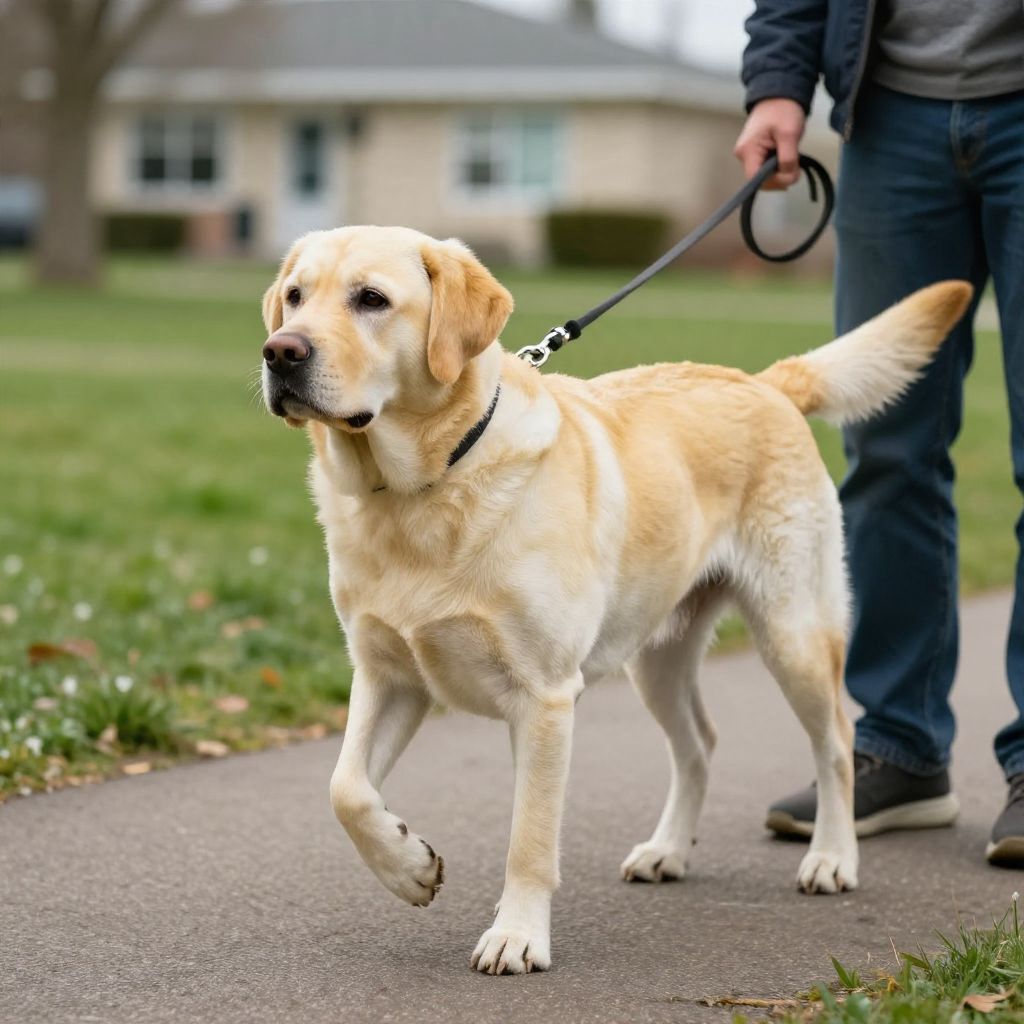
If your dog is limping but shows no sign of pain, it can still mean something is wrong. Dogs often hide discomfort, and a limp may come from a minor sprain, nail injury, paw irritation, joint issue, or something more serious.
Watch how your dog moves, check the paw and leg carefully, and contact a veterinarian if the limp is sudden, persistent, worsening, or paired with swelling, heat, weakness, or any change in behavior.
My Dog Is Limping But Shows No Sign Of Pain: What Does It Mean?
A limp without obvious pain still deserves attention. Dogs may mask discomfort, and limping can signal a soft-tissue strain, paw injury, foreign object, nail problem, joint disease, or a neurological issue. If the limp lasts more than a day, gets worse, or affects weight-bearing, schedule a veterinary exam.
Why a Dog May Limp Without Acting Hurt
Some dogs are naturally stoic, while others simply keep moving despite discomfort. The absence of whining, licking, or yelping does not rule out pain.
Common possibilities
- Paw or nail problems: torn nails, cracked pads, foxtails, thorns, cuts, or debris between the toes.
- Sprains and strains: minor soft-tissue injuries can cause a limp before obvious soreness appears.
- Joint issues: arthritis, hip or elbow problems, or luxating kneecap may cause intermittent limping.
- Foot or leg injuries: bruising, a small fracture, or a bite wound may be easy to miss.
- Neurologic or spinal problems: weakness, coordination changes, or dragging a paw can look like limping.
Age and body type matter, too. Puppies may limp after rough play or growth-related issues, while senior dogs are more likely to have arthritis or chronic joint disease. Large, active, or athletic dogs may be prone to overuse injuries, but any dog can be affected.
What You Should Check at Home First
Before assuming it will pass, do a calm, safe check. Keep your dog on a leash or in a small area so you can observe the limp without extra running or jumping.
- Watch the gait: Is the limp mild, intermittent, or severe? Does it affect a front leg or back leg?
- Inspect the paw: Look between the toes, around the pads, and under the nails for cuts, swelling, debris, or redness.
- Feel the leg gently: Compare both sides for heat, swelling, or a painful reaction.
- Check for nail damage: A split or partially torn nail can cause a limp even when your dog seems otherwise fine.
- Notice behavior changes: Reluctance to climb stairs, jump, sit, or play may point to discomfort.
If your dog resists handling, do not force the exam. A fearful or painful dog may snap, even if they usually tolerate touch well.
When a Limp Is an Emergency
Some limps need urgent veterinary care. Do not wait if you notice any of the following:
- Sudden inability to bear weight
- Visible deformity, severe swelling, or an obvious wound
- Bleeding that does not stop
- A hot, very swollen, or rapidly worsening leg or paw
- Dragging a limb, knuckling, or loss of coordination
- Fever, lethargy, vomiting, or refusal to eat along with the limp
- Known trauma, such as a fall, car accident, or rough collision
- Signs of severe pain such as trembling, panting, hiding, or aggression when touched
If your dog may have a broken bone, dislocated joint, or spinal injury, keep them as still as possible and contact a veterinarian right away.
What You Can Do Before the Vet Visit
For a mild limp without red flags, the safest approach is rest and observation until your veterinarian can assess the cause. Avoid trying to “walk it off.”
- Restrict activity: No running, jumping, rough play, or stairs if possible.
- Use leash walks only: Keep outings short and controlled for bathroom breaks.
- Prevent licking: Excess licking can worsen a paw or nail injury.
- Keep the area clean and dry: This helps if there is a small cut or pad irritation.
- Monitor progress: Note whether the limp improves, stays the same, or gets worse.
Do not give human pain medication unless a veterinarian specifically instructs you to do so. Many common medications are unsafe for dogs, and the wrong product or dose can be dangerous.
How Vets Usually Evaluate a Limping Dog
A veterinarian will look for the source of the limp rather than just the symptom. The exam may include watching your dog walk, checking the paw and nails, feeling the joints and muscles, and assessing range of motion.
Depending on the findings, your vet may recommend imaging such as X-rays or other tests if they suspect a fracture, arthritis, ligament injury, infection, or another internal problem. In some cases, a limp that seems mild can still need treatment because the cause is not visible from the outside.
Common Mistakes to Avoid
It is easy to underestimate a limp when your dog seems cheerful. These mistakes can delay proper care:
- Assuming no pain means no problem: dogs often hide discomfort.
- Letting your dog exercise normally: activity can worsen a strain or injury.
- Ignoring intermittent limping: a limp that comes and goes can still indicate a joint or ligament issue.
- Trying home treatment without guidance: bandaging, splinting, or medicating incorrectly can cause harm.
- Waiting too long: early evaluation often prevents a minor issue from becoming a bigger one.
Different Ages, Breeds, and Body Types Can Change the Risk
There is no single explanation that fits every dog. The most likely cause depends on your dog’s age, activity level, size, and medical history.
Puppies
Puppies may limp after play, slipping, or minor injury. Some growing dogs also develop orthopedic conditions that need veterinary attention, especially if the limp keeps returning or seems to shift between legs.
Adult active dogs
Dogs that run, jump, hike, or play hard may strain muscles or ligaments. Working and sporting dogs can be especially prone to overuse injuries, but any energetic dog can be affected.
Senior dogs
Older dogs are more likely to have arthritis or chronic joint changes. They may not cry out, but you might notice stiffness after rest, slower movement, or reluctance to rise.
Small and large dogs
Body size can influence injury patterns, but it does not determine the diagnosis. Small dogs may be more likely to show kneecap issues, while larger dogs may be at higher risk for some joint and ligament injuries. Your veterinarian can help sort out the cause.
How to Support Recovery Safely
If your veterinarian diagnoses a minor injury or chronic condition, recovery usually depends on controlled activity and follow-up care. The exact plan varies with the cause.
- Follow the prescribed rest period closely.
- Use any supportive gear only as directed by your vet.
- Keep your dog at a healthy weight to reduce stress on joints.
- Use non-slip surfaces at home if your dog is stiff or unsteady.
- Return for rechecks if the limp does not improve as expected.
For dogs with recurring limps, your veterinarian may discuss long-term management such as weight control, physical rehabilitation, or joint-support strategies tailored to your dog’s condition.
When the Limp Seems Mild but Still Should Be Seen
Even if your dog is bright, eating, and acting normal, a veterinary visit is still a good idea when the limp:
- lasts longer than 24 to 48 hours
- keeps coming back
- appears after exercise or a fall
- affects the same leg repeatedly
- comes with swelling, licking, or sensitivity
That is especially important if your dog is very young, very old, or already has arthritis, hip problems, or a history of orthopedic injury.
Bottom Line
If your dog is limping but shows no sign of pain, take it seriously. Rest your dog, check the paw and leg carefully, and arrange a veterinary exam if the limp is sudden, persistent, or worsening. Quick attention can help protect your dog’s comfort and mobility.
If you want more guidance, you may also find these related articles helpful: my dog is limping and my dog is limping on his back leg but not in pain.