
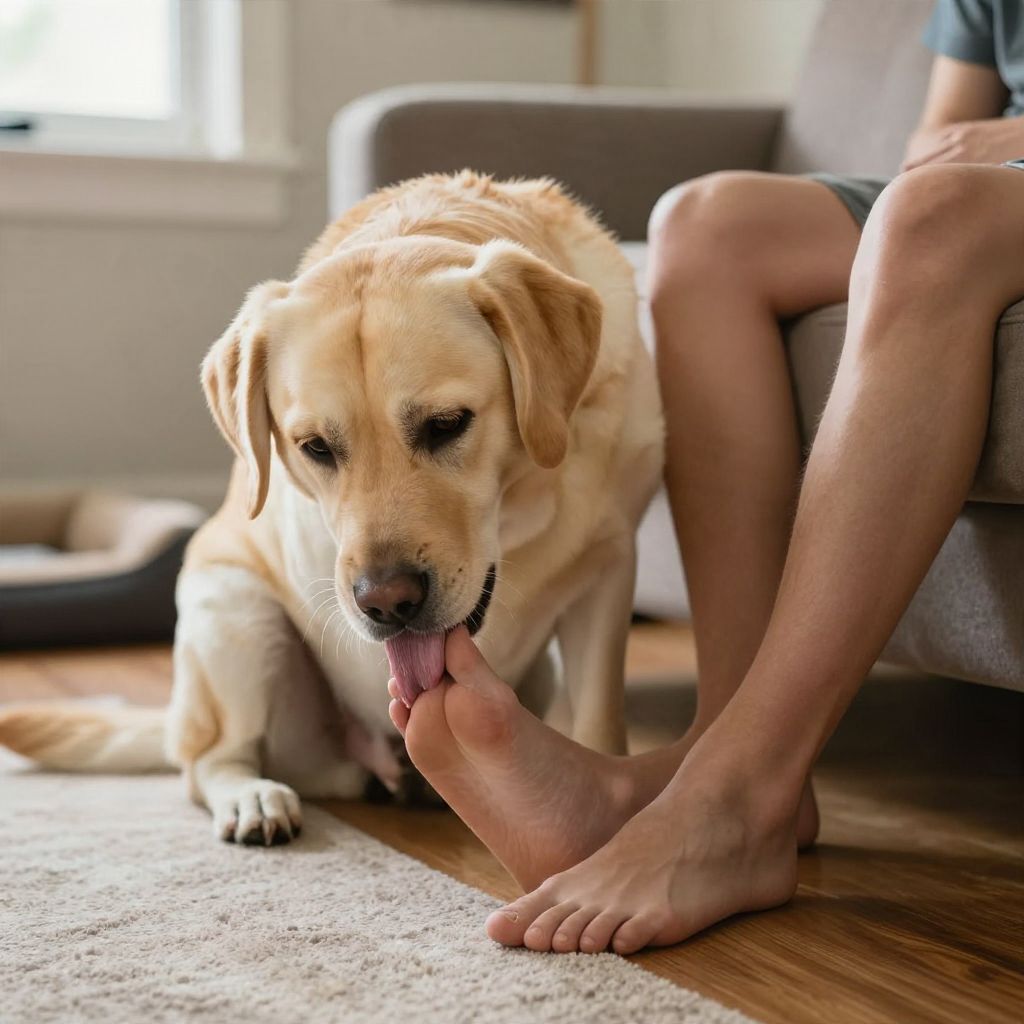
Dogs lick feet for many reasons, and most are harmless at first. Your dog may be seeking attention, enjoying your salty skin, reacting to stress, or responding to an odor or skin irritation.
Sometimes foot licking points to a medical issue such as allergies, pain, nausea, or infection. The key is to notice whether it is occasional and gentle or frequent, intense, and hard to stop.
Why do dogs lick feet?
Dogs lick feet to gather information, show affection, self-soothe, or respond to something on your skin. Occasional licking is often normal, but repeated or obsessive licking can signal anxiety, boredom, skin irritation, allergies, pain, or another health problem that needs a veterinarian’s attention.
Common reasons dogs lick feet
1. Your feet smell interesting
Feet naturally carry sweat, salt, skin oils, and bacteria that can be appealing to dogs. To a dog, your feet may simply be a rich source of scent information.
This is especially likely if your dog licks your feet after exercise, at the end of the day, or when you take off shoes and socks.
2. Your dog wants attention
Many dogs learn that licking gets a reaction, even if that reaction is just talking, laughing, or moving your foot away. If your dog wants interaction, licking can become a reliable habit.
This is more common in dogs that are under-stimulated, bored, or have learned that licking makes people notice them.
3. Licking is soothing
Some dogs use licking as a calming behavior. It can help them settle when they are excited, uncertain, or mildly stressed.
If the licking happens during visitors, loud noises, changes in routine, or when you are relaxing and your dog seems restless, stress may be part of the picture.
4. Your dog likes the taste
Salt on skin can be appealing, and some dogs simply enjoy the taste of feet or lotion residue. Fragranced products may also attract or irritate some dogs.
If you use scented creams, oils, or foot sprays, your dog may be drawn to the smell or taste. Some products can upset a dog’s stomach or irritate the mouth if licked in large amounts.
5. Skin irritation or allergy is present
When a dog repeatedly licks a person’s feet, it can sometimes be a response to skin changes on the feet or lower legs. Dogs may notice redness, flaking, fungal odor, swelling, or broken skin that you have not yet seen.
If your dog also licks their own paws, scratches, or has recurring ear issues, allergies become more likely and deserve veterinary evaluation.
6. Pain or discomfort may be involved
Some dogs lick as a response to pain, nausea, or general discomfort. If the licking is focused on one foot, one leg, or happens alongside limping, stiffness, or reluctance to move, pain should be considered.
Never assume it is “just a habit” if the behavior starts suddenly or comes with other physical changes.
When foot licking is normal vs. when it is a problem
Occasional licking that stops easily is usually less concerning than persistent licking that is hard to interrupt. The difference matters because repeated licking can become a habit and can also point to an underlying issue.
- Usually less concerning: brief licking, no skin damage, no other symptoms, and your dog can disengage.
- More concerning: frequent licking, fixation on one area, licking that wakes your dog from rest, or licking that causes redness or hair loss.
- Urgent: swelling, bleeding, limping, severe redness, open sores, sudden behavior change, vomiting, or signs of toxin exposure.
What to do if your dog keeps licking your feet
1. Check for patterns
Notice when the licking happens. Does it occur after walks, when you sit down, when guests arrive, or after you apply lotion? Patterns can help you figure out whether the cause is attention, stress, scent, or a medical issue.
2. Avoid rewarding the behavior
If your dog licks your feet to get attention, even pushing them away can reinforce the habit. Instead, stay calm and consistent.
- Stand up or move away briefly.
- Redirect your dog to a toy, chew, or mat.
- Reward calm behavior with praise or a treat.
3. Offer a better outlet
Dogs often lick when they need something to do. Give your dog appropriate alternatives such as sniff walks, food puzzles, chew-safe toys, or training games.
More enrichment can reduce attention-seeking licking, especially in young dogs or high-energy dogs that need more mental work.
4. Keep your feet clean and skin-friendly
Wash off sweat after exercise and dry your feet well. If you use lotions, choose pet-safe products when possible and keep scented products away from your dog’s mouth.
If your skin is broken, irritated, or infected, avoid letting your dog lick it. That protects both your skin and your dog’s mouth.
5. Teach an alternate behavior
You can reward your dog for doing something else when they approach your feet. A simple “sit,” “go to mat,” or “leave it” cue can be very helpful.
- Ask for a known behavior before your dog starts licking.
- Reward immediately when they comply.
- Practice in short sessions when your dog is calm.
- Use the cue consistently in the same situations.
6. Reduce stress triggers
If licking happens during stressful moments, focus on making the environment calmer. Predictable routines, quiet resting spaces, and gradual exposure to triggers can help.
If your dog seems anxious often, a certified trainer or veterinary behaviorist can help you build a plan based on humane, reward-based methods.
When to call the veterinarian
Contact your veterinarian if the licking is new, intense, or accompanied by other symptoms. A medical issue is more likely when the behavior appears suddenly or changes in frequency.
- Redness, swelling, odor, discharge, or sores on the feet or skin
- Limping, stiffness, or sensitivity when touched
- Repeated paw licking, ear infections, or scratching
- Vomiting, diarrhea, drooling, or reduced appetite
- Behavior changes such as restlessness, hiding, or irritability
Emergency warning signs
Seek urgent veterinary care if your dog has trouble breathing, collapses, has facial swelling, cannot bear weight, has severe bleeding, or may have licked or ingested a harmful substance. Do not wait for symptoms to “see if it passes.”
Could breed, age, or personality matter?
Yes, individual differences matter a lot. Some dogs are naturally more mouthy, more scent-driven, or more prone to anxiety, but no breed automatically licks feet for the same reason.
Puppies may lick more because they are exploring and learning. Senior dogs may lick more if they are uncomfortable, anxious, or dealing with pain or cognitive changes. A shy dog may lick as a calming signal, while a social dog may lick mainly for attention.
Common mistakes to avoid
- Assuming all licking is harmless without checking for skin or health problems
- Using punishment, yelling, or physical correction
- Accidentally rewarding the licking with attention every time
- Ignoring sudden changes in behavior
- Using human creams or essential oils without checking safety for dogs
How a vet may help
If your veterinarian suspects a medical cause, they may examine the skin, ears, paws, and overall health, and ask about diet, environment, grooming products, and timing. Depending on the findings, they may discuss allergies, infection, pain, gastrointestinal issues, or anxiety-related licking.
Treatment depends on the cause, so it is important not to guess. The right approach for a dog with allergies is different from the right approach for a dog licking out of boredom or stress.
Bottom line
Dogs lick feet for scent, attention, comfort, taste, or sometimes because of a health problem. If the behavior is occasional, it may be normal; if it is frequent, intense, or paired with other symptoms, your veterinarian should evaluate it.
If you want to understand related licking habits, you may also find these articles helpful: why dogs lick their paws and why dogs lick you so much.