
Why do dogs shake their heads? Often it’s a normal way to clear water, dust, or loose debris from the ears. But repeated head shaking can also signal irritation, pain, or an ear problem that needs attention.
The key is to notice how often it happens and whether your dog also scratches, smells bad, seems painful, or has discharge. Those clues help you tell a harmless shake from a problem that should be checked by a veterinarian.
Why do dogs shake their heads?
Dogs shake their heads to remove something uncomfortable from the ears, such as water, dirt, wax, or an insect. If the shaking is frequent, forceful, or paired with scratching, odor, redness, discharge, or balance changes, it may point to an ear infection, allergy, foreign body, or injury.
Common reasons dogs shake their heads
Water or debris in the ear
This is one of the most common and least concerning reasons. After swimming, bathing, rain, or rolling in grass, a dog may shake to dry the ear canal or dislodge material.
If the shaking stops quickly and your dog otherwise seems comfortable, it may simply be a normal response.
Ear wax buildup or mild irritation
Some dogs naturally produce more wax than others, and floppy-eared dogs or dogs that swim often may trap moisture and debris more easily. Mild irritation can trigger occasional head shaking before a bigger issue develops.
Regular ear checks can help you notice redness, a strong smell, or excess wax early.
Ear infection
Ear infections are a very common cause of repeated head shaking. They can be caused by bacteria, yeast, allergies, moisture, or an underlying skin problem.
Other signs may include:
- Scratching at one or both ears
- Redness or swelling
- Bad odor
- Dark, yellow, or bloody discharge
- Pain when you touch the ear
- Head tilt or balance problems
Allergies
Dogs with environmental or food-related allergies may develop itchy ears, which can lead to head shaking and scratching. Allergies do not affect every dog the same way, and some dogs show skin signs more than ear signs.
If your dog has recurring ear trouble, your veterinarian may look for an allergy pattern rather than treating only the ear itself.
Foreign body or insect
A grass seed, foxtail, dirt clump, or insect in the ear can cause sudden, intense head shaking. This is more likely if the problem starts abruptly during a walk, hike, or play session outdoors.
Do not try to dig into the ear canal with cotton swabs or tools, because that can push the object deeper or injure the ear.
Ear mites
Ear mites are more common in puppies and in dogs with close contact with other pets. They can cause intense itchiness, head shaking, and dark, crumbly debris in the ears.
Because ear mites can spread to other animals, your veterinarian should confirm the cause and recommend appropriate treatment.
Ear injury or pain elsewhere in the head
A scratch, bite, hematoma, or trauma can make a dog shake its head to try to relieve discomfort. Sometimes the problem is not in the ear canal itself but in the ear flap, jaw, or nearby tissues.
If your dog cries out, avoids being touched, or has swelling of the ear flap, get veterinary care promptly.
When head shaking is normal vs. when it is a warning sign
A single shake after swimming, grooming, or a windy walk is usually normal. Repeated shaking over hours or days is not something to ignore, especially if it comes with itchiness, odor, discharge, pain, or a head tilt.
Usually less concerning
- One or two quick shakes after getting wet
- No scratching or discomfort
- No smell, redness, or discharge
- Your dog acts normally otherwise
More concerning
- Frequent or forceful head shaking
- Scratching at the ear or rubbing the face
- Foul odor from the ear
- Redness, swelling, or discharge
- Head tilt, wobbliness, or loss of balance
- Whining, sensitivity, or sudden behavior change
What you should do if your dog keeps shaking their head
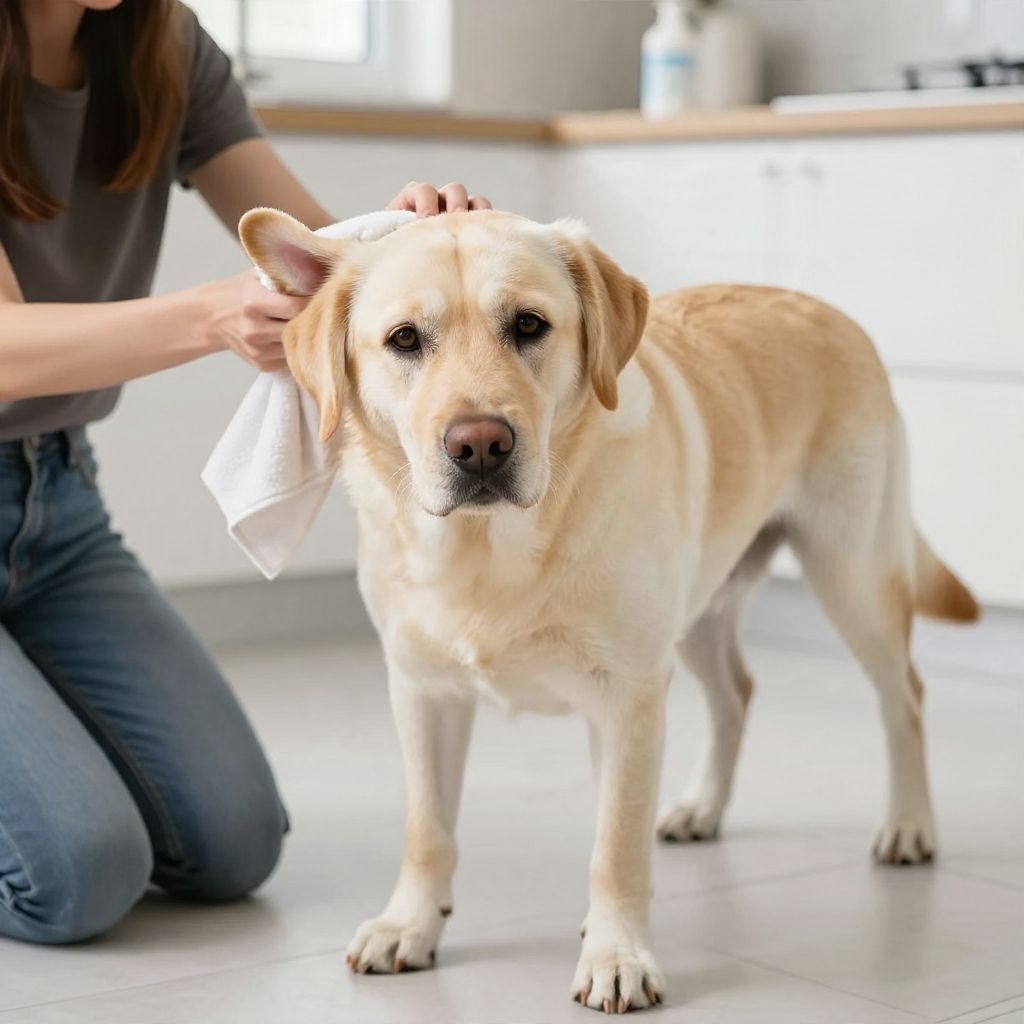
Start by looking for obvious causes, but avoid putting anything deep into the ear. If the shaking is mild and your dog has just gotten wet, gently dry the outer ear with a soft towel.
- Check both ears for redness, odor, swelling, or discharge.
- Look for recent swimming, bathing, grooming, or outdoor exposure.
- Notice whether one ear or both ears are affected.
- Watch for scratching, head tilt, pain, or balance changes.
- Schedule a veterinary exam if the behavior continues or returns.
If your dog has a history of ear problems, recurring head shaking should be taken seriously. Repeated episodes often mean there is an underlying issue that needs treatment, not just cleaning.
What not to do
It can be tempting to “clean it out” at home, but some common mistakes can make the problem worse.
- Do not use cotton swabs deep in the ear canal.
- Do not pour random oils, peroxide, or home mixtures into the ear.
- Do not use leftover ear drops from another pet or a previous problem unless your veterinarian told you to.
- Do not wait if your dog seems painful or unsteady.
The ear canal is delicate, and the wrong product can irritate tissue or hide the real cause of the problem.
When to call the veterinarian
Contact your veterinarian if head shaking lasts more than a day, keeps coming back, or is paired with any other ear symptom. A veterinary exam can identify whether the cause is infection, mites, allergies, a foreign body, or another problem.
Your vet may examine the ear with an otoscope, look at ear debris under a microscope, or recommend additional testing if the issue is chronic or severe.
Get urgent veterinary care if you notice:
- A sudden head tilt
- Loss of balance or falling over
- Severe pain or crying when the ear is touched
- Bleeding from the ear
- Swelling of the ear flap after shaking
- Sudden weakness, disorientation, or abnormal eye movements
These signs can indicate a more serious ear problem or a condition affecting the inner ear or nervous system.
How age, breed, and lifestyle can affect head shaking
Any dog can shake their head, but some dogs are more likely to develop ear irritation because of their individual anatomy or habits. This does not mean every dog of a certain breed will have the same issue.
Dogs with floppy ears
Dogs with long or floppy ears may trap more moisture and airflow in the ear canal, which can make irritation and infection more likely. That said, ear shape is only one factor; allergies, grooming, and swimming habits matter too.
Puppies
Puppies may shake their heads because of ear mites, play-related debris, or early ear irritation. Because puppies can also be more prone to contagious parasites, persistent shaking should be checked sooner rather than later.
Active swimmers or outdoor dogs
Dogs that swim, hike, or spend a lot of time in tall grass may pick up water, dirt, or plant material in the ears. After these activities, a quick ear check and drying of the outer ear can help reduce irritation.
Senior dogs
Older dogs may be more sensitive to discomfort and may also have chronic skin or ear conditions. If an older dog starts shaking their head more often, it is worth a veterinary visit rather than assuming it is “just age.”
How veterinarians may treat the cause
Treatment depends on the reason for the shaking. The goal is to address the underlying problem, not just the symptom.
- Infection: Prescription ear medication and cleaning guidance
- Mites: Parasite treatment for the affected pet and sometimes other pets in the home
- Foreign body: Careful removal by a veterinarian
- Allergies: A plan to manage skin and ear inflammation over time
- Injury: Pain control and treatment of the damaged tissue
Follow the full treatment plan even if your dog seems better quickly. Stopping early can allow the problem to return.
How to help prevent ear irritation
You cannot prevent every ear problem, but a few habits can lower the risk of recurring head shaking.
- Dry the outer ear after swimming or bathing.
- Keep ear hair and grooming up to date if your dog’s coat tends to trap debris.
- Check ears regularly for odor, redness, or discharge.
- Use parasite prevention recommended by your veterinarian.
- Address allergies or skin problems early if they keep returning.
If your dog is prone to ear trouble, ask your veterinarian which ear-cleaning routine is appropriate. Not every dog needs the same level of cleaning, and too much cleaning can also irritate the ear.
Bottom line
Why do dogs shake their heads? Sometimes it is a simple way to clear water or debris, but frequent or painful head shaking often points to an ear problem that needs veterinary attention. Watch for odor, redness, discharge, scratching, pain, or balance changes, and get help promptly if those signs appear.
If you want to learn more about related symptoms, you may also find these guides helpful: why dogs shake their bodies and why a dog may be shaking and panting.