
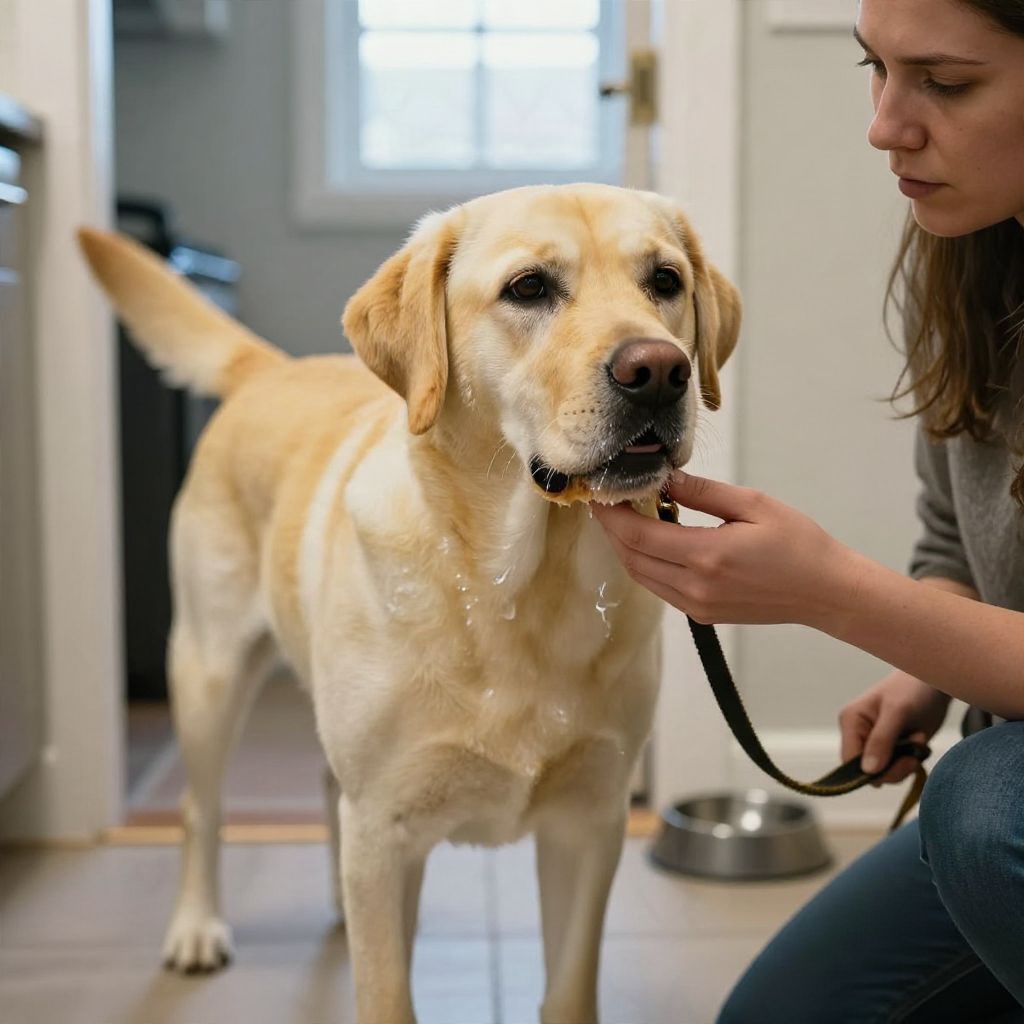
Why is my dog foaming at the mouth? In many cases, it’s drool mixed with air, saliva, or vomit, but it can also signal nausea, mouth irritation, heat stress, poisoning, or a seizure. The cause matters because some reasons are mild while others need urgent veterinary care.
If your dog is otherwise normal, the foaming may be temporary. If it comes with collapse, trouble breathing, repeated vomiting, tremors, or sudden behavior changes, treat it as an emergency and contact a veterinarian right away.
Why is my dog foaming at the mouth?
Foaming at the mouth usually happens when a dog produces extra saliva and it gets whipped into bubbles by panting, lip-smacking, or vomiting. Common causes include nausea, stress, motion sickness, dental pain, mouth injury, toxin exposure, heatstroke, and seizures. The right response depends on the other symptoms.
Common causes of foaming at the mouth in dogs
1. Nausea or an upset stomach
Dogs often drool more when they feel sick to their stomach. If they are also licking their lips, swallowing repeatedly, or retching, the foam may be related to nausea or vomiting.
This can happen after eating something unusual, getting carsick, or having a stomach bug. Some dogs vomit before you see any foam, while others only produce saliva and bubbles.
2. Mouth pain or something stuck in the mouth
Foaming can happen if your dog has a broken tooth, gum disease, a cut in the mouth, or a foreign object such as a stick, bone fragment, or piece of toy. Pain and irritation can trigger heavy drooling.
Look for pawing at the face, bad breath, bleeding, trouble chewing, or refusing food. Do not put your fingers deep into the mouth if your dog is painful or anxious.
3. Heat stress or overheating
Excessive panting can make saliva look foamy. If your dog has been exercising in hot weather, sitting in a warm car, or struggling in humid conditions, overheating is a serious concern.
Heatstroke is an emergency. Other warning signs include weakness, bright red or pale gums, vomiting, diarrhea, confusion, or collapse.
4. Poisoning or toxin exposure
Certain substances can cause sudden drooling and foaming, including some household cleaners, pesticides, toxic plants, human medications, and foods that are unsafe for dogs. Toxin exposure may also cause vomiting, tremors, wobbliness, or seizures.
If you suspect poisoning, contact your veterinarian or an animal poison helpline immediately. Do not wait for symptoms to worsen.
5. Seizures or neurological problems
Some dogs foam at the mouth during or after a seizure. You may also notice stiffening, paddling, staring, loss of awareness, or sudden collapse. Afterward, the dog may seem confused, restless, or temporarily blind.
This is urgent, especially if it is the first seizure, seizures repeat, or your dog does not return to normal quickly.
6. Stress, fear, or motion sickness
Excitement, anxiety, and car rides can cause drooling that looks like foaming. Some dogs are especially prone to motion sickness, while others only do this in stressful situations such as vet visits or loud events.
If the problem happens mainly during travel or stressful handling, the cause may be behavioral or situational rather than a medical emergency. Still, repeated episodes are worth discussing with your veterinarian.
7. Dental disease or oral inflammation
Inflamed gums, infected teeth, ulcers, or oral masses can all increase saliva production. Small dogs, senior dogs, and dogs with a history of dental disease are often more likely to show mouth-related drooling.
Because oral pain can be easy to miss, any ongoing foam with bad breath, drooling, or reluctance to eat should be checked by a vet.
When foaming at the mouth is an emergency
Some causes of foaming are minor, but certain signs mean your dog needs urgent veterinary attention. Do not try to “watch and wait” if you see any of the following:
- Difficulty breathing or choking
- Collapse, extreme weakness, or inability to stand
- Seizures, tremors, or uncontrolled shaking
- Known or suspected toxin exposure
- Repeated vomiting or retching
- Bloated abdomen or unproductive vomiting
- Heat stress signs such as heavy panting, disorientation, or bright red gums
- Bleeding from the mouth or a visible object stuck in the mouth
- Sudden confusion, disorientation, or abnormal behavior
If your dog is foaming and also seems distressed, the safest choice is to seek emergency care.
What to do right away
Your next steps should focus on safety and observation. Keep your dog calm and avoid anything that could make the situation worse.
- Move your dog to a quiet, cool place. Reduce excitement and stop exercise.
- Check breathing and gum color. Pale, blue, gray, or very dark gums are concerning.
- Look for obvious causes. Check for a stuck object, vomiting, injury, or signs of overheating.
- Keep other pets away. If toxin exposure is possible, limit access to the area.
- Call your veterinarian. Share when the foaming started, what it looks like, and any other symptoms.
If your dog may have ingested something harmful, bring the product label or packaging with you to the clinic if it is safe to do so.
What not to do
When you are worried, it is tempting to try quick fixes, but some actions can make things worse.
- Do not give human medications unless a veterinarian specifically instructs you to.
- Do not force food, water, or treats if your dog is vomiting, choking, or having a seizure.
- Do not try to pull out a deep object from the mouth if it is lodged firmly.
- Do not assume foaming is “just drool” if your dog has other symptoms.
- Do not use punishment if stress or fear seems to be involved.
How a vet may evaluate the problem
Your veterinarian will usually ask about the timing, your dog’s recent activities, diet, environment, and any possible exposures. They may examine the mouth, check temperature, and assess hydration, pain, or neurological signs.
Depending on the situation, the vet may recommend bloodwork, imaging, toxin guidance, dental evaluation, or treatment for vomiting, pain, infection, or another underlying issue. The exact approach depends on your dog’s age, breed, history, and symptoms.
Breed, age, and individual factors that can matter
Any dog can foam at the mouth, but some factors change how likely certain causes are. This does not mean a dog is destined to have a problem; it just helps narrow the possibilities.
- Puppies may be more likely to mouth objects, swallow foreign material, or react strongly to new foods and environments.
- Senior dogs may have more dental disease, oral masses, or neurological issues that need attention.
- Brachycephalic dogs with short muzzles can be more prone to overheating and breathing difficulty, which can make saliva look foamy.
- Anxious or motion-sensitive dogs may drool heavily during travel or stressful events.
- Dogs with a history of seizures need prompt evaluation if foaming appears with any abnormal episode.
How to prevent future episodes
Prevention depends on the cause, but a few practical habits can reduce risk.
- Keep toxic products, medications, and unsafe foods out of reach.
- Use safe chew toys and replace damaged ones before they break apart.
- Brush your dog’s teeth or follow a vet-approved dental care plan.
- Limit hard exercise in hot weather and provide shade and water.
- Use gradual, reward-based training for travel or handling anxiety.
- Schedule veterinary care if drooling or foaming happens repeatedly.
When repeated foaming needs follow-up
If your dog foams at the mouth more than once, even if the episodes seem mild, it is worth tracking the pattern. Note the time, what your dog ate, activity level, travel, weather, and any signs like vomiting or trembling.
Recurring episodes can point to dental disease, nausea, anxiety, motion sickness, or another medical issue that needs treatment. A pattern is often more useful than a single isolated event.
Conclusion
Why is my dog foaming at the mouth? It may be simple drooling from stress or nausea, but it can also signal poisoning, overheating, seizures, or mouth injury. If your dog has any red-flag symptoms, seek urgent veterinary care. When in doubt, call your vet and describe the full picture.
If you want to compare related symptoms, you may also find it helpful to read about why dogs throw up or why dogs throw up white foam.