
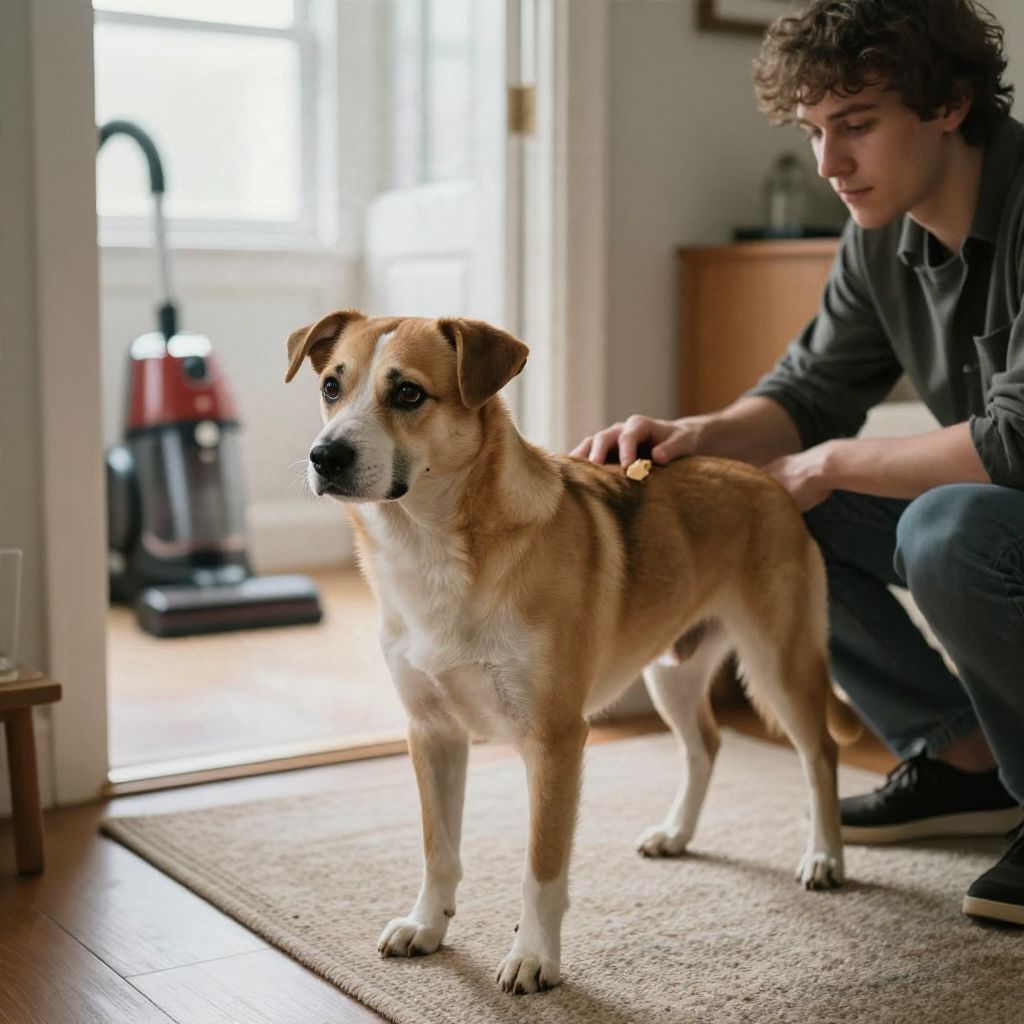
Why is my dog scared of everything? If your dog startles at noises, avoids new people, or seems nervous in everyday situations, fear is usually driving the behavior. The cause can be poor socialization, a past bad experience, pain, illness, genetics, or simply a naturally cautious temperament.
The good news is that many fearful dogs improve with patient management, predictable routines, and reward-based training. The key is to identify what triggers your dog, avoid forcing exposure, and get veterinary help if the fear is sudden, severe, or linked to other health changes.
Why is my dog scared of everything?
A dog that seems afraid of everything is usually reacting to stress, not being stubborn or “bad.” Common causes include limited early socialization, a frightening event, pain or illness, age-related changes, or an anxious temperament. The right response is gentle management, gradual confidence-building, and a vet check if the fear is new or worsening.
Common causes of fear in dogs
Fear can come from behavior, health, or both. Some dogs are naturally more cautious, while others become fearful after a negative experience or because something physical is making the world feel unsafe.
1. Poor early socialization
Puppies go through a sensitive learning period when positive exposure to people, sounds, surfaces, and everyday life can shape confidence. If a puppy had too little safe exposure, later experiences may feel overwhelming.
This does not mean the dog is doomed. It means you may need to rebuild confidence slowly with calm, positive experiences.
2. A frightening or painful experience
Dogs can become fearful after loud fireworks, rough handling, a dog attack, a fall, a car accident, or even a single scary veterinary visit. Sometimes the fear is specific at first, then spreads to similar sounds, places, or people.
3. Pain or medical problems
Dogs in pain may seem jumpy, defensive, or reluctant to move. Ear infections, arthritis, dental pain, vision loss, hearing loss, and neurological problems can all make the world feel more threatening.
If your dog’s fear appeared suddenly, especially in an older dog, a veterinary exam is important.
4. Age-related changes
Puppies may be fearful because they are still learning. Senior dogs may become more anxious if their senses decline or if cognitive changes make familiar things confusing. Both age groups may need extra patience and structure.
5. Genetics and temperament
Some dogs are simply more cautious by nature. Breed tendencies can play a role in energy level, sensitivity, or alertness, but no breed is guaranteed to act a certain way. Individual personality, early care, and life experiences matter a lot.
Signs your dog is scared, not “being difficult”
Fear can look subtle at first. Learning your dog’s body language helps you respond before the fear escalates.
- Tail tucked or held low
- Flattened ears
- Wide eyes or “whale eye”
- Freezing or moving away
- Hiding behind you or furniture
- Shaking, panting, or drooling when not hot or excited
- Refusing food in stressful situations
- Growling, barking, snapping, or lunging when cornered
If your dog is showing aggressive behavior out of fear, that is a safety issue, not a training failure. Give space and seek professional help.
What to do if your dog is scared of everything
The goal is not to “make” your dog face fears. The goal is to help your dog feel safe enough to learn that the world is manageable.
- Rule out medical causes first. If the fear is new, sudden, or paired with appetite changes, limping, vomiting, head shaking, confusion, or sleep changes, schedule a vet visit.
- Track triggers. Write down what your dog fears, how intense the reaction is, and what happened right before it. Patterns make training easier.
- Reduce exposure to overwhelming situations. Avoid crowded parks, noisy gatherings, or forced greetings while your dog is still struggling.
- Use distance and choice. Let your dog look at the trigger from far enough away that they can stay calm.
- Reward calm behavior. Use treats, praise, or play when your dog notices something scary and stays relaxed.
- Move slowly. Increase difficulty only when your dog is consistently comfortable.
Training methods that help fearful dogs
Reward-based training is the safest and most effective approach for fear. It teaches your dog that good things happen when scary things appear, without adding pressure.
Desensitization and counterconditioning
These two methods are often used together. Desensitization means exposing your dog to a mild version of the trigger. Counterconditioning means pairing that trigger with something your dog loves, such as food or a favorite toy.
For example, if your dog fears strangers, start with a person far away and reward calm behavior. If your dog remains relaxed, you can slowly decrease distance over time.
Build confidence with easy wins
Fearful dogs often benefit from predictable, low-stress activities where they can succeed.
- Simple cue training like sit, touch, or look at me
- Sniffing games and food puzzles
- Short leash walks in quiet areas
- Calm handling practice only if your dog is comfortable
- Enrichment that allows choice, such as scatter feeding in a safe space
Keep sessions short
Long training sessions can overwhelm a fearful dog. A few minutes at a time is often better than one long lesson.
What not to do
Some common approaches can make fear worse. Avoiding these mistakes can prevent setbacks.
- Do not punish barking, growling, or hiding. Those are warning signals, not bad behavior.
- Do not force your dog toward the scary object or person.
- Do not use shock collars, prong collars, or intimidation-based methods.
- Do not flood your dog by trapping them in a scary situation until they “get over it.”
- Do not assume your dog will simply outgrow severe fear without help.
Fear can intensify if your dog learns that scary situations are unavoidable.
How to help your dog feel safer at home
Home should be the place where your dog can relax and recover. Small changes can reduce daily stress.
- Create a quiet retreat with a bed, crate, or room your dog can choose
- Keep a routine for meals, walks, and bedtime
- Use white noise or soft background sound to mask sudden noises
- Limit chaotic interactions with children or visitors
- Offer enrichment like chew-safe toys, sniffing games, or food puzzles
If your dog is scared of household noises, start with very low-volume exposure paired with treats, then gradually increase only if your dog stays relaxed.
When fear may be linked to health or aging
Sometimes a dog that suddenly seems afraid of everything is actually struggling with a medical issue. This is especially important in older dogs, but it can happen at any age.
Call your veterinarian soon if you notice
- Sudden onset of fear or anxiety
- Changes in appetite, thirst, or bathroom habits
- Stiffness, limping, or trouble jumping
- Head shaking, scratching, or signs of ear pain
- Cloudy eyes, bumping into objects, or reluctance in dim light
- Confusion, pacing, nighttime restlessness, or altered sleep
These signs can point to pain, sensory decline, or another condition that needs treatment.
Seek urgent veterinary care if your dog
- Has trouble breathing
- Collapses or cannot stand
- Has seizures
- Shows sudden severe disorientation
- Has a painful injury or obvious trauma
- Becomes dangerously aggressive or panicked and cannot be safely handled
When to work with a trainer or behavior specialist
If your dog’s fear is affecting daily life, a qualified professional can help you make a safe plan. Look for a certified trainer who uses humane, reward-based methods, or a veterinary behaviorist for severe anxiety or complex cases.
Professional help is especially useful if your dog fears many different things, cannot settle at home, or has started guarding, snapping, or biting when scared.
How long does it take to improve?
There is no fixed timeline. Some dogs improve in weeks, while others need months of gradual work. Progress is usually uneven, with good days and setbacks.
What matters most is consistency. Small, repeatable successes build confidence better than big, dramatic changes.
Conclusion
If you keep asking why is my dog scared of everything, start by considering fear triggers, pain, and recent changes in behavior. Give your dog space, use reward-based training, and avoid forcing exposure. If the fear is sudden, severe, or tied to health symptoms, schedule a veterinary exam and get professional behavior help.
If you want to understand related comfort-seeking behaviors, you may also find it helpful to read about why dogs lick so much and why dogs lick you all the time.