
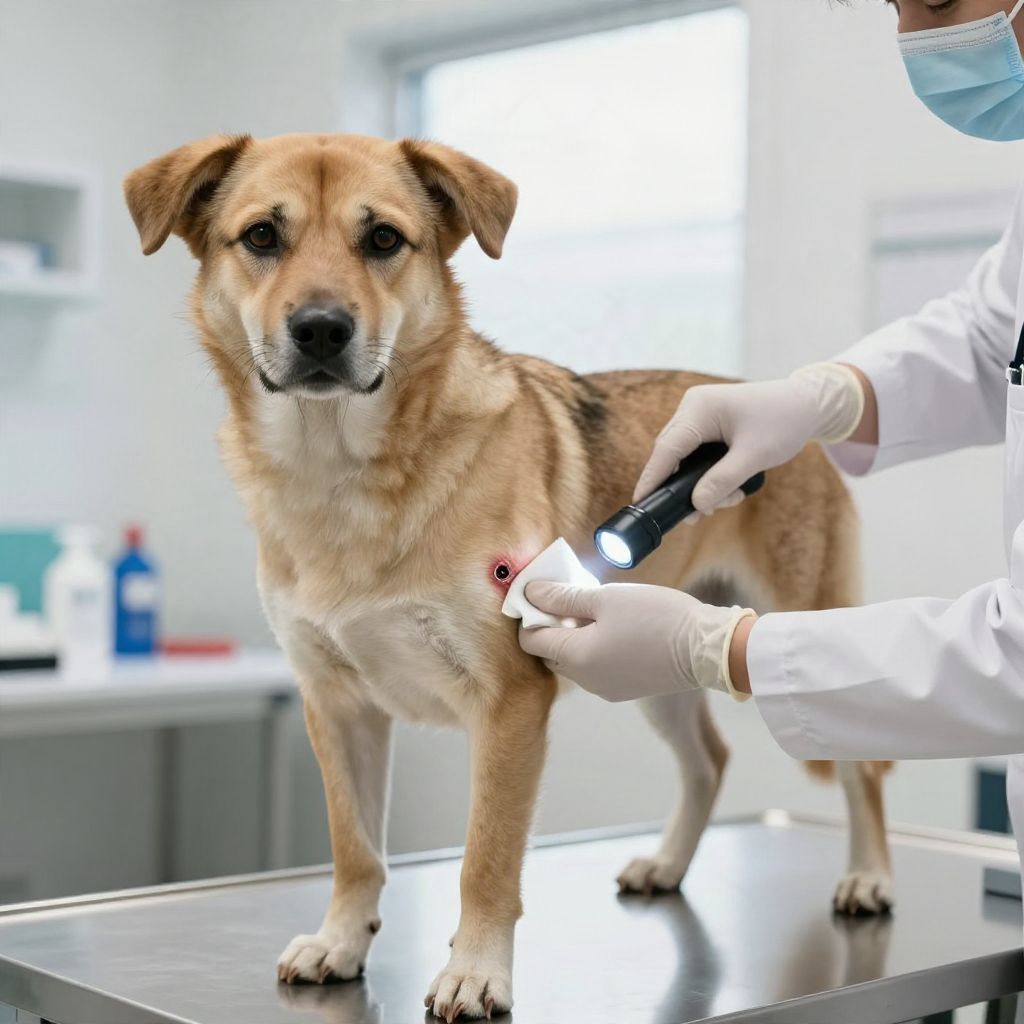
If you’re asking, can dogs get tetanus, the short answer is yes, but it’s uncommon. Dogs are generally more resistant to tetanus than people, yet a deep puncture wound or contaminated injury can still allow the bacteria to enter.
Because tetanus can become serious quickly, any dog with a wound plus stiffness, facial changes, or trouble moving should be checked by a veterinarian promptly. Early care matters, especially if the injury was dirty, deep, or you are unsure how it happened.
Can dogs get tetanus?
Yes. Dogs can get tetanus if Clostridium tetani bacteria enter a wound, usually a deep puncture or contaminated cut. It is less common in dogs than in people, but it can still cause painful muscle stiffness, difficulty opening the mouth, and serious complications that need veterinary treatment.
How tetanus happens in dogs
The bacteria that cause tetanus live in soil, dust, and manure. They usually cause problems when they get into a wound with low oxygen, such as a puncture, bite, embedded object, or deep scrape that seals over.
Not every wound leads to tetanus. Risk depends on the wound type, how contaminated it is, how quickly it is cleaned, and your dog’s overall health.
Wounds that deserve extra caution
- Deep puncture wounds
- Animal bites
- Wounds with dirt, manure, or rust-colored debris
- Embedded thorns, sticks, or foreign objects
- Injuries that were not cleaned right away
Signs of tetanus in dogs
Early tetanus signs can be subtle, then progress. The most common clue is muscle stiffness, but the exact signs can vary with the dog and the severity of the infection.
Common warning signs
- Stiff gait or difficulty walking
- Rigid body posture
- Jaw stiffness or trouble opening the mouth
- Facial changes, such as a tight or “smiling” look
- Ear position changes or a fixed expression
- Difficulty swallowing
- Muscle spasms or tremors
- Sensitivity to noise, touch, or movement
If you notice these signs after a wound, treat it as urgent. Tetanus can worsen, and dogs may need pain control, wound care, antibiotics, and supportive treatment from a veterinarian.
When to seek urgent veterinary care
Do not wait for symptoms to “settle down” if your dog has a suspicious wound and is becoming stiff. Tetanus is not something to monitor at home when red flags are present.
- Go to a veterinarian promptly if your dog has a deep or dirty wound and any stiffness, facial tightness, or trouble eating or walking.
- Seek emergency care immediately if your dog cannot stand, is having repeated spasms, is struggling to breathe, or cannot swallow normally.
- Call your vet the same day for any puncture wound if you are unsure how deep it is or whether a foreign object is still inside.
What a veterinarian may do
Your veterinarian will examine the wound and your dog’s neurologic and muscle function. They may also look for abscesses, foreign material, or tissue damage that could be keeping the wound from healing.
Treatment depends on the case, but it often includes professional wound cleaning, pain relief, antibiotics when appropriate, and supportive care. Dogs with more severe signs may need hospitalization, quiet monitoring, and help with eating, drinking, or breathing.
Do not try to treat suspected tetanus with home remedies, leftover antibiotics, or human medications. Some products can be harmful to dogs, and delaying proper care can make the condition worse.
How tetanus is different from a simple wound infection
A wound infection often causes swelling, heat, redness, discharge, or pain at the injury site. Tetanus is different because it affects the nervous system and muscles, leading to stiffness and spasms rather than just local inflammation.
That said, a wound can have both problems at once. A dog with a dirty injury may need evaluation even if the wound seems small on the outside.
Can puppies get tetanus?
Yes, puppies can get tetanus too. Young dogs may be more likely to get into rough play, chew objects, or injure themselves, which can increase the chance of puncture wounds or contaminated cuts.
Because puppies are smaller and still developing, any illness that affects eating, movement, or breathing can become serious quickly. If a puppy seems stiff, painful, or unusually quiet after an injury, contact a veterinarian right away.
Can certain dogs be at higher risk?
Any dog can get tetanus if exposed through a wound, but risk can be higher depending on lifestyle and individual circumstances. Dogs that spend more time outdoors, on farms, or in areas with soil and debris may encounter more opportunities for contaminated injuries.
Risk can also vary with age, immune health, body condition, and how quickly a wound is noticed. A very active dog, a senior dog, or a dog with chronic illness may need closer monitoring after an injury.
How to reduce the risk of tetanus in dogs
You cannot eliminate every risk, but you can lower the chance of tetanus by responding quickly to injuries and keeping your dog’s environment safer.
- Check wounds early. Look for punctures, swelling, limping, or tenderness after play, walks, or outdoor time.
- Clean obvious surface dirt gently. If the wound is minor, you can rinse visible debris with clean water while arranging veterinary advice.
- Do not ignore punctures. Small holes can trap bacteria and close over before you notice a problem.
- Keep your dog away from dirty or sharp hazards. Broken fencing, sticks, thorns, wire, and trash can all cause injuries.
- Watch closely for changes. Stiffness, jaw tension, or trouble eating after an injury should be treated seriously.
Common mistakes to avoid
- Waiting to see if stiffness improves on its own
- Assuming a small wound cannot be serious
- Using human pain relievers without veterinary guidance
- Trying to squeeze, probe, or cut into a wound at home
- Ignoring a bite wound because the skin opening looks minor
What recovery can look like
Recovery varies a lot depending on how early the problem is caught and how severe the signs are. Some dogs improve with timely treatment, while others need longer hospitalization and careful supportive care.
During recovery, your veterinarian may recommend rest, limited activity, wound monitoring, and follow-up visits. Keep your dog calm and avoid rough play until your vet says it is safe.
When it may not be tetanus
Stiffness or trouble walking can also be caused by pain, injury, neurologic disease, toxin exposure, or other infections. Because the signs can overlap, you should not assume the cause based on appearance alone.
If your dog has a wound and seems “off,” a veterinary exam is the safest way to sort out the cause and start the right treatment.
Bottom line
Yes, dogs can get tetanus, though it is uncommon. The biggest warning signs are stiffness, jaw tightness, and muscle spasms after a wound. If you see those signs, or if a puncture wound looks dirty or deep, contact a veterinarian right away.
If you want to learn more about related illness signs, you may also find can dogs get fevers and can dogs get strep throat helpful for understanding when to call your vet.