
If you’re wondering, “How do I know if my dog has fleas?” the answer is usually a mix of itching, skin irritation, and signs you can spot with a careful check. Fleas can be easy to miss, especially on thick-coated dogs, but a few simple clues often point to an infestation.
The good news is that you can often confirm fleas at home by looking for live fleas, flea dirt, and skin changes. If your dog is very uncomfortable, has open sores, or seems unwell, contact your veterinarian promptly.
How do I know if my dog has fleas?
Common signs include frequent scratching, biting, or licking; tiny black specks in the coat; red or irritated skin; and sometimes live fleas moving through the fur. A flea comb check is often the fastest way to spot them, but some dogs show only mild signs at first.
What fleas look like on dogs
Adult fleas are small, dark, and fast-moving, so you may see them dart away when you part the fur. They often hide around the neck, tail base, belly, and inner thighs, where the coat may be thinner or easier to access.
Common signs you may notice
- Repeated scratching, especially around the back end
- Biting or chewing at the skin
- Restlessness or trouble settling comfortably
- Hair loss from excessive grooming or scratching
- Small scabs or irritated patches
- Black specks that look like pepper in the coat
Not every itchy dog has fleas, though. Allergies, dry skin, mites, infections, and other skin problems can look similar, so a careful check matters.
How to check your dog for fleas at home
A flea check is easiest when your dog is calm and you have good lighting. Use your hands and a flea comb, and inspect the areas where fleas commonly gather.
- Part the fur near the neck, tail base, belly, and groin.
- Look for moving fleas or black specks stuck close to the skin.
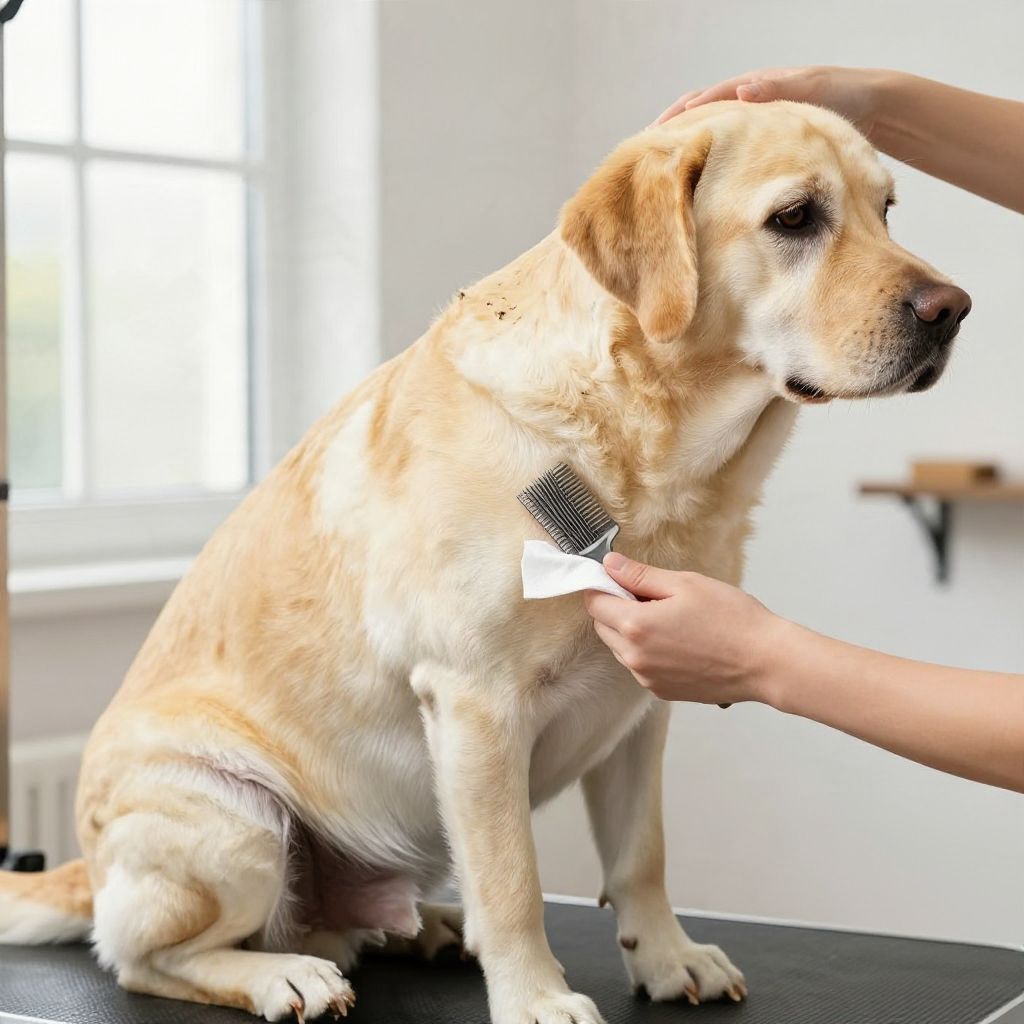
- Run a flea comb through the coat, especially near the skin.
- Tap debris onto a white paper towel or damp cloth.
- If the specks smear reddish-brown when wet, that may be flea dirt.
Flea dirt is flea waste made from digested blood. It can be a helpful clue even when you do not see a live flea.
Why a flea comb helps
A flea comb has very fine teeth that can catch fleas and debris near the skin. It is especially useful on dogs with longer coats, but it can help on short-coated dogs too.
- Comb slowly to avoid missing fast-moving fleas
- Focus on warm, hidden areas of the body
- Check the comb after each pass
- Use a white surface so dark specks are easier to see
Signs that the problem may be more than a few fleas
A small number of fleas can become a bigger issue quickly, especially in warm homes or if multiple pets live together. Some dogs are also very sensitive to flea bites and can develop intense itching from just a few fleas.
Watch for these warning signs
- Constant scratching or licking that does not settle
- Red, inflamed skin or hot spots
- Scabs, crusts, or patchy hair loss
- Ear irritation from scratching around the head and neck
- Pale gums, weakness, or tiredness in puppies or small dogs
Seek urgent veterinary care if your dog seems weak, collapses, has pale gums, has a large number of fleas, or is a young puppy or frail senior with heavy infestation. Severe flea infestations can contribute to anemia and serious skin infection.
Why some dogs show stronger flea symptoms than others
Dogs vary a lot in how they react to fleas. Coat thickness, skin sensitivity, age, overall health, and whether your dog has allergies can all affect what you see.
Factors that can change the signs
- Coat type: Thick or long coats can hide fleas better
- Age: Puppies may become unwell faster if heavily infested
- Skin sensitivity: Some dogs react strongly to even a few bites
- Health status: Dogs with skin disease or weakened health may have worse irritation
- Environment: Homes with carpets, bedding, or other pets can support flea spread
Breed can influence coat type or grooming needs, but it does not guarantee whether a dog will get fleas or how badly the dog will react.
What to do if you think your dog has fleas
If you suspect fleas, act quickly. Fleas reproduce fast, so early treatment helps protect your dog and reduce spread in your home.
- Confirm the signs with a flea comb if possible.
- Contact your veterinarian for a safe flea-control plan.
- Treat all pets in the household if your vet recommends it.
- Wash bedding and vacuum floors, rugs, and furniture thoroughly.
- Follow product instructions exactly and use only dog-safe parasite control.
Do not use flea products made for cats on dogs unless your veterinarian specifically tells you to. Some ingredients safe for one species can be dangerous for another.
Why home cleaning matters
Adult fleas on your dog are only part of the problem. Eggs, larvae, and pupae can remain in the environment, which is why reinfestation can happen if the home is not addressed too.
- Wash pet bedding in hot water if fabric care allows it
- Vacuum carpets, baseboards, and upholstery regularly
- Empty the vacuum promptly to reduce reintroduction
- Clean areas where your dog sleeps most often
Common mistakes to avoid
When you are trying to figure out how do I know if my dog has fleas, it helps to avoid shortcuts that can delay proper care or make things worse.
- Assuming scratching always means fleas
- Using random over-the-counter products without checking if they are dog-safe
- Skipping treatment because you only saw one flea
- Ignoring the home environment
- Waiting too long if your dog is very itchy or has sores
If your dog has repeated skin issues, your veterinarian can help determine whether fleas, allergies, mites, or infection are involved.
When to call the veterinarian
Call your vet if you are unsure whether the signs are fleas, if your dog’s skin is worsening, or if you need help choosing an effective prevention plan. Veterinary guidance is especially important for puppies, seniors, pregnant dogs, and dogs with chronic health problems.
Get prompt help if you notice
- Open wounds, pus, or a strong odor from the skin
- Extreme itching that keeps your dog from resting
- Gum pallor, weakness, or unusual tiredness
- Repeated flea problems despite treatment
- Signs of a reaction after using a parasite product
Never give a medication or apply a product unless you know it is appropriate for your dog’s age, weight, health status, and species.
How to prevent fleas from coming back
Prevention is usually easier than trying to eliminate a full infestation. A consistent parasite-control routine and good home hygiene can make a big difference.
- Use a veterinarian-recommended flea preventive year-round if advised in your area
- Keep up with regular grooming and coat checks
- Wash bedding and vacuum often
- Check your dog after visits to parks, boarding, or areas with other animals
- Ask your vet about the best prevention for your dog’s lifestyle
If you want to learn more, you may also find what flea bites look like on dogs and how to know if your dog has fleas helpful for comparing symptoms and next steps.
If you suspect fleas, check your dog today, clean the environment, and contact your veterinarian if the itching is severe or the skin looks irritated. Quick action is the best way to keep your dog comfortable and stop fleas from spreading.