
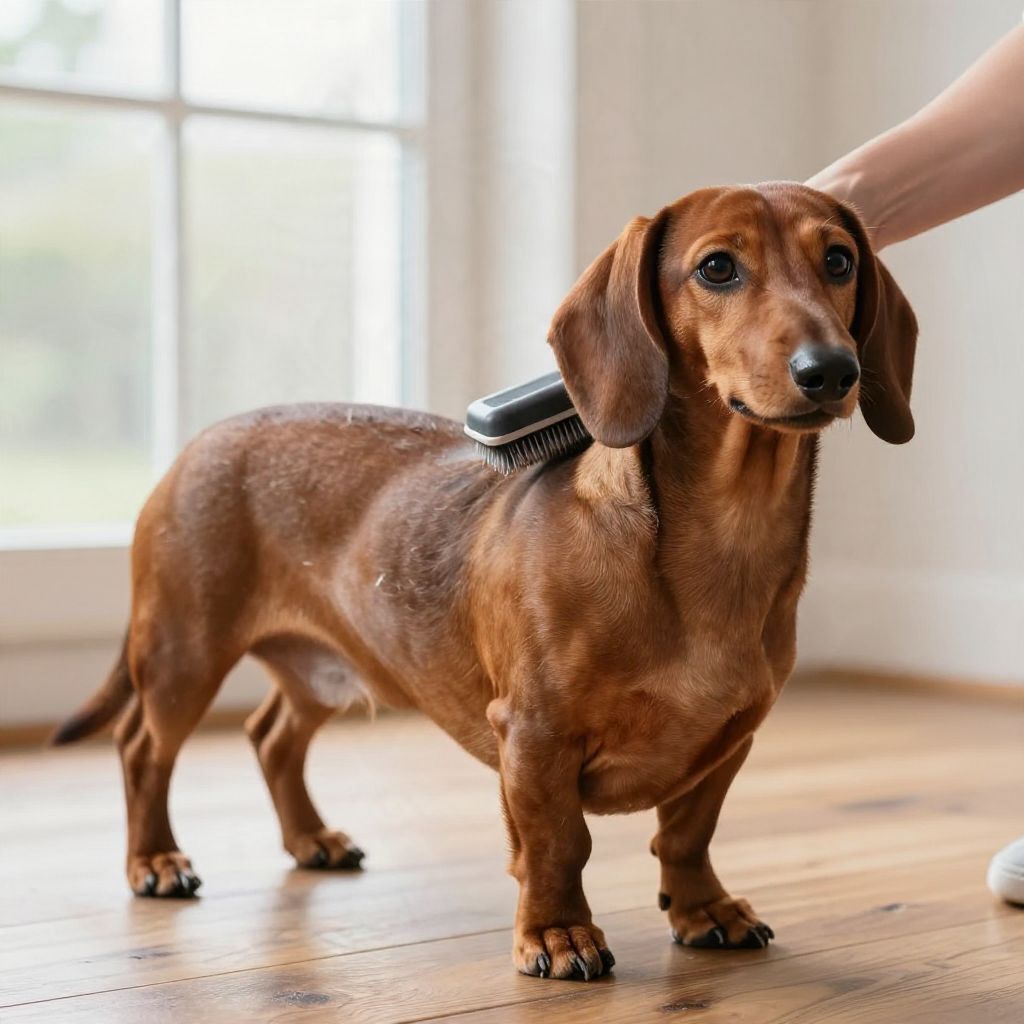
Do Dachshunds shed a lot? In most cases, they shed a moderate amount, but the exact amount depends on coat type, season, health, and grooming habits. Smooth-coated Dachshunds usually shed less visibly than long-haired or wire-haired dogs, though all three coat types can leave hair around the home.
If you are noticing more shedding than usual, it may be normal seasonal coat change or a sign that your dog needs better grooming, nutrition, or a veterinary checkup. The key is learning what is typical for your individual Dachshund.
Do Dachshunds Shed A Lot?
Dachshunds usually do not shed heavily compared with some double-coated breeds, but they are not low-shedding dogs either. Most owners should expect regular hair around furniture, clothing, and floors, especially during seasonal coat changes. How noticeable it is depends on the coat type and the individual dog.
Which Dachshund Coat Type Sheds the Most?
Coat type makes a big difference in how much shedding you see. Some Dachshunds shed lightly and consistently, while others shed more noticeably or need more grooming to keep loose hair under control.
Smooth-coated Dachshunds
Smooth Dachshunds often shed short hairs that can be easy to miss until they collect on fabric. They usually need less brushing than the other coat types, but they still shed year-round.
Long-haired Dachshunds
Long-haired Dachshunds can shed a moderate amount and may leave longer hairs on bedding and clothing. Their coat can also tangle more easily, so regular brushing helps remove loose hair before it spreads through the house.
Wire-haired Dachshunds
Wire-haired Dachshunds may shed less obviously, but they still lose hair and often need coat maintenance. Some benefit from hand-stripping or grooming help to keep the coat healthy and reduce loose hair buildup.
Why Your Dachshund May Be Shedding More Than Usual
Shedding can increase for normal reasons or because something is irritating your dog’s skin or coat. A change in shedding pattern is worth paying attention to, especially if it happens suddenly or comes with other symptoms.
- Seasonal coat change: Many dogs shed more during spring and fall.
- Grooming gaps: Loose hair stays in the coat and falls out later.
- Dry skin: Low humidity or frequent bathing can make shedding more noticeable.
- Diet issues: Poor nutrition can affect coat quality.
- Stress: Changes in routine, environment, or household activity can affect skin and coat.
- Medical causes: Allergies, parasites, infections, hormonal disease, or pain can all contribute.
What Normal Dachshund Shedding Looks Like
Normal shedding is usually even and gradual. You may notice hair on your dog’s bedding, on your clothes after cuddling, or in areas where your dog rests most often. The coat should still look healthy overall, without bald spots, redness, or persistent scratching.
It is more concerning if the shedding is sudden, patchy, or paired with skin changes. That can mean your dog needs veterinary attention rather than just more brushing.
How to Reduce Shedding in a Dachshund
You cannot stop shedding completely, but you can often make it much more manageable. A simple grooming routine and healthy skin support usually help the most.
- Brush regularly. Use a brush suited to your Dachshund’s coat type to remove loose hair before it ends up around the house.
- Bathe only as needed. Overbathing can dry skin and make shedding worse. Use a dog-safe shampoo if your veterinarian recommends bathing.
- Feed a complete, balanced diet. Good nutrition supports skin and coat health. Avoid using supplements unless your veterinarian suggests them.
- Check for parasites. Fleas and mites can cause itching and hair loss.
- Keep your home environment comfortable. Dry indoor air may worsen flaking and shedding for some dogs.
- Watch for stress or routine changes. Some dogs shed more when anxious or unsettled.
Brushing tips by coat type
- Smooth coat: A soft brush or grooming mitt may be enough a few times a week.
- Long coat: Brush more often to prevent tangles and remove loose hair from feathering.
- Wire coat: Use grooming tools recommended for that coat type, and consider professional grooming if needed.
When Shedding May Mean a Health Problem
Some shedding is normal, but hair loss with other symptoms should not be ignored. Skin and coat changes can be an early sign that something is wrong.
Call your veterinarian if you notice:
- Patchy hair loss or bald spots
- Red, flaky, scaly, or greasy skin
- Constant scratching, licking, or chewing
- Bad odor from the skin or ears
- Visible fleas, flea dirt, or signs of mites
- Weight change, low energy, or appetite changes along with coat problems
- Sudden increase in shedding that does not improve with grooming
Seek urgent veterinary care if your Dachshund has open sores, swelling, severe itching, signs of pain, trouble breathing, or a sudden collapse. Those are not normal shedding issues.
Does Age Affect Dachshund Shedding?
Yes. Puppies, adults, and seniors can all shed differently. A young Dachshund may go through coat changes as it matures, while older dogs may develop coat thinning or skin sensitivity that makes shedding more noticeable.
Senior dogs may also have health conditions that affect the skin, such as allergies or hormonal disease. If your older Dachshund’s coat changes suddenly, it is a good idea to ask your veterinarian for guidance.
Can Diet Help With Shedding?
A balanced diet supports skin and coat health, but food alone will not fix every shedding problem. If your dog’s diet is incomplete, poor quality, or not suited to their needs, the coat may look dull and shed more.
If you are thinking about changing food, choose a complete diet appropriate for your dog’s life stage and health status. If shedding is accompanied by itching, ear problems, or digestive upset, your veterinarian may want to check for allergies or other medical causes before you make major diet changes.
Common Mistakes That Make Shedding Seem Worse
Sometimes the problem is not excessive shedding itself, but a few habits that make loose hair harder to manage.
- Brushing too infrequently
- Using the wrong grooming tool for the coat type
- Bathing too often or with harsh products
- Ignoring fleas or skin irritation
- Expecting one grooming session to solve a long-term shedding pattern
- Assuming all shedding is normal when the skin looks unhealthy
How to Keep Hair Under Control at Home
Even a moderate-shedding Dachshund can be easier to live with if you stay ahead of loose hair. Small routines usually work better than occasional deep cleaning.
- Brush your dog on a regular schedule.
- Wash bedding often.
- Use a vacuum or lint roller on high-traffic areas.
- Keep grooming tools near the places your dog rests.
- Check the coat during cuddle time so you notice changes early.
When to Ask a Veterinarian or Groomer for Help
If you are unsure whether your Dachshund’s shedding is normal, a veterinarian can help you sort out coat type, skin health, and possible medical causes. A professional groomer can also show you the best tools and brushing method for your dog’s coat.
Get help sooner if your dog resists grooming because of pain, has matted fur, or develops skin irritation after bathing or brushing. The right approach should make the coat healthier, not more uncomfortable.
Bottom Line: Do Dachshunds Shed A Lot?
Dachshunds usually shed a moderate amount, with smooth-coated dogs often shedding less visibly and long-haired or wire-haired dogs needing more grooming. Regular brushing, a balanced diet, and attention to skin health can keep shedding manageable. If the hair loss is sudden, patchy, or paired with itching or skin changes, contact your veterinarian.
If you want to learn more, you may also find these helpful: Do Long-Haired Dachshunds Shed? and Why Is My Dog Shedding So Much?