
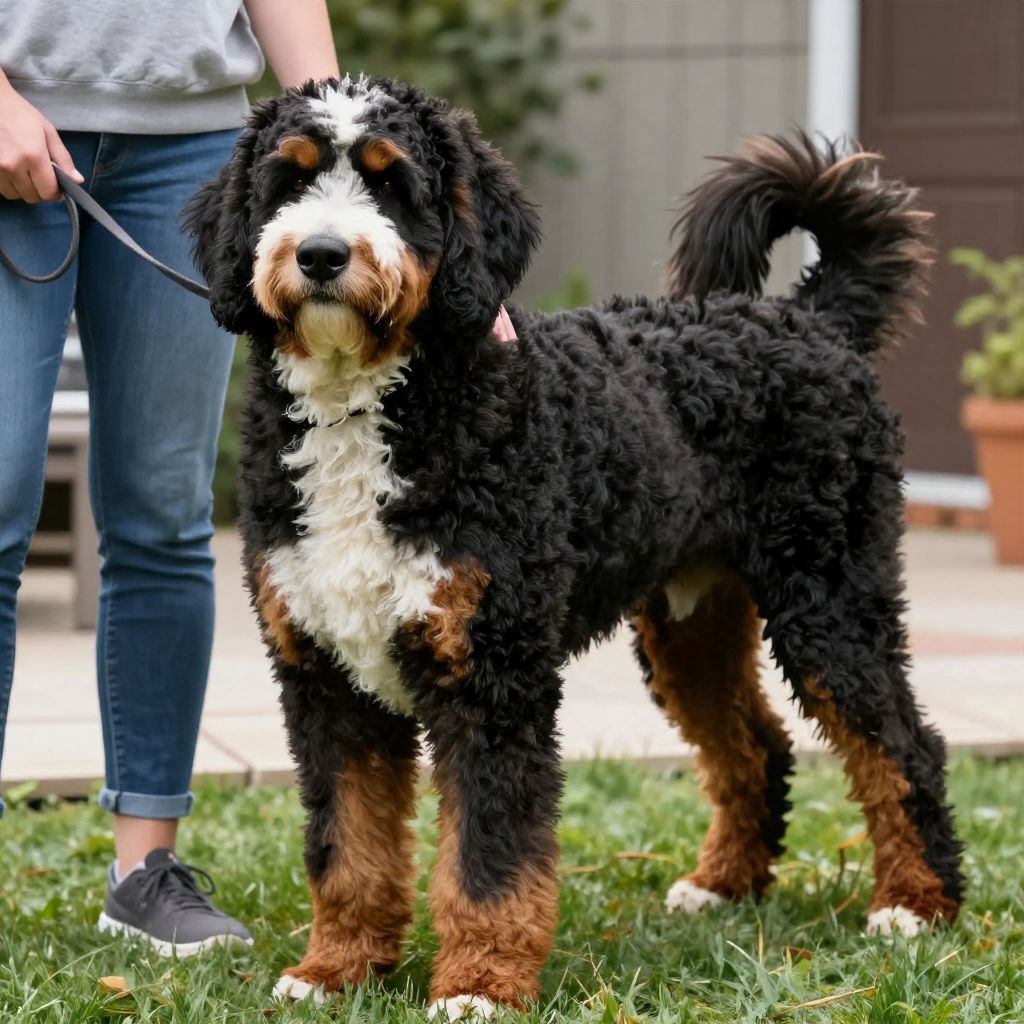
How big do Bernedoodles get? The answer depends on the puppy’s size category, because Bernedoodles are commonly bred in different generations and weights. A Bernedoodle can be a medium, large, or very large dog, so it helps to know which parent sizes were used.
Most Bernedoodles grow to roughly match their breeding line, but individual dogs can vary. Genetics, sex, nutrition, and overall health all influence adult size, so your puppy may end up a little smaller or larger than expected.
How big do Bernedoodles get?
Bernedoodles usually range from medium to giant size, depending on whether they are standard, mini, or tiny. Adult weight can vary widely, but many standard Bernedoodles are large dogs, mini Bernedoodles are medium-sized, and tiny Bernedoodles stay much smaller. Exact size is never guaranteed.
What affects a Bernedoodle’s adult size?
Several factors shape how big your Bernedoodle gets. The biggest influence is the size of the parent dogs, but growth is also affected by age, sex, body condition, and individual genetics.
- Parent size: Puppies from larger Bernese Mountain Dog and Poodle parents usually grow larger.
- Generation and breeding goals: Some lines are bred for smaller or more predictable adult sizes.
- Sex: Males may be somewhat larger than females in some litters, though not always.
- Nutrition and health: Balanced feeding supports healthy growth, but overfeeding does not create a healthier or better-proportioned dog.
- Individual variation: Two littermates can still mature at different sizes.
Typical Bernedoodle size ranges
Breeders often use size labels such as standard, mini, and tiny or toy. These labels are helpful, but they are not exact promises. Ask for the adult weight range of both parents and any previous litters if you want a better estimate.
Standard Bernedoodle
Standard Bernedoodles are the largest type and are usually considered a large to giant dog. They generally need more space, more exercise, and stronger management than smaller doodle varieties.
Mini Bernedoodle
Mini Bernedoodles are bred to be smaller and more manageable in size. They still need daily exercise and training, but they often fit better into homes that want a medium-sized companion.
Tiny or toy-sized Bernedoodle
Smaller Bernedoodles are bred for compact size, though the exact adult weight can still vary. Because smaller dogs can be more fragile, careful handling and appropriate exercise matter just as much as size.
How to estimate your Bernedoodle puppy’s adult size
You can make a rough estimate, but no method is perfect. The most reliable clues come from the breeder’s records and the puppy’s growth pattern over time.
- Ask for the adult size of both parents.
- Ask whether the litter is expected to be standard, mini, or tiny.
- Review the puppy’s current weight and age with your veterinarian or breeder.
- Watch steady growth over several months rather than focusing on one weigh-in.
- Remember that puppies often go through awkward growth phases before they fill out.
If your puppy seems much smaller or larger than expected, your veterinarian can check for growth issues, nutrition problems, or other health concerns.
How size changes care needs
Knowing how big Bernedoodles get matters because size affects daily care. Bigger dogs usually need more food, more room, and more joint support, while smaller dogs may need more protection from rough handling and cold weather.
Exercise needs
All Bernedoodles need regular exercise, but the amount and type should match age and size. Puppies should not be overexercised, especially while joints are still developing.
- Large Bernedoodles: Benefit from structured walks, play, and low-impact exercise.
- Mini Bernedoodles: Often enjoy active play and training sessions in addition to walks.
- Puppies: Need short, age-appropriate activity rather than long runs or repetitive jumping.
A good rule is to focus on controlled movement, mental enrichment, and consistency instead of pushing a young dog to “tire out” with hard exercise.
Feeding and body condition
Size affects calorie needs, but body condition matters more than the number on the scale. A healthy Bernedoodle should have a visible waist and ribs that are easy to feel without pressing hard.
- Feed a complete, balanced dog food appropriate for your dog’s life stage.
- Measure meals instead of free-feeding if weight gain is a concern.
- Use treats sparingly during training and adjust meal portions if needed.
- Ask your vet if you are unsure whether your dog is growing too quickly or too slowly.
Grooming and coat care
Bernedoodles often have coats that need regular brushing and grooming, regardless of size. Larger dogs simply take longer to groom and may need more patience during coat care sessions.
- Brush regularly to prevent mats and tangles.
- Check ears, paws, and sanitary areas often.
- Schedule professional grooming if your dog’s coat is dense or prone to matting.
Why growth rate matters as much as final size
A Bernedoodle that grows too quickly may be at higher risk for orthopedic strain, especially if it is a large dog. Rapid growth can be influenced by overfeeding, excessive calories from treats, or inappropriate exercise for a growing puppy.
Support healthy growth by avoiding these common mistakes:
- Overfeeding because the puppy seems “hungry all the time.”
- Using too many high-calorie treats during training.
- Encouraging repeated jumping, stair running, or intense fetch in a young puppy.
- Ignoring limping, stiffness, or reluctance to move.
If your Bernedoodle seems to be growing unusually fast or slow, or if you notice pain or uneven movement, schedule a veterinary exam.
When size may signal a health problem
Most size variation is normal, but some changes deserve attention. A puppy that is not gaining weight, is losing weight, or looks pot-bellied with poor muscle tone may need medical evaluation.
Contact a veterinarian promptly if you notice:
- Persistent vomiting or diarrhea
- Poor appetite or sudden refusal to eat
- Lethargy, weakness, or collapse
- Limping, pain, or obvious stiffness
- A swollen abdomen or breathing trouble
- Failure to grow normally compared with littermates or expected patterns
Seek urgent veterinary care if your dog has trouble breathing, collapses, has a bloated abdomen, cannot stand, or seems severely painful.
Choosing the right Bernedoodle size for your home
If you are still deciding on a Bernedoodle, think beyond the number on a weight chart. The right size depends on your living space, activity level, grooming commitment, and ability to manage a dog safely at every life stage.
- Large homes and active families: May suit standard Bernedoodles well.
- Smaller homes or less space: A mini Bernedoodle may be a better fit.
- First-time owners: Should consider training needs, not just adult size.
- Households with children or seniors: Need to think about safe handling and jumping behavior.
Remember that a smaller Bernedoodle still needs training, grooming, exercise, and socialization. A large Bernedoodle may be calm indoors, but it can still be physically strong and require consistent manners.
Training and socialization for a growing Bernedoodle
Training should begin early, no matter how big your Bernedoodle will become. Good manners are especially important for larger dogs because size makes jumping, pulling, and rough play harder to manage.
- Teach leash walking, sit, stay, and polite greetings early.
- Reward calm behavior with treats, praise, and play.
- Expose your puppy to different people, surfaces, sounds, and handling in a positive way.
- Use crate training or safe confinement to prevent unsafe jumping and chewing when unsupervised.
If your Bernedoodle is anxious, overly excitable, or difficult to handle, a certified trainer or veterinary behaviorist can help with a humane, reward-based plan.
What to ask a breeder or rescue before you adopt
To better predict how big Bernedoodles get, ask practical questions before bringing one home. Good information can help you prepare for the dog’s adult size and care needs.
- What are the adult weights of the parents?
- What size category is this litter expected to be?
- Have previous puppies from this pairing grown to a similar size?
- What health testing has been done on the parents?
- What feeding and growth guidance do you recommend?
Responsible breeders should be transparent about size estimates, but they should also make clear that adult size is still an estimate, not a guarantee.
Bottom line: how big do Bernedoodles get?
Bernedoodles can grow into medium, large, or giant dogs depending on the breeding size. The best way to estimate adult size is to look at the parents, the litter’s size category, and your puppy’s growth over time. Focus on healthy growth, good training, and regular veterinary care so your dog develops well at any size.
If you want to compare other doodle size ranges or learn more about the parent breeds, you may also find how big mini Goldendoodles get and how long Bernese Mountain Dogs live helpful.