
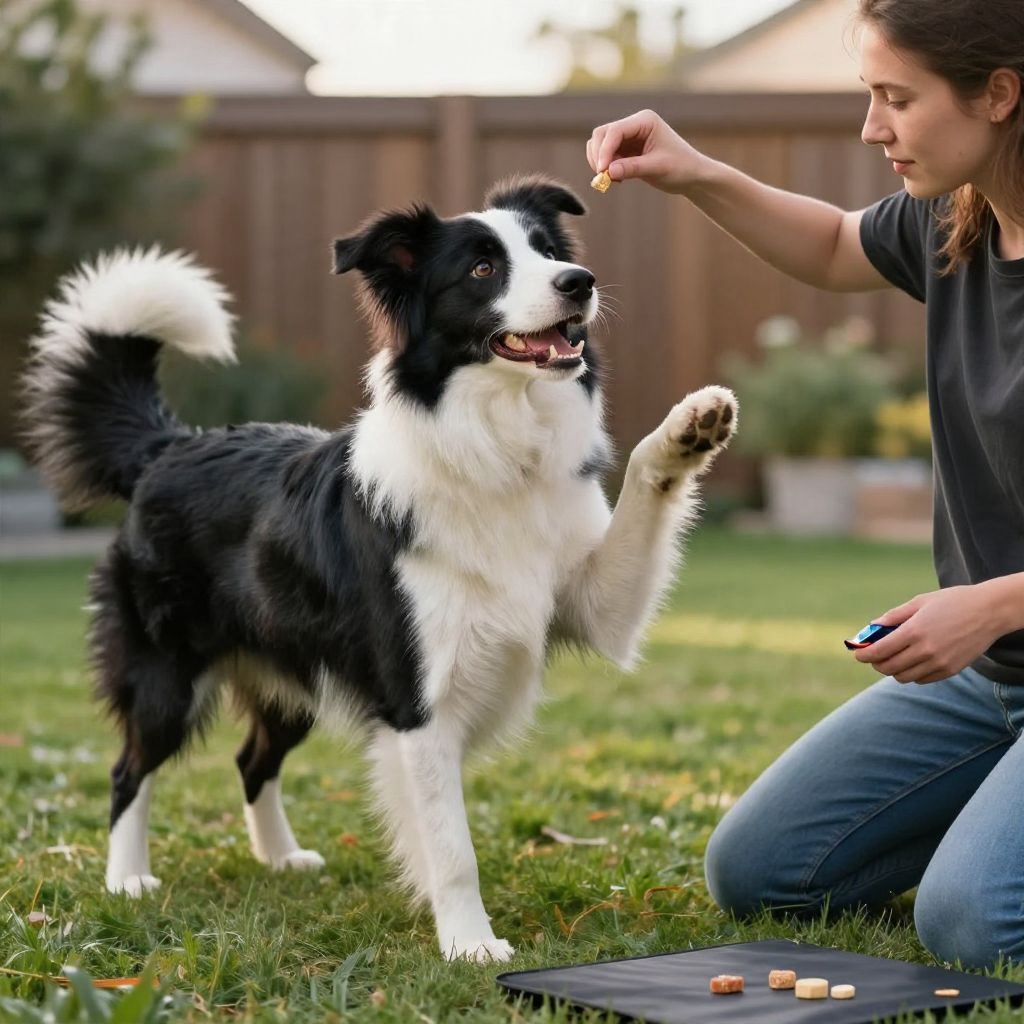
How to teach a dog tricks starts with clear cues, tiny training steps, and rewards your dog actually wants. Most dogs learn best through short, upbeat sessions that make success easy and repeatable.
You do not need special equipment or a “naturally smart” dog. With patience, timing, and consistency, you can teach useful tricks while also building focus, confidence, and a stronger bond.
How To Teach A Dog Tricks?
Use reward-based training: choose one trick, break it into small steps, mark the exact moment your dog gets it right, and reward immediately. Keep sessions short, practice in a low-distraction place, and repeat often. Progress at your dog’s pace, and end before your dog gets bored or frustrated.
Start With the Right Training Setup
Before you begin, set your dog up for success. A calm environment, good timing, and high-value rewards make learning much easier.
- Choose a quiet space: Start indoors or somewhere familiar with few distractions.
- Use small rewards: Tiny treats, praise, toys, or access to something your dog enjoys can all work.
- Keep sessions short: Five to 10 minutes is often enough, especially for puppies or beginners.
- Pick one trick at a time: Mixing cues too early can confuse your dog.
- Have a marker ready: A clicker or a consistent word like “yes” helps your dog understand the exact correct moment.
Different dogs respond to different motivators. Food-motivated dogs may learn quickly with treats, while others prefer toys, play, or praise. Age, energy level, health, and previous training all affect how fast your dog picks things up.
Step-by-Step Method for Teaching Tricks
Most tricks become easier when you follow the same training pattern every time. This helps your dog understand what earns a reward.
- Lure or shape the behavior: Use a treat, hand signal, or environmental setup to help your dog offer the right movement.
- Mark success: The instant your dog does the right part, say your marker word or click.
- Reward quickly: Give the treat or reward right after the marker.
- Repeat a few times: Dogs learn through repetition, but too many reps can cause fatigue.
- Add a cue: Once your dog is reliably doing the behavior, pair it with the spoken cue or hand signal.
- Practice in new settings: Gradually add mild distractions so your dog learns the trick in real life, not just at home.
What “shaping” means
Shaping means rewarding small steps toward the final trick. For example, if you want a spin, you might first reward your dog for turning their head, then for taking a step, then for completing the turn.
This approach is especially helpful for shy, cautious, or easily distracted dogs because it reduces pressure and builds confidence.
Best Tricks to Teach First
Start with simple tricks that are easy to reward and easy for your dog to understand. These also build the skills needed for more advanced training later.
- Sit: A useful foundation for manners and impulse control.
- Down: Helpful for settling and calm behavior.
- Touch: Your dog touches your hand with their nose; great for focus.
- Spin: Fun, simple, and easy to shape.
- Paw/shake: A classic trick that many dogs learn quickly.
- Roll over: Best taught after your dog is comfortable lying down and relaxing.
If you want a structured next step, teaching how to teach a dog to lay down can make later tricks much easier, because many behaviors begin from a down position.
How to Keep Training Fun and Effective
Dogs learn best when training feels like a game. If your dog is engaged, curious, and earning rewards, you are on the right track.
- Stop while your dog is successful: End on a good rep rather than pushing until your dog loses interest.
- Use clear cues: Say one cue once, then wait.
- Reward effort: Early in training, reward small improvements, not just the finished trick.
- Vary rewards: Sometimes use treats, sometimes praise or play, so training stays interesting.
- Practice in short bursts: Several mini-sessions often work better than one long session.
Consistency matters more than intensity. A few minutes every day usually works better than an occasional long session.
Common Mistakes That Slow Progress
Many training problems come from moving too fast or making the cue unclear. Avoiding these mistakes can save time and frustration.
- Repeating the cue too many times: Say it once, then help your dog succeed.
- Rewarding the wrong behavior: Timing is important; reward the exact action you want.
- Training when your dog is tired or overstimulated: A distracted dog will struggle to learn.
- Expecting too much too soon: Break tricks into smaller pieces.
- Using punishment or intimidation: This can damage trust and make learning harder.
If your dog seems confused, go back a step. Training should feel achievable, not like a test your dog keeps failing.
How Age, Breed, and Health Can Affect Learning
Any healthy dog can learn tricks, but the pace and style of training may differ. Individual temperament matters more than breed labels alone.
Puppies
Puppies often learn quickly, but they also tire fast and have short attention spans. Keep sessions very brief and focus on simple behaviors, socialization, and positive experiences.
Adult dogs
Adult dogs may learn faster than puppies because they can concentrate longer. If your dog already has habits you want to change, be patient and consistent while building new associations.
Senior dogs
Older dogs can still learn tricks, especially low-impact ones. If your senior dog has arthritis, vision changes, hearing loss, or reduced stamina, choose gentle tricks and ask your veterinarian if you are unsure what is comfortable.
Breed tendencies
Some dogs are bred for close cooperation, problem-solving, or physical activity, which may influence how they approach training. Still, every dog is an individual, so avoid assuming your dog will love or dislike a trick based only on breed.
How to Troubleshoot When Your Dog Gets Stuck
If progress stalls, the fix is usually to simplify the task rather than push harder. Look at what part is confusing your dog.
- Dog won’t follow the lure: Try a better reward or train before meals when motivation is higher.
- Dog offers the wrong behavior: Reward only the correct movement and ignore the rest.
- Dog loses interest: Shorten the session and end with an easier win.
- Dog is distracted: Move to a quieter area or reduce the difficulty.
- Dog seems anxious or shut down: Pause training and rebuild confidence with easier, low-pressure exercises.
If your dog has sudden behavior changes, pain, stiffness, or trouble moving, check with a veterinarian before continuing trick training. Physical discomfort can look like stubbornness.
When to Get Professional Help
Most families can teach basic tricks at home, but some situations benefit from expert support. A certified trainer or veterinary behaviorist can help if your dog is fearful, reactive, easily overwhelmed, or not improving despite consistent practice.
Professional help is also wise if your dog guards food or toys, shows aggression, or has a history of trauma. In those cases, reward-based guidance is safer and more effective than trying to force progress on your own.
Safety Tips While Teaching Tricks
Trick training should be physically and emotionally safe. Choose behaviors that fit your dog’s body and confidence level.
- Avoid repetitive jumping if your dog is young, large-breed, overweight, senior, or prone to joint problems.
- Do not force positions by pushing, pulling, or holding your dog into a pose.
- Watch for fatigue: panting, slowing down, looking away, or wandering off can mean it is time to stop.
- Use safe treats: Small, easy-to-chew rewards reduce choking risk and prevent overfeeding.
- Keep sessions positive: If your dog becomes worried, make the task easier and rebuild confidence.
Training should leave your dog more relaxed and successful over time, not stressed or sore.
Simple Trick-Training Plan You Can Follow
If you want a practical routine, use this simple pattern for each new trick.
- Pick one trick and define the final goal.
- Choose a quiet place and gather rewards.
- Break the trick into tiny steps.
- Mark and reward each correct attempt.
- Repeat a few successful reps, then stop.
- Practice daily, gradually adding the cue and mild distractions.
- Once the trick is reliable, use it in different rooms and then outdoors.
For example, if you want a roll over, start by teaching a reliable down first. Then reward small turns onto one hip before asking for the full movement; a step-by-step approach like how to teach a dog to roll over works best when your dog already understands the basics.
Conclusion
To teach a dog tricks, keep training short, reward the right behavior immediately, and build each trick in small steps. Stay patient, match the difficulty to your dog’s age and ability, and use positive methods that make learning enjoyable. If your dog struggles or shows signs of pain, anxiety, or behavior problems, get professional help early.