
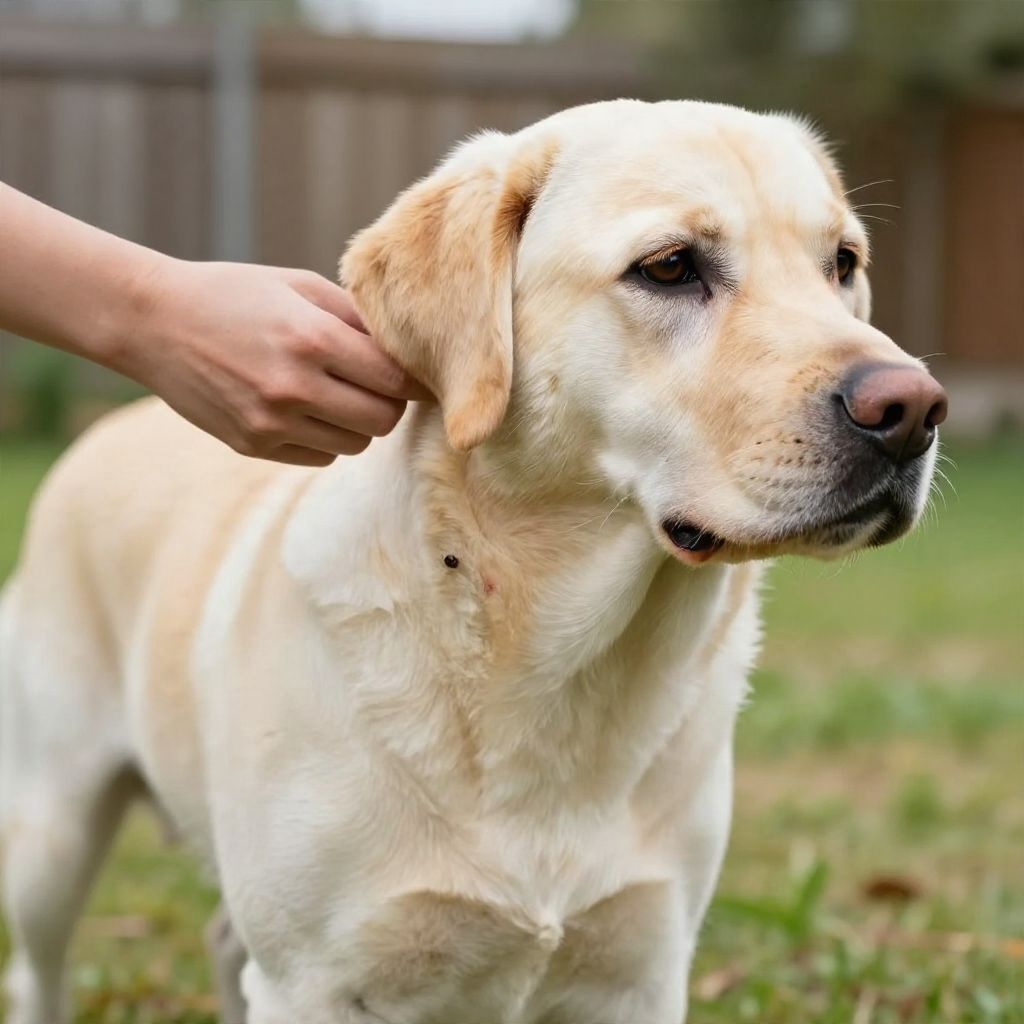
If you’re wondering what does a tick bite look like on a dog, the answer is usually a small, localized skin reaction where the tick was attached. It may look like a tiny red bump, a scab, or mild swelling after the tick is removed.
Sometimes the tick itself is still attached, which makes the spot easier to identify. Other times you only notice the bite after the tick is gone, so it helps to know the common signs and when to call your veterinarian.
What does a tick bite look like on a dog?
A tick bite on a dog often looks like a small red or pink bump, a tiny scab, or a slightly swollen spot where the tick attached. The area may be itchy or tender, but many bites cause only mild skin irritation. If the skin becomes very red, painful, or oozes, contact your vet.
Common signs of a tick bite on dogs
Tick bites can look different depending on how long the tick was attached, where it bit, and how sensitive your dog’s skin is. Some dogs barely react, while others develop a noticeable bump or irritation.
What you may see
- A small raised bump
- Redness around the bite site
- A tiny scab after the tick falls off or is removed
- Mild swelling
- Itching, licking, or scratching at one spot
- A dark speck or attached tick that may look like a small bump
What the bite usually does not look like
- A large open wound, unless the area has been irritated or infected
- A widespread rash all over the body from the bite alone
- A dramatic lesion immediately after every tick bite
If you find a bump but did not see the tick, the spot may be from the bite, a retained mouthpart, or another skin issue. Because several problems can look similar, it is worth monitoring the area closely.
How to tell a tick bite from a tick still attached
A tick that is still attached usually appears as a small, round, gray, brown, or black body sitting on the skin. It may look like a raised lump, but if you look closely you may see legs near the base. A bite after removal is more likely to look like a flat or slightly raised red mark.
Ticks commonly attach in places your dog may not easily groom, such as:
- Around the ears
- On the neck or collar line
- Between the toes
- Under the collar
- In the armpits or groin
- Around the face and eyelids
Checking these areas after walks, especially in grassy or wooded places, can help you catch ticks before they stay attached for long.
What is normal after a tick bite?
After a tick is removed, a small bump or scab can be normal for a few days. Mild redness and slight itching may also happen as the skin heals. The spot should gradually improve rather than become larger or more inflamed.
General healing signs include:
- Redness fading over time
- Less scratching or licking
- A small scab drying and falling off naturally
- No discharge, odor, or spreading swelling
Some dogs have more visible skin reactions than others. Dogs with sensitive skin, thick coats, allergies, or a history of skin irritation may show a more noticeable bump than dogs with less reactive skin.
When a tick bite may be a problem
Most tick bites are minor, but some become infected or are linked to tick-borne disease. The bite itself may not look severe even when a health issue is developing, so watch for changes in your dog’s overall condition.
Call your veterinarian if you notice:
- Increasing redness, swelling, or warmth at the bite site
- Pus, bleeding, or a bad smell
- A lump that keeps growing
- Persistent pain when touched
- Repeated licking, scratching, or chewing at the area
- Lethargy, fever, loss of appetite, or limping after a tick bite
- Multiple ticks found on your dog
Seek urgent veterinary care if your dog has trouble breathing, collapse, severe weakness, facial swelling, or signs of a serious allergic reaction. These are emergencies and should not wait.
Can a tick bite leave a scab or lump?
Yes. A small scab is common after a tick detaches or is removed, especially if the skin was irritated during attachment. A tiny lump can also remain for a short time as the skin heals.
If the lump stays the same size or shrinks, it is often just healing tissue. If it becomes larger, firmer, painful, or starts to ooze, a vet should examine it. Sometimes a retained mouthpart or secondary infection can keep the area irritated.
What to do if you find a tick bite on your dog
If you notice a tick bite, the safest approach is to assess the area, remove any attached tick carefully, and monitor your dog for changes. Avoid squeezing the tick body or using home methods that may irritate the skin or increase the chance of incomplete removal.
- Look closely at the spot to see whether the tick is still attached.
- If the tick is attached, remove it promptly and correctly or ask your vet to do it.
- Clean the area gently if your veterinarian recommends it.
- Watch the site for several days for redness, swelling, or discharge.
- Monitor your dog’s energy, appetite, and gait for any illness signs.
If you want a step-by-step guide for removal, see how to remove ticks from dogs.
What not to do
Some common internet advice can make the situation worse. The goal is to remove the tick safely and avoid irritating the bite site.
- Do not burn the tick off
- Do not cover it with petroleum jelly or nail polish
- Do not crush the tick with your fingers
- Do not dig aggressively at the skin if the tick has already been removed
- Do not ignore illness signs after a tick bite
If you are unsure whether the tick was fully removed, your veterinarian can examine the area and advise you on next steps.
How tick bites can vary by dog
Not every dog shows the same skin reaction. Breed, coat type, age, health status, and individual sensitivity can all affect how noticeable a tick bite looks.
Puppies
Puppies have smaller bodies and may be more vulnerable to dehydration or illness if they become unwell. Even a minor-looking bite deserves attention if a puppy seems tired, stops eating, or acts painful.
Senior dogs
Older dogs may have thinner skin, slower healing, or other health conditions that make skin changes more important to monitor. A bite that seems mild can still become irritated more easily.
Dogs with allergies or sensitive skin
These dogs may develop more redness, itchiness, or swelling than dogs with less reactive skin. That does not automatically mean infection, but it does mean you should watch the site carefully.
How to reduce the chance of tick bites
Prevention matters because ticks can transmit disease and because some bites are hard to spot right away. Your veterinarian can help you choose a preventive plan that fits your dog’s lifestyle and health needs.
- Use a vet-recommended tick preventive consistently
- Check your dog after walks in tall grass, woods, or brush
- Keep fur brushed and inspect hidden areas by hand
- Mow yards and reduce heavy brush where ticks may live
- Wash bedding regularly if your dog spends time outdoors
Preventives vary by dog and region, so it is best to ask your vet which option is appropriate for your pet rather than choosing randomly.
When a bite may be something else
Not every small bump on a dog is a tick bite. Flea bites, insect stings, skin infections, cysts, and minor wounds can look similar at first glance. If the spot changes quickly or appears in multiple places, another cause may be more likely.
If you are also trying to tell the difference between parasites, it may help to compare the appearance of other bites with what flea bites look like on dogs.
Bottom line
What does a tick bite look like on a dog? Usually it is a small red bump, scab, or mildly swollen spot where the tick was attached. Most bites heal with simple monitoring, but redness that worsens, discharge, pain, or illness signs should be checked by a veterinarian promptly.
If you find a tick or a suspicious bump, act quickly, watch the area for changes, and contact your vet if anything seems unusual. Early attention is the best way to protect your dog’s skin and overall health.