
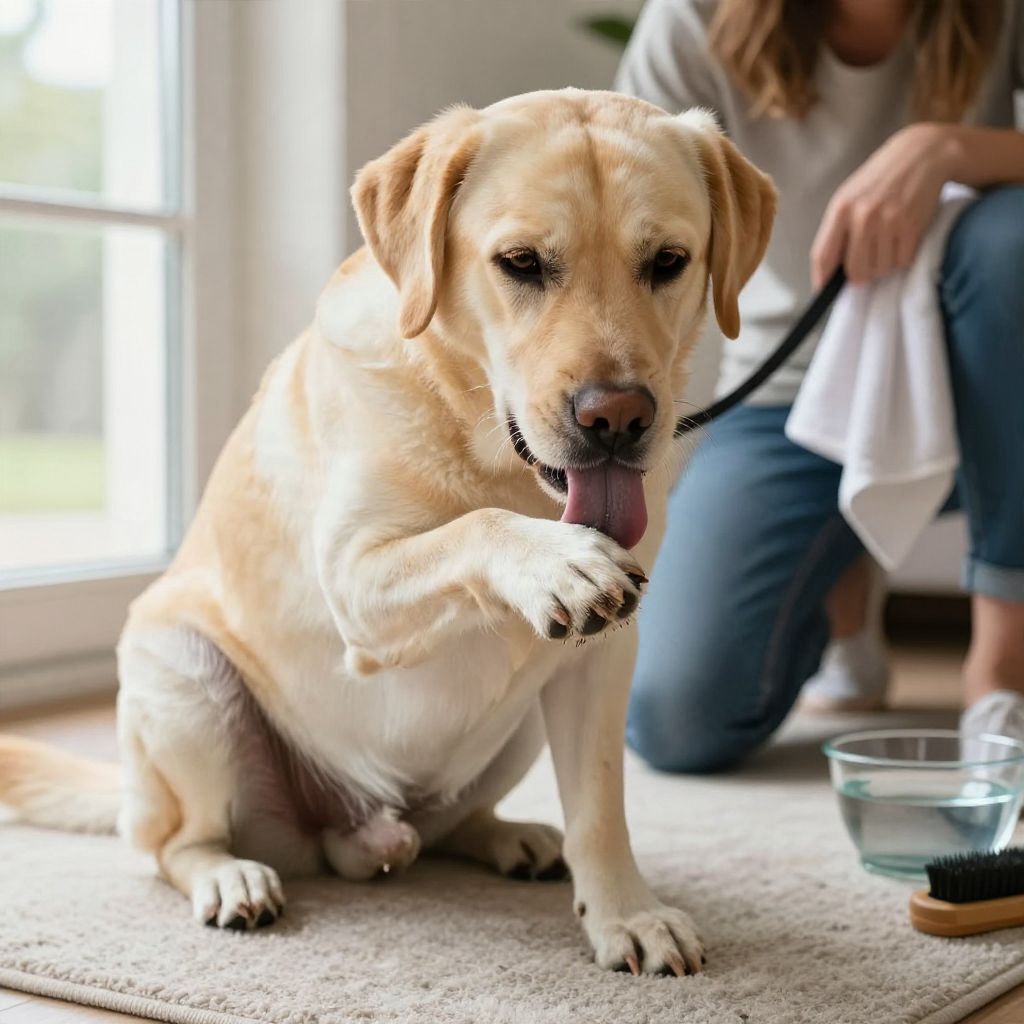
If you keep asking, “Why does my dog lick his paws so much,” the short answer is that something is irritating, painful, or bothering him. Occasional licking is normal, but frequent or focused licking can point to allergies, skin irritation, injury, infection, parasites, anxiety, or a foreign object.
The next step is to look for clues such as redness, swelling, odor, limping, or licking that worsens at certain times. Some causes are minor, but others need a veterinarian’s help to prevent infection or ongoing discomfort.
Why does my dog lick his paws so much?
Dogs lick their paws to clean themselves, soothe irritation, or respond to pain, itchiness, or stress. If the licking is repeated, intense, or only affects one paw, it usually means there is an underlying problem that should be checked. The cause can range from mild dryness to infection, allergies, or an injury.
Common reasons dogs lick their paws
There is no single answer for every dog. The cause depends on your dog’s age, environment, health history, grooming routine, and whether the licking is occasional or constant.
1. Allergies
Allergies are one of the most common reasons for paw licking. Dogs may react to environmental triggers like pollen, grass, dust mites, or mold, and some also react to ingredients in food.
Allergy-related licking often comes with itchy skin, paw chewing, face rubbing, ear problems, or seasonal flare-ups. Some dogs lick all four paws, while others seem to focus on the paws that touch the irritating surface most.
2. Skin irritation or dryness
Salt, ice melt, lawn chemicals, hot pavement, rough terrain, or frequent washing can irritate paw pads and the skin between the toes. Dry, cracked pads can also make a dog lick for relief.
Even grooming products that are safe for dogs can irritate sensitive skin if they are used too often or not rinsed well.
3. Pain or injury
A small cut, torn nail, splinter, thorn, insect sting, or sore toe can cause persistent licking. Pain is especially likely if your dog licks one paw more than the others or starts limping.
Dogs sometimes lick because they are trying to soothe a sprain, joint pain, or a nail-bed problem that is not obvious at first glance.
4. Infection
Bacterial or yeast infections can develop when moisture, allergies, or repeated licking damage the skin. These infections often cause redness, odor, greasy fur, discharge, or dark staining around the paws.
If the skin looks inflamed or your dog’s paws smell unusual, the licking may be part of an infection that needs veterinary treatment.
5. Parasites
Fleas, mites, and other parasites can trigger itching and licking. This is more likely if your dog also scratches elsewhere, has hair loss, or seems uncomfortable after outdoor exposure.
Parasites are not always easy to see, so a vet exam may be needed even when you cannot find anything on the skin.
6. Anxiety, stress, or boredom
Some dogs lick their paws as a self-soothing habit. This can happen during changes in routine, long periods alone, lack of exercise, or when a dog is generally anxious or under-stimulated.
What starts as occasional licking can become a habit if it relieves stress, even if the original trigger is no longer present.
7. Foreign material stuck in the paw
Grass awns, burrs, small stones, glass, or debris can hide between the toes or under the paw pads. A dog may lick or chew at one spot repeatedly while trying to remove the discomfort.
In some cases, the object is lodged deep enough that you may not see it without a careful inspection.
What to look for at home
A quick check can help you decide whether the issue is urgent or can wait for a regular vet visit. Look at all four paws, including between the toes and around the nails.
- Redness, swelling, or warmth
- Broken skin, bleeding, or scabs
- Odor, discharge, or sticky fur
- Hair loss or dark staining from saliva
- Limping or reluctance to walk
- Licking that is worse after walks, grooming, or meals
- One paw affected more than the others
When the pattern matters
The timing of the licking can offer clues. If it happens after outdoor walks, think about environmental irritation. If it flares after meals, food allergy is possible, though not the only explanation. If it happens mainly when your dog is alone or bored, stress or habit may be involved.
What you can do right now
Simple steps can reduce irritation while you figure out the cause. These are supportive measures, not a substitute for veterinary care if the paw looks painful or infected.
- Inspect the paw carefully for debris, cuts, swelling, or broken nails.
- Rinse the paw with lukewarm water after walks if you suspect dirt, salt, or chemical irritation.
- Dry the paw well, especially between the toes, to reduce moisture that can worsen yeast or bacterial problems.
- Prevent more licking if needed with an e-collar or vet-approved protective covering.
- Keep walks on cleaner, softer surfaces while the paw is irritated.
- Note when the licking happens so you can share the pattern with your veterinarian.
What not to do
Do not apply human creams, essential oils, or medicated products unless your veterinarian tells you to. Some products can irritate skin further or be unsafe if your dog licks them off.
Also avoid scolding or punishing your dog for licking. That does not solve the cause and can increase stress, which may make the habit worse.
When paw licking needs a veterinarian
Make a vet appointment if the licking lasts more than a day or two, keeps returning, or is causing skin damage. A veterinarian can check for allergies, infection, parasites, pain, nail problems, or a hidden foreign body.
Seek urgent care sooner if you notice any of the following:
- Severe swelling or sudden pain
- Bleeding that does not stop
- A deep cut, puncture, or torn nail
- Limping or refusal to bear weight
- Pus, strong odor, or rapidly worsening redness
- A visible object stuck in the paw that you cannot safely remove
- Signs your dog seems unwell overall, such as lethargy or feverish behavior
If your dog is in obvious distress, do not wait to see whether it improves on its own.
How veterinarians may investigate the cause
Your vet will usually start with a physical exam and a look at the skin, nails, and spaces between the toes. Depending on what they find, they may recommend skin tests, parasite checks, or other diagnostics.
If allergies are suspected, the plan may include managing environmental triggers, treating skin inflammation, and possibly discussing diet trials under veterinary guidance. If infection is present, treatment may need to address both the infection and the reason the skin became irritated in the first place.
How to reduce repeated paw licking long term
Long-term management depends on the cause, but a few habits help many dogs.
- Keep paws clean and dry after wet walks or muddy play.
- Trim hair between the toes if your groomer or vet says it is appropriate for your dog.
- Use flea and parasite prevention recommended by your veterinarian.
- Provide regular exercise, training, and enrichment to reduce boredom-related licking.
- Watch for seasonal patterns that suggest allergies.
- Address any pain, arthritis, or nail issues promptly.
Supporting an anxious or bored dog
If stress seems likely, focus on predictable routines, daily activity, and reward-based training. Food puzzles, sniffing games, and short training sessions can help redirect your dog’s attention in a positive way.
If the licking is tied to separation stress, noise sensitivity, or other behavior concerns, a certified trainer or veterinary behaviorist can help you build a humane plan.
Does age or breed matter?
Any dog can lick his paws, but some dogs may be more prone because of their individual skin sensitivity, coat type, activity level, or health history. Puppies may lick due to curiosity, teething, or minor irritation, while older dogs may lick because of arthritis, skin disease, or reduced mobility.
Breed tendencies can matter in a general sense, especially for dogs that are more allergy-prone or have skin folds, but breed alone does not explain the problem. Your dog’s specific symptoms matter more than assumptions about his breed.
Bottom line
If you are wondering why your dog licks his paws so much, start by checking for irritation, pain, infection, parasites, or stress. Occasional licking is normal, but frequent licking that causes redness, odor, limping, or hair loss deserves veterinary attention. The sooner you identify the cause, the easier it is to stop the cycle and keep your dog comfortable.
If you want more help narrowing it down, you may also find these related guides useful: why dogs lick their paws and why dogs chew their paws.