
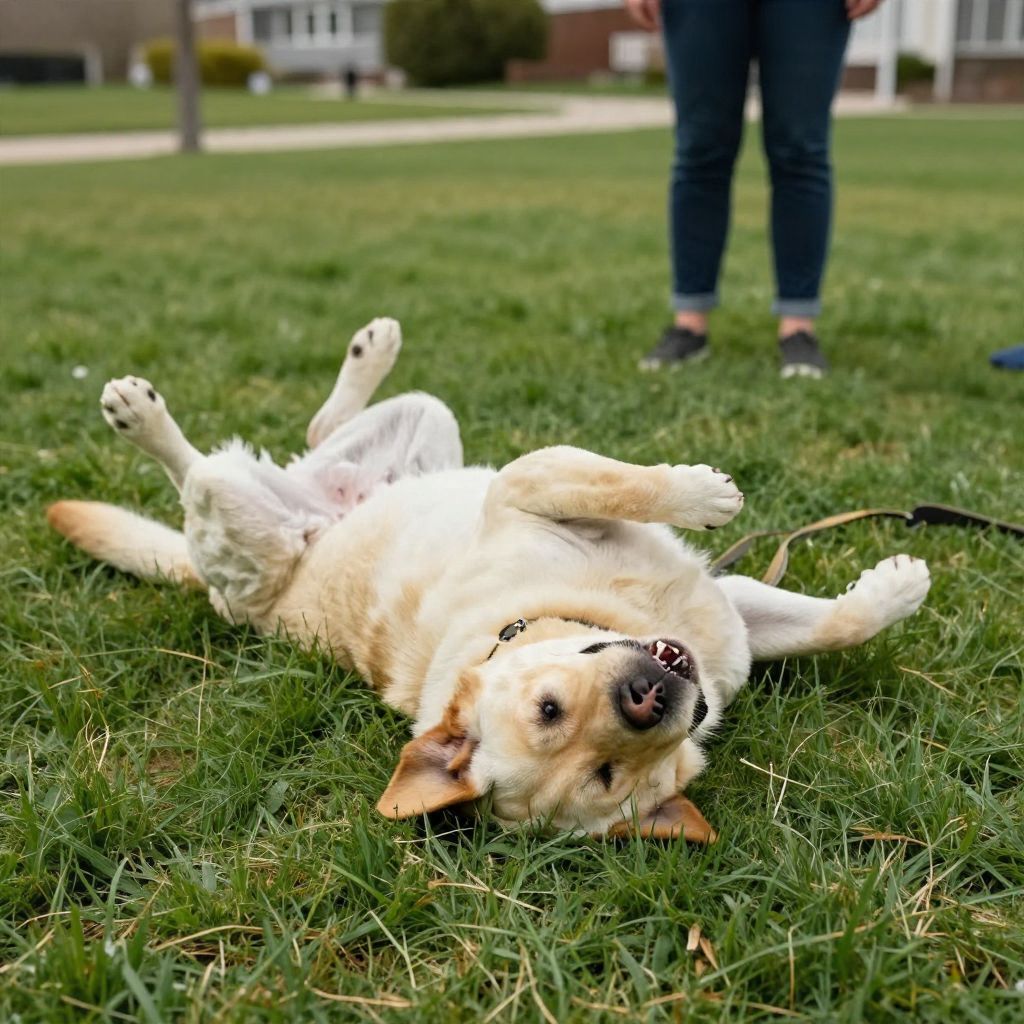
Why does my dog roll in the grass? In most cases, it’s normal dog behavior. Your dog may be enjoying the scent, scratching an itch, cooling off, or simply engaging in playful, instinctive movement.
Sometimes rolling is harmless, but it can also point to skin irritation, allergies, parasites, or a strong reaction to a smell. Watching when and how often it happens helps you tell normal fun from a possible problem.
Why does my dog roll in the grass?
Dogs roll in the grass for several common reasons: to scratch an itch, mask or explore scents, cool down, stretch, play, or relieve mild discomfort. Most of the time it is normal. If the behavior is sudden, frequent, or paired with itching, redness, or odor, a vet check is a good idea.
Common reasons dogs roll in the grass
1. They like the smell
Dogs experience the world through scent, so grass can be interesting, exciting, or simply irresistible. Some dogs roll after finding a smell they want to investigate or “wear.”
This is especially common in dogs that are highly scent-driven, but any dog can do it. A favorite patch of grass may smell like other animals, plants, soil, or even leftover food scents.
2. They are scratching an itch
Rolling can feel good when a dog has a mild itch on the back, shoulders, or sides. It may briefly relieve dry skin, loose fur, or a small irritation.
If your dog seems to roll because of itchiness often, look for other signs such as:
- Excessive licking or chewing
- Red or flaky skin
- Hair loss or thinning fur
- Frequent scratching
- Head shaking or ear scratching
3. They are cooling off or getting comfortable
Grass can feel cooler and softer than pavement or dirt, especially on a warm day. Some dogs roll to settle their body, stretch their back, or enjoy the sensation.
This is more likely after exercise, during warm weather, or in dogs with thick coats. Short-coated and long-coated dogs may both do it, but the reason can vary by individual comfort rather than breed alone.
4. They are playing or self-entertaining
Rolling is often part of normal play. A dog may flop, twist, kick, and rub around because it simply feels fun.
Puppies and younger dogs may do this more often because they are still learning how to explore the world and burn energy. That said, older dogs may also roll when they are relaxed and happy.
5. They are reacting to something unpleasant
Sometimes a dog rolls in the grass after smelling something strong or unpleasant. They may be trying to cover their own scent or “replace” the smell on their coat.
This behavior is instinctive and not a sign of disobedience. It can be frustrating if your dog chooses mud, dead animals, or other messy spots, but the behavior itself is usually normal.
6. They may have skin discomfort or allergies
If your dog rolls frequently, seems restless, or cannot seem to get comfortable, allergies or skin irritation could be involved. Grass pollen, environmental allergens, fleas, and skin infections can all make a dog itch.
Rolling alone does not confirm an allergy. But if it happens along with persistent itching, ear problems, or recurring skin issues, your veterinarian can help identify the cause.
When grass rolling is normal and when it is not
Occasional rolling after a walk, during play, or when your dog finds an interesting smell is usually nothing to worry about. The behavior becomes more concerning when it is frequent, intense, or linked to discomfort.
Pay attention if your dog:
- Rolls repeatedly on every walk
- Seems unable to settle
- Scratches, licks, or chews the skin a lot
- Has redness, bumps, or hair loss
- Has a strong odor or greasy coat
- Shows pain, stiffness, or trouble getting up
Urgent veterinary care is needed if rolling is accompanied by trouble breathing, collapse, vomiting, swelling, severe pain, sudden weakness, or signs of heat stress such as heavy panting, drooling, and disorientation.
What you should do if your dog rolls in the grass
Check the environment
Look at where your dog rolled. Avoid areas that may contain pesticides, fertilizers, sharp debris, animal waste, or unknown substances. These can irritate the skin or be dangerous if licked off later.
Inspect your dog’s coat and skin
After rolling, check for burrs, foxtails, ticks, sticky plant material, or signs of redness. A quick inspection can prevent small problems from becoming bigger ones.
Focus on the belly, armpits, ears, neck, and between the toes, since these spots can trap debris.
Redirect calmly if needed
If you do not want your dog rolling in a certain spot, use a cheerful cue and call them away before they start. Reward them for coming to you or walking on.
Reward-based training works better than scolding because it teaches your dog what to do instead of just stopping the behavior in the moment.
Give appropriate outlets for the behavior
Some dogs roll because they need more enrichment or exercise. A dog that is bored, under-stimulated, or overly excited may seek sensory experiences outdoors.
Helpful outlets include:
- Sniff walks
- Play sessions
- Puzzle toys
- Training games
- Safe off-leash or long-line exploration where appropriate
How to tell if itchiness is the real cause
If you suspect your dog is rolling because of itching, look for a pattern. Does it happen after being outside, after grooming, or at certain times of year? Does your dog also lick paws, rub the face, or scratch the ears?
Common causes of itchiness include:
- Environmental allergies
- Flea bites or other parasites
- Dry skin
- Contact irritation from grass or chemicals
- Skin infection
- Ear discomfort that makes the dog rub and roll
If the problem is ongoing, a veterinarian can help sort out whether it is allergy-related, parasite-related, or caused by another skin issue. That matters because treatment depends on the cause.
What not to do
It is tempting to assume your dog is being stubborn or dirty, but rolling is usually not a behavior to punish. Harsh corrections can make outdoor time stressful and may not stop the underlying reason.
Avoid these common mistakes:
- Yelling after the rolling has already happened
- Using punishment to “teach a lesson”
- Ignoring repeated itching or skin changes
- Letting your dog roll in treated or dirty areas
- Skipping parasite prevention if your vet recommends it
When to call the vet
Contact your veterinarian if the rolling is new, frequent, or seems linked to discomfort. A visit is especially important if you notice skin changes, ear problems, or behavior that suggests your dog is trying to relieve irritation.
Make an appointment if your dog has:
- Persistent scratching or licking
- Red, scaly, or inflamed skin
- Hair loss or bald spots
- Bad skin odor
- Recurrent ear infections
- Signs of pain or stiffness
If your dog rolls and then develops sudden swelling, hives, vomiting, or breathing trouble, seek emergency care right away.
How age, size, and temperament can affect the behavior
Not every dog rolls in the grass for the same reason. Puppies may do it because they are playful and curious. Adult dogs may do it for scent marking, comfort, or itch relief. Senior dogs may roll less often, or they may do it because they are trying to ease stiffness or find a comfortable position.
Body size and coat type can also matter, but they do not determine behavior on their own. A dog’s individual personality, history, and health are often more important than breed stereotypes.
How to reduce messy or risky rolling
If your dog loves rolling in places you would rather avoid, management helps. You may not stop the behavior entirely, but you can make it safer and easier to handle.
- Choose cleaner walking routes when possible.
- Keep your dog on leash in high-risk areas.
- Use a reliable recall cue to interrupt rolling early.
- Offer sniffing and play as alternatives.
- Rinse or wipe your dog after walks if they roll in irritants.
For dogs with sensitive skin, your veterinarian may suggest a grooming routine or medical plan tailored to the cause of the irritation.
Bottom line
Why does my dog roll in the grass? Most often, it is normal behavior tied to scent, comfort, play, or mild itch relief. Watch for patterns and skin symptoms, keep your dog away from unsafe areas, and call your vet if the rolling seems excessive or uncomfortable.
If you want to understand related habits too, you may find it helpful to read about why dogs lick their paws and why a dog smells bad.