
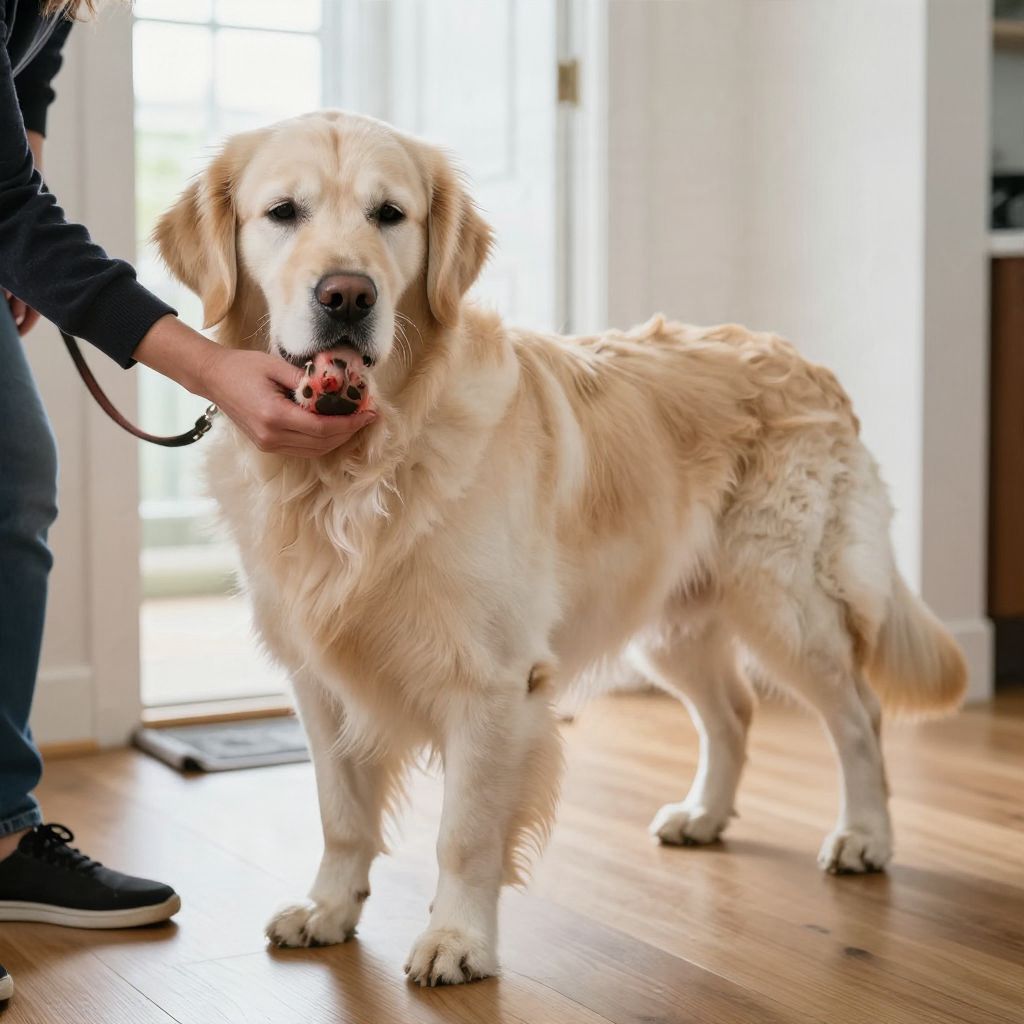
If you’re asking, “Why are my dogs paws red?” the most common reasons are irritation, allergies, licking, or a skin infection. Red paws can also happen after contact with something irritating, like hot pavement, grass, cleaning products, or rough surfaces.
Some causes are mild and short-lived, but others need veterinary care. The key is to look at the whole picture: redness, swelling, odor, pain, limping, licking, and whether one paw or several paws are affected.
Why are my dogs paws red?
Red dog paws usually mean the skin is inflamed. Common causes include allergies, constant licking, yeast or bacterial infection, contact irritation, cuts, burns, foreign objects, or parasites. If the redness is severe, painful, smelly, swollen, or your dog is limping, contact a veterinarian promptly.
Common reasons dog paws turn red
Allergies
Allergies are one of the most common reasons for red paws. Dogs may react to environmental triggers such as pollen, dust, mold, grass, or household irritants, and some also have food allergies or sensitivities.
Allergy-related paw redness often comes with licking, chewing, itchy skin, ear problems, or redness between the toes. The exact pattern can vary by dog, age, season, and exposure.
Licking and chewing
When a dog licks the paws repeatedly, the skin becomes wet, irritated, and inflamed. Over time, that irritation can make the paws look red or even darker and stained from saliva.
Dogs may lick because of itchiness, boredom, anxiety, pain, or a habit that started after a minor injury. If the licking is frequent, the underlying cause needs attention, not just the symptom.
Yeast or bacterial infection
Warm, moist paws are a good environment for yeast and bacteria to grow, especially if your dog has been licking. Infection can cause redness, odor, discharge, crusting, swelling, or a greasy feel to the skin.
These infections often need veterinary diagnosis and treatment. The right care depends on whether the problem is yeast, bacteria, or both.
Contact irritation or burns
Red paws can appear after your dog walks on hot pavement, ice-melt products, rough gravel, sand, or freshly cleaned floors. Some dogs also react to lawn chemicals, fertilizers, or soaps.
If the redness started after a walk or cleaning session, think about what your dog stepped on. Paw pads and the skin between the toes can be especially sensitive.
Injuries or foreign objects
A cut, scrape, torn nail, thorn, splinter, pebble, or grass awn can make a paw look red and painful. Usually one paw is affected more than the others.
Your dog may limp, hold the paw up, or react when you touch the area. Small objects between the toes can be easy to miss.
Parasites and skin disease
Mites, fleas, and some skin conditions can contribute to paw redness, especially if the dog is itchy in other areas too. Skin inflammation may also be part of a broader problem affecting the ears, belly, or face.
Because many skin diseases look similar, a vet exam is often needed to sort out the cause.
What to look for at home
Before you do anything else, gently inspect the paws in good light. Compare all four paws and note whether the redness is on the pads, between the toes, or around the nails.
- One paw only can suggest injury, a foreign object, or a localized infection.
- Several paws often points more toward allergies, licking, or environmental irritation.
- Odor, discharge, or greasy skin can suggest infection.
- Swelling, limping, or pain suggests a more urgent problem.
- Repeated licking or chewing means the issue is likely bothering your dog.
What you can safely do first
If the redness is mild and your dog is otherwise acting normal, you can take a few careful steps while you monitor the paws. Keep everything gentle and avoid using human products unless your veterinarian has told you to.
- Rinse the paws with lukewarm water if you suspect dirt, pollen, salt, or another surface irritant.
- Dry the paws well, especially between the toes.
- Check for visible debris, a broken nail, or a thorn.
- Limit licking with close supervision, a cone, or a vet-approved protective option if needed.
- Keep walks short until you know what is causing the redness.
Do not apply ointments, essential oils, alcohol, or over-the-counter creams without veterinary guidance. Some products can irritate the skin further or be unsafe if licked.
When red paws need a veterinarian
Some red paws are minor, but others are signs of pain, infection, or a more serious condition. A veterinary exam is the safest next step when the cause is not obvious or the problem does not improve quickly.
- Your dog is limping or refusing to bear weight
- The paw is swollen, hot, or very painful
- You see pus, bleeding, open sores, or a torn nail
- There is a strong odor or repeated discharge
- Your dog keeps licking despite your efforts to stop it
- The redness is spreading or affecting multiple paws
- Your dog seems lethargic, feverish, or unwell
Seek urgent veterinary care if your dog has severe swelling, a deep wound, a suspected burn, a foreign object stuck in the paw, or sudden trouble walking.
How a vet may approach the problem
Your veterinarian will usually start with a physical exam and a history of when the redness began, what surfaces your dog walks on, whether itching is seasonal, and whether the problem affects one paw or several.
Depending on the findings, the vet may recommend skin cytology, a paw exam, parasite checks, allergy management, or other testing. Treatment is based on the cause, so it is important not to guess.
How to reduce the chance of red paws returning
Prevention depends on the trigger, but a few practical habits can help many dogs. The goal is to reduce irritation, keep paws clean and dry, and catch problems early.
- Wipe or rinse paws after outdoor walks if your dog is exposed to pollen, mud, salt, or chemicals.
- Dry between the toes thoroughly after baths, swimming, or wet weather.
- Trim fur around the paws if your dog’s coat traps moisture or debris.
- Inspect paws regularly for cracks, stones, burrs, or nail problems.
- Use booties or avoid hot or rough surfaces when needed.
- Address chronic licking early before it becomes a cycle of irritation.
Common mistakes to avoid
It is easy to overlook a serious issue when the paws only look a little red. A few common mistakes can make the problem worse or delay proper care.
- Assuming all redness is “just allergies” without checking for injury or infection
- Waiting too long when your dog is licking constantly or limping
- Using human creams, sprays, or home mixtures without veterinary advice
- Ignoring odor, swelling, or discharge
- Letting the dog keep licking the area until the skin becomes raw
Special considerations for puppies, seniors, and sensitive dogs
Puppies may be more likely to explore rough surfaces, chew at their feet, or get minor injuries while learning about the world. Senior dogs may have arthritis or other pain that changes how they stand or walk, which can contribute to paw irritation.
Dogs with a history of allergies, chronic skin disease, or anxiety may need a more structured plan. Because individual health and temperament vary, what works for one dog may not work for another.
Bottom line
Red paws in dogs are usually a sign of irritation, allergy, licking, injury, or infection. Look for clues such as odor, swelling, pain, limping, and whether one paw or several are affected, then contact your veterinarian if the problem is persistent or severe.
If you want to learn more about related paw-licking problems, you may also find these articles helpful: why dogs lick their paws and why a dog licks paws so much.